About this place
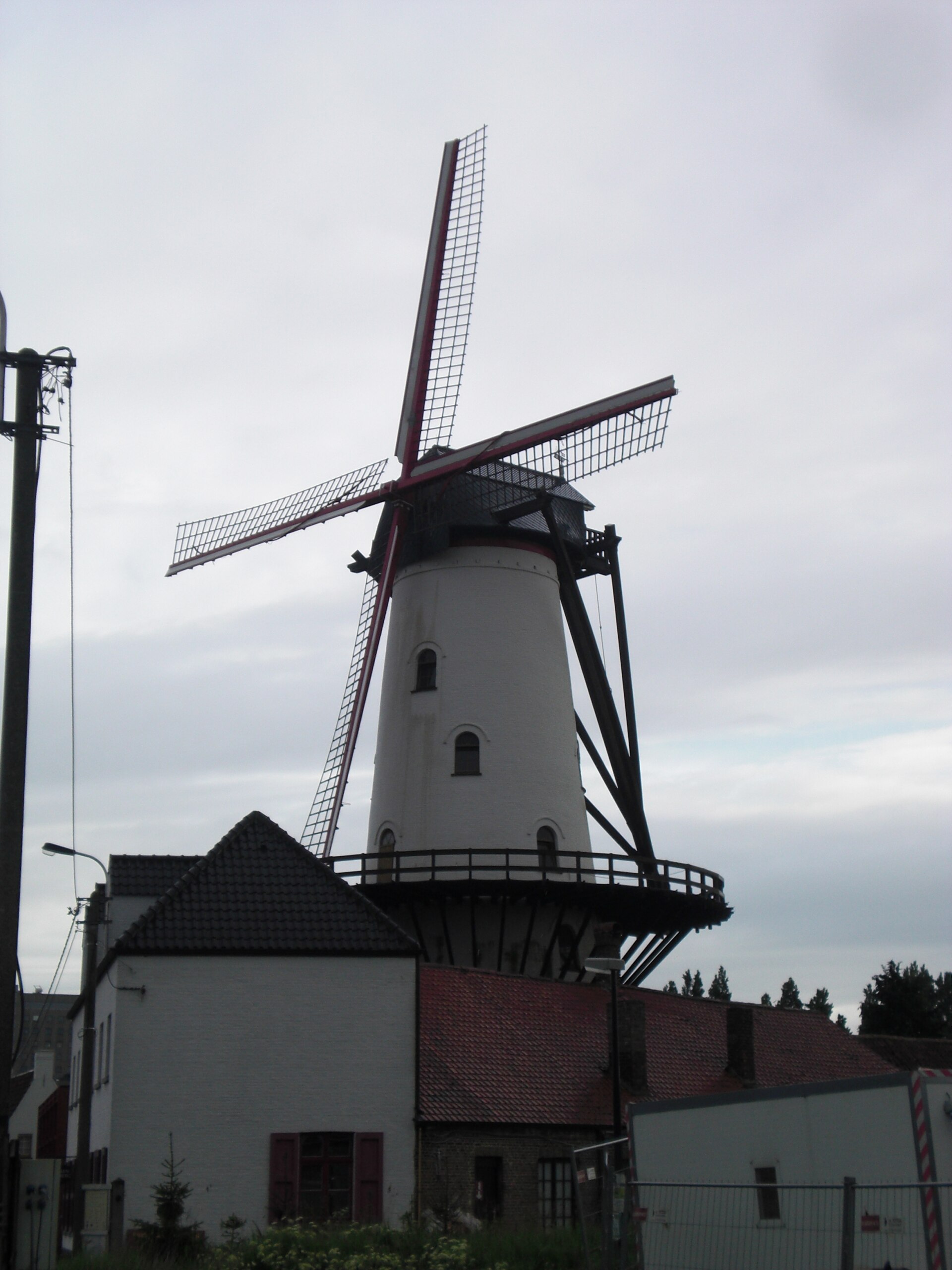
Hubertmolen is a wooden windmill standing on the Ringlaan in Wenduine, a seaside district of the Belgian municipality of De Haan. Built in 1880, this small structure has long been one of the town's recognizable landmarks and a popular stop for visitors walking along the North Sea coastline.
Who built the Hubertmolen?
The mill was commissioned by the miller Jan Hubert, who in 1879 received permission from the Permanent Deputation of West Flanders to construct a windmill on his own land — a decision that gave the mill its name. After Jan Hubert's death in 1898, his son Desideer Hubert took over operations, and in 1920 another son, Theophiel, assumed control of the mill. The business therefore stayed within the same family across three generations.
What type of windmill is it?
The Hubertmolen is a wooden stake mill (staakmolen), typologically comparable to Dutch wip mills. It has a four-sided, single-storey construction and functioned as a grain mill. The windmill remained in operation until 1934, after which its role as a working mill ended and it began its second life as a tourist attraction of the seaside resort.
What happened to the mill during the Second World War?
During the German occupation, the occupying forces removed the mill's sails. After the war ended, the structure was restored, and in 1946 it was protected, along with its surroundings, as a landscape monument — an early safeguard that helped preserve its distinctive silhouette against the coastal backdrop of Wenduine.
Why was the mill restored in the 1990s?
A severe spring storm in 1992 caused significant damage to the windmill. In response, the municipal council of De Haan purchased the structure and carried out a thorough restoration. The following year, in 1993, the Hubertmolen was officially protected as a monument, further securing its future as part of the local heritage.
What makes the mill's appearance distinctive?
A notable detail of the Hubertmolen is its weather vane, shaped like a mermaid — a motif that echoes Wenduine's seaside setting and local coastal lore. This feature often catches the eye of visitors photographing the windmill.
What can visitors see at the mill today?
In 2016, the municipal council of De Haan decided to purchase the adjacent miller's house. This led to the creation of a small museum dedicated to the use of wind as an energy source, from the past to the present. Since the summer of 2020, the restored miller's house has been open to the public, offering a virtual reality experience that lets visitors explore the mill's history and the traditional miller's trade in an interactive way.
Frequently asked questions
Where is the Hubertmolen located? The windmill stands on the Ringlaan in Wenduine, a seaside town within the municipality of De Haan in West Flanders, Belgium.
When was the mill built? The Hubertmolen was built in 1880, after miller Jan Hubert obtained permission in 1879.
Is the mill still used for grinding grain? No, it operated as a working grain mill until 1934. Today it serves as a protected monument and tourist attraction.
Can visitors go inside? Yes, the adjacent miller's house has been open to the public since summer 2020, featuring an exhibition and a virtual reality experience.
Is the Hubertmolen legally protected? Yes, it was protected as a landscape in 1946 and gained full monument protection status in 1993.
Nearby places

Earn badges for the places you visit
Download NextOnTrip, discover new places and check off your trails.