About this place
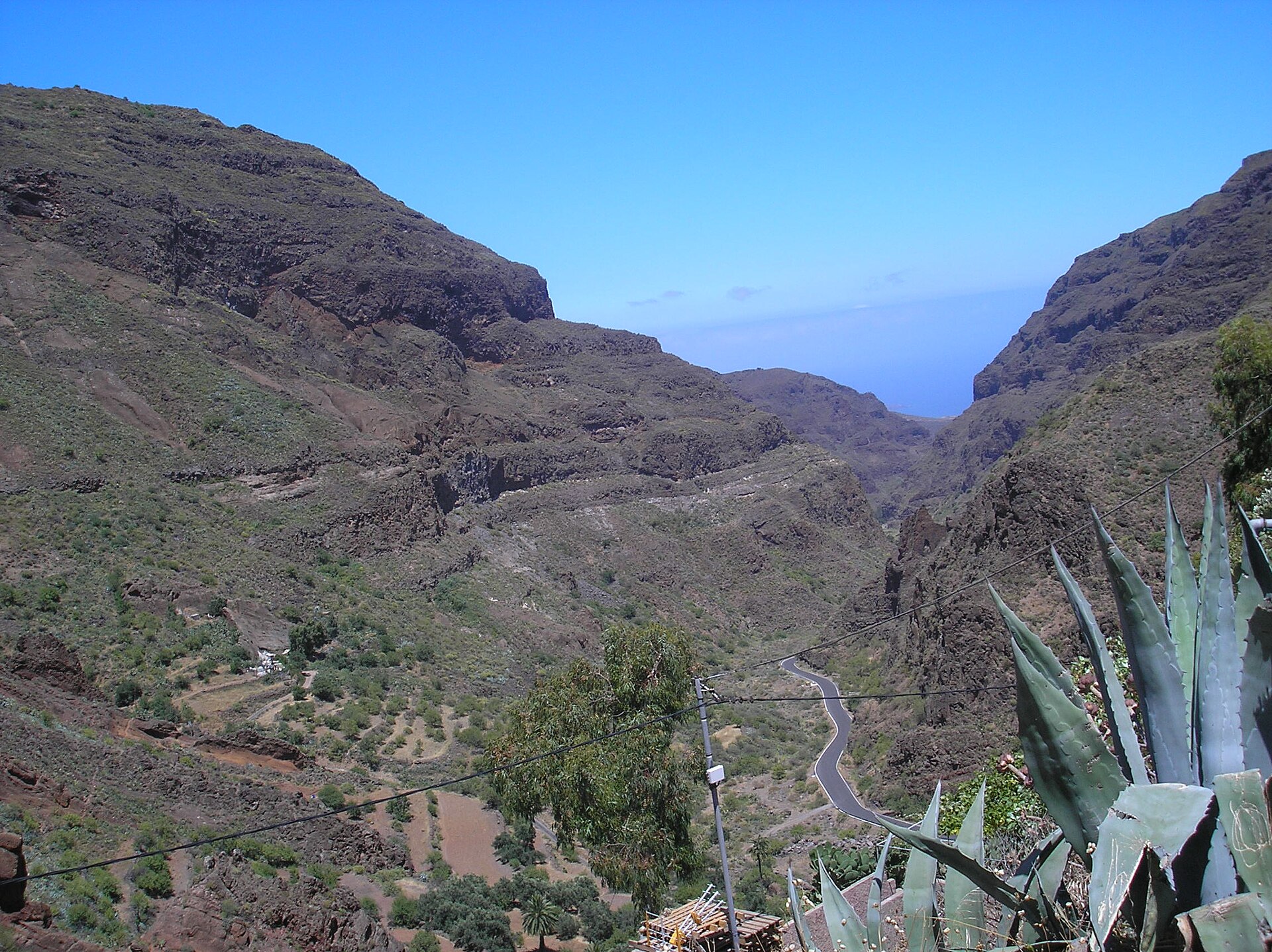
Hoya del Gamonal is a broad natural depression high in the Las Cumbres mountain range, at roughly 1,432 metres above sea level, within the municipality of Vega de San Mateo on Gran Canaria. The place name already appears in a document from 1549, when a certain Diego Gutiérrez petitioned for land there — one of the earliest written traces of settlement in this part of the island. Today it is a small hamlet (just a dozen or so residents recorded in 2014), set in a landscape that still carries hints of a much wetter past.
Why is this spot notable for nature lovers?
Hoya del Gamonal lies within the Protected Natural Space of Las Cumbres, the summit range of Gran Canaria valued for its concentration of endemic plant species. The shape of the terrain, combined with the trade winds, creates a cooler, more humid microclimate here than in many other parts of the island. Those conditions — steady moisture and regular rainfall — are the reason researchers believe a laurel forest (laurisilva) once grew in the area, a habitat now almost entirely absent from this part of Gran Canaria.
Among the endemic plants recorded here are the crested cockscomb (Isoplexis isabelliana) and the woody groundsel known locally as the "May flower" (Pericallis hadrosomus) — species typical of the island's higher elevations and an important part of local biodiversity.
Where did the water for Las Palmas come from?
Hoya del Gamonal played a real role in the history of the island capital's water supply. In the early 20th century, water from natural springs here was carried through iron pipes all the way to Llano de las Brujas in Las Palmas de Gran Canaria, with the route passing near an old beer factory along the way. Thanks to the clean water flowing from Hoya del Gamonal and neighbouring Camaretas, the wider Vega de San Mateo area is sometimes described as a natural water tank, or aljibe, for the island's capital.
Water from these highland springs mattered socially as well as economically — the surrounding villages, including Gamonal itself, were among the places that supplied the neveros, workers who once collected snow in the high mountains for food storage and cooling before refrigeration existed.
What should visitors know before heading up?
Because of its altitude and cooler climate, Hoya del Gamonal appeals to hikers looking for a quieter, more mountainous side of Gran Canaria, away from the coastal resorts. Its proximity to the La Lechucilla area and its place within the trail network running through Las Cumbres make it a useful starting point or waypoint for longer routes across the island's highlands.
Frequently asked questions
How high up is Hoya del Gamonal? The hamlet sits at an altitude of approximately 1,432 metres above sea level.
Is Hoya del Gamonal a protected area? Yes, it forms part of the Protected Natural Space of Las Cumbres on Gran Canaria.
What is its historical significance? The place name is documented as early as 1549, and in the early 20th century it supplied water to Las Palmas de Gran Canaria.
Which endemic plants grow here? Among others, the crested cockscomb (Isoplexis isabelliana) and Pericallis hadrosomus, both typical of the island's higher elevations.
Nearby places

Earn badges for the places you visit
Download NextOnTrip, discover new places and check off your trails.