About this place
Hôtel Lefebure de la Malmaison, a 17th-century private mansion on Paris's Île Saint-Louis, ranks among the best-preserved examples of the small island's classical townhouse architecture.
What is this building, exactly?
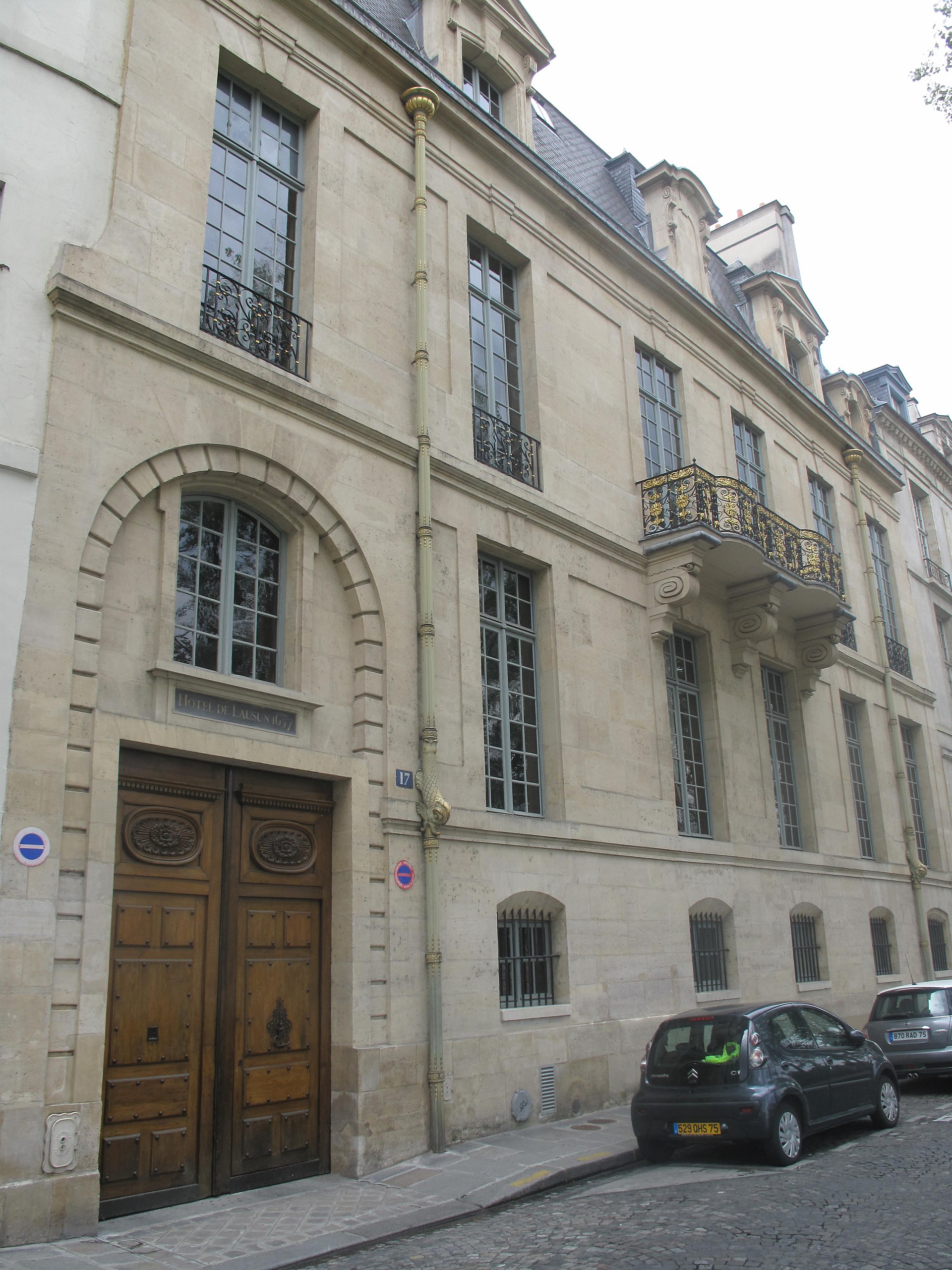
Despite the word "hôtel" in its name, this is not a place to book a room. In French, a hôtel particulier is a grand private townhouse, and this one sits at 22 quai de Béthune, on the island's southern embankment facing the Seine and the Left Bank. Its stone street facade rises three stories over a ground floor, capped by an attic level, with a carriage entrance framed by two ornately carved wooden doors.
When was it built, and by whom?
The story starts in 1643 and 1644, when two brothers, Antoine Le Febvre de La Barre, a counselor at the Parlement de Paris, and François Le Febvre de la Malmaison, an official at the audit office, bought adjoining plots along what is now quai de Béthune. Each brother set out to build his own house, and construction on both got underway from 1645. Ownership of the mansion at no. 22 stayed within the family for two more generations: François passed it to his son Antoine in 1663, and Antoine in turn gave it to his daughter, Catherine Charlotte Lefebvre de La Malmaison, in 1693. She had married Michel Chabenat de Bonneuil, a court official responsible for introducing foreign ambassadors, and it was she who sold the property in 1714, closing out the family's direct line of ownership.
Why does the building next door look almost identical?
Because the two brothers built their houses side by side at the same time, producing a matched pair at nos. 20 and 22 quai de Béthune — an unusual arrangement, since most private mansions in Paris were designed to stand apart architecturally. The two facades share the same overall proportions and layout, and diverge mainly in smaller details, such as the wrought-iron ironwork crowning each carriage gate.
What has survived inside?
In its heyday, the mansion's interior carried painted decoration by some of the leading names of the Louis XIV era: Pierre Mignard, Charles Le Brun, Eustache Le Sueur, and Jean Bérain. None of that decorative scheme survives today — later renovations stripped out the painted rooms, and about the only original interior feature still standing is the staircase. The building is nonetheless registered as a monument historique under reference PA00086299, a listing that protects its facades and roof as part of the city's architectural heritage.
Can visitors go inside?
No. Like most of the hôtels particuliers lining Île Saint-Louis, this one remains privately owned and lived in, with no public access to the interior. Visitors take it in from the quai de Béthune itself, where the stone facade and carriage gate are best appreciated on foot. It makes for a brief but rewarding stop on a walk around the island, with the Seine on one side and the towers of Notre-Dame visible in the distance.
Najczęstsze pytania / Frequently asked questions
Is Hôtel Lefebure de la Malmaison a hotel where I can stay? No. The French word "hôtel" here refers to a historic private townhouse, not a place of accommodation — the building is a private residence.
When was the mansion built? Construction began in 1645, after the Le Febvre brothers acquired the land in 1643–1644.
Does the interior still show its original 17th-century decoration? Mostly not. Painted works by Mignard, Le Brun, Le Sueur, and Bérain were lost to later remodeling; the staircase is the main original element left.
Why do numbers 20 and 22 quai de Béthune look so similar? Two brothers built both houses at the same time on adjoining plots, resulting in a matched architectural pair that is unusual for Parisian private mansions of the period.
Nearby places

Earn badges for the places you visit
Download NextOnTrip, discover new places and check off your trails.