About this place
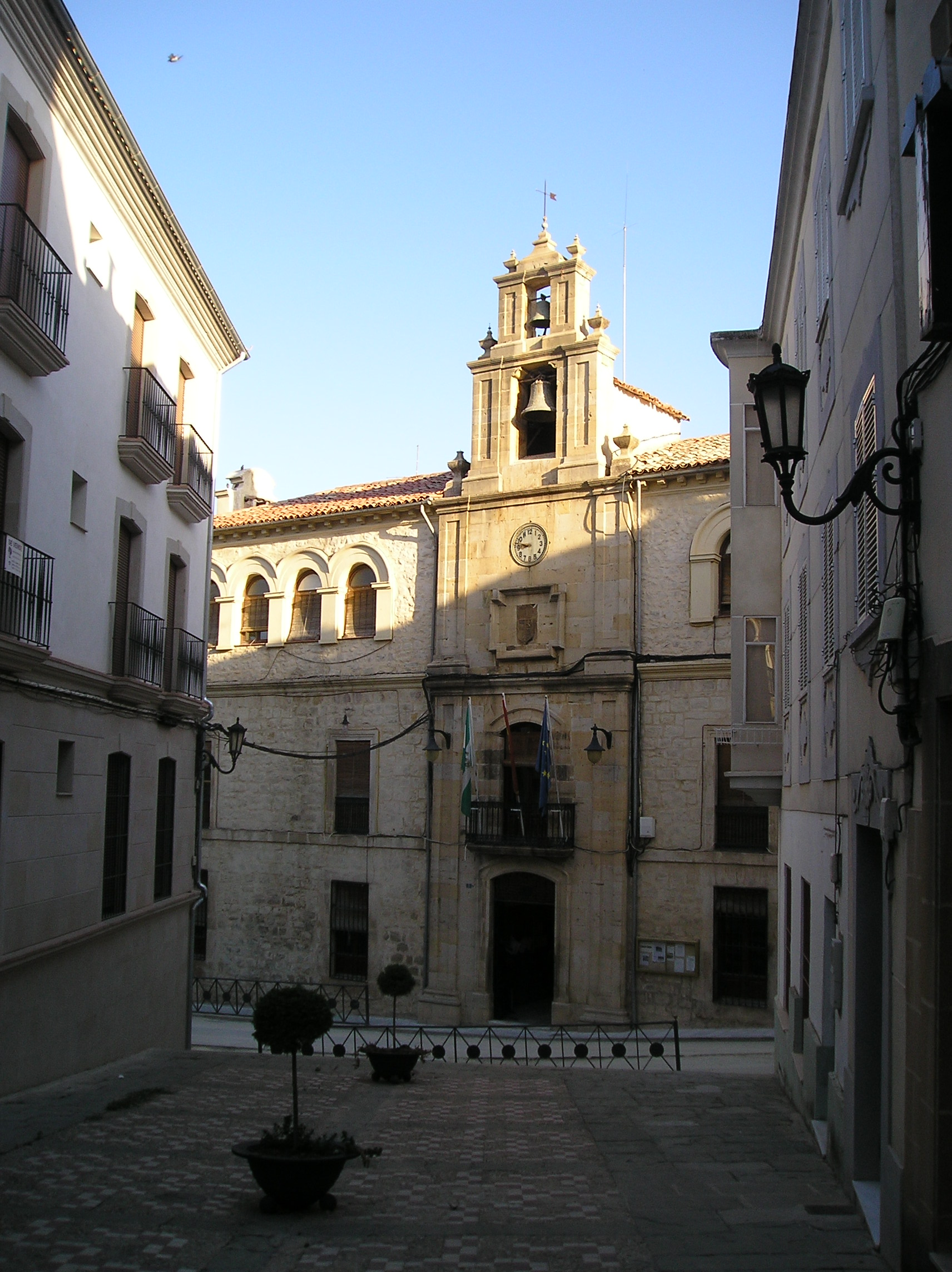
Hornos Town Hall sits at the administrative heart of Hornos, a small hilltop village in the province of Jaén, Andalusia. The building serves the local council of a municipality that lies entirely within the Sierra de Cazorla, Segura y Las Villas Natural Park, one of Spain's largest protected natural areas. Perched on a rocky outcrop above what is now the Tranco reservoir, Hornos packs a long and layered history into a tiny footprint.
How do you get to Hornos town hall?
Hornos sits in the northeastern corner of Jaén province, roughly an hour's drive from the city of Jaén and about 40 minutes from Cazorla. A car is the practical way in — the approach winds through the natural park on mountain roads dotted with viewpoints over the reservoir and surrounding peaks. Once in the village itself, park at the entrance rather than trying to drive further: the old town's streets are narrow and steep, built for foot traffic long before cars existed. The town hall stands right in the historic core, just off the main square, from where lanes fan out toward the castle and the village's best lookout points.
What is there to see around the town hall?
The building itself is a working municipal office — residents come here for paperwork, and visitors can pick up local information. The real draw is the setting around it. Hornos has been inhabited since the third millennium BC, during the Copper Age, with continued settlement through the Bronze Age. Arabic sources record it as Fornus, a heavily fortified hins whose position atop a rocky spur made it nearly impossible to take by force. That changed in 1239, when Pedro Pelayo Correa, master of the Order of Santiago, conquered the town, which was then attached to the commandery of Segura de la Sierra.
Above the village rises a castle of Muslim origin, rebuilt by the Order of Santiago between the second half of the 13th century and the early 14th century — one of the best-preserved defensive structures in the region. From the castle hill and from the area around the main square, where the town hall stands, the views stretch out over the Tranco reservoir and the wooded slopes of the Sierra de Cazorla.
When is the best time to visit?
Spring (April to June) and early autumn (September–October) offer the most comfortable temperatures for exploring the natural park, along with green or golden landscapes depending on the season. Summers can run hot, though the altitude and the nearby reservoir take the edge off, and the area draws its own crowd of water-sports visitors in July and August. Winters are generally passable by road, but it's worth checking conditions beforehand, since mountain routes through the Sierra de Cazorla can turn slick after rain or snow.
Practical information
Council business and local information can be handled by phone or through the town hall's electronic office (sede electrónica), which is a convenient option for visitors planning ahead. Keep in mind that Hornos is a genuinely small village — parking and any food options cluster around the entrance and the main square, not throughout the old town.
Frequently asked questions
Can you visit Hornos town hall as a sightseeing stop? Not really — it's a working administrative building for the municipality, not a museum. The main tourist draws in Hornos are the castle and the compact historic street plan, with the town hall marking the center of that old core.
Is parking available in Hornos? Yes, there are parking spaces at the village entrance. Because the old town's streets are narrow, it's best to continue on foot from there.
How far is the castle from the town hall? The castle overlooks the historic center directly and is within a short walk of the main square where the town hall is located.
Is Hornos near water? Yes — the village sits above the Tranco reservoir on the Guadalimar river, one of the region's main scenic attractions and a common destination for hikers and water-sports visitors from the surrounding villages.
Nearby places

Earn badges for the places you visit
Download NextOnTrip, discover new places and check off your trails.