About this place
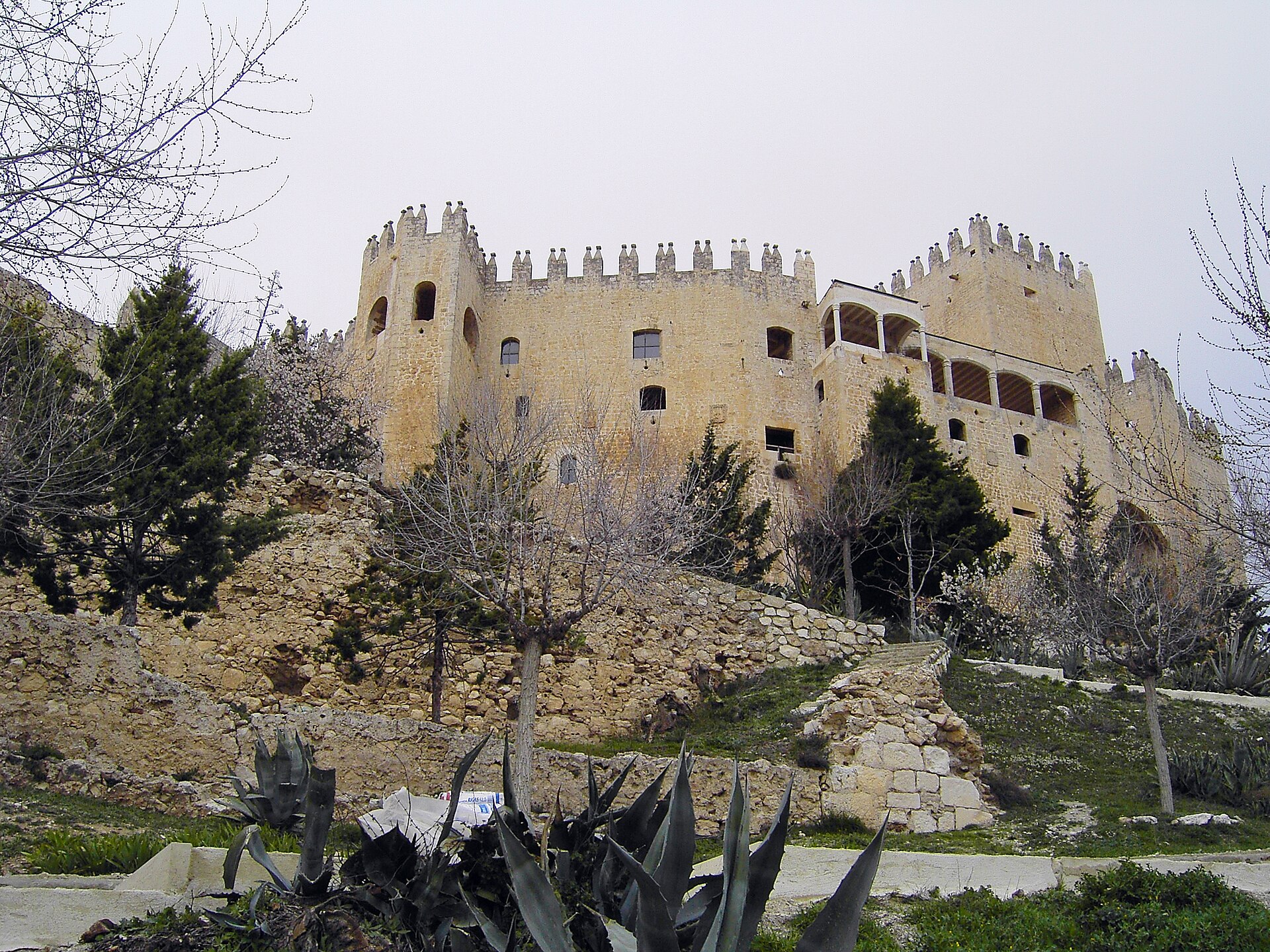
Castillo de Volteruela is a medieval fortress overlooking the countryside around Puebla de Don Fadrique, a small town in the far northeast corner of Granada province, right where it meets the regions of Murcia and Albacete.
Where exactly is the castle?
The ruins sit on Cerro Testigo, a hill rising to roughly 1,369 metres above sea level. The choice of site was deliberate: medieval fortifications in this part of Spain were built on commanding high points that let defenders watch the approach roads and valleys leading into Castilian territory. From the top, the view stretches across the open, high-plateau landscape typical of this corner of Granada, next to the Sierra de la Sagra range.
What does the castle look like today?
Volteruela was a military stronghold built using the tapial technique — rammed earth compacted inside wooden formwork, a common construction method across medieval Castile and Al-Andalus. It was cheap and fast to build, but far less durable than stone or brick. As a result, very little survives today beyond scattered wall fragments at the corner of what was once a tower. The rest of the structure has worn away over the centuries, which is the typical fate of unprotected tapial fortifications left exposed to the elements for hundreds of years. For visitors, this means Volteruela is best approached as a site of historical and scenic interest rather than a restored architectural monument.
What is the history behind it?
The place appears in written sources as early as 1243, under the names Vulteyrola or Bolteruela, at a time when this entire territory was under Castilian control and formed part of a network of fortresses and settlements dependent on the town of Segura. The castle would have functioned as one of the defensive points guarding this stretch of the Granada highlands, in an era when the frontier between Christian Castile and Muslim-held territory shifted repeatedly.
A turning point in the settlement's history came in 1525, when Fadrique Álvarez de Toledo, 2nd Duke of Alba, renamed the town from Bolteruela to Puebla de Don Fadrique — the name it still carries today. Although the castle predates that event, it remains the most tangible surviving trace of the region's medieval past and a reference point for local historical identity.
Who should visit?
Castillo de Volteruela suits travelers interested in the medieval Castilian-Andalusian frontier and hikers who enjoy combining open landscapes with a bit of field archaeology. Given the altitude and terrain, sturdy footwear and unhurried time for the climb are worth planning for. It also makes a good stop while exploring the area around Puebla de Don Fadrique, a town within the Geoparque de Granada known for the wide, open highland scenery that is unusual elsewhere in Andalusia.
Frequently Asked Questions
What is Castillo de Volteruela? It is the ruin of a medieval defensive castle built in tapial (rammed earth), standing on Cerro Testigo hill in the municipality of Puebla de Don Fadrique.
How much of the original structure survives? Very little — only fragments of walls at the corner of a former tower remain. It is a site valued for its history and views rather than an intact monument.
What is the castle's connection to the town's name? The settlement was originally called Bolteruela. In 1525, Fadrique Álvarez de Toledo, 2nd Duke of Alba, renamed it Puebla de Don Fadrique, the name still used today.
Is it worth climbing up to the castle hill? Yes, mainly for the panoramic view over the highlands of northeastern Granada and for the historical context — the site was part of a border fortress network as far back as the 13th century.
Nearby places

Earn badges for the places you visit
Download NextOnTrip, discover new places and check off your trails.