About this place
Holy Trinity Church in Smíchov is a modest neoclassical church standing on Plzeňská street within the grounds of the former Malá Strana Cemetery, in Prague's Smíchov district (administratively part of Košíře today). Most visitors walk past it without a second glance, yet the building carries a story that reaches back more than three centuries, to a plague epidemic.
Why is there a church in the middle of a cemetery?
The story begins in 1680, when Dominican friars founded a cemetery here during a plague outbreak and raised a small chapel dedicated to St. Roch, the traditional protector against the disease. When another wave of plague — reportedly carried in from Vienna — killed close to twenty thousand people in Prague in 1713, the chapel was enlarged and rededicated to the Holy Trinity. Eleven years later it was expanded again.
The real transformation came in the 19th century. In the 1820s, a charitable brotherhood known as the "Bratrstvo lásky k bližnímu" (Brotherhood of Love for One's Neighbor) decided to replace the modest chapel with a proper church. Most of the twenty-six thousand gold florins needed for the project came from a single donor: Leopold Leonhard Thun-Hohenstein, a Bohemian nobleman who served as Bishop of Passau. Construction began in 1831, and the finished church was consecrated on 22 October 1837.
What does the church look like inside?
The building is a single-nave structure with a rectangular presbytery and a sacristy added later, its neoclassical façade topped by a slender tower. Above the high altar hangs a painting of the Last Judgment by František Horčička, notable for its unusually bold, colorful treatment of a subject more often rendered in somber tones.
The two side altars hold older pieces that survived from the original chapel: a copy of Peter Paul Rubens' painting of St. Anne, made by the Baroque painter Filip Mazanec in 1664, and a crucifix carved by Leonhard Blanckart in 1787. The organ, likewise inherited from the earlier chapel, comes with a piece of local lore claiming that Wolfgang Amadeus Mozart himself once played it.
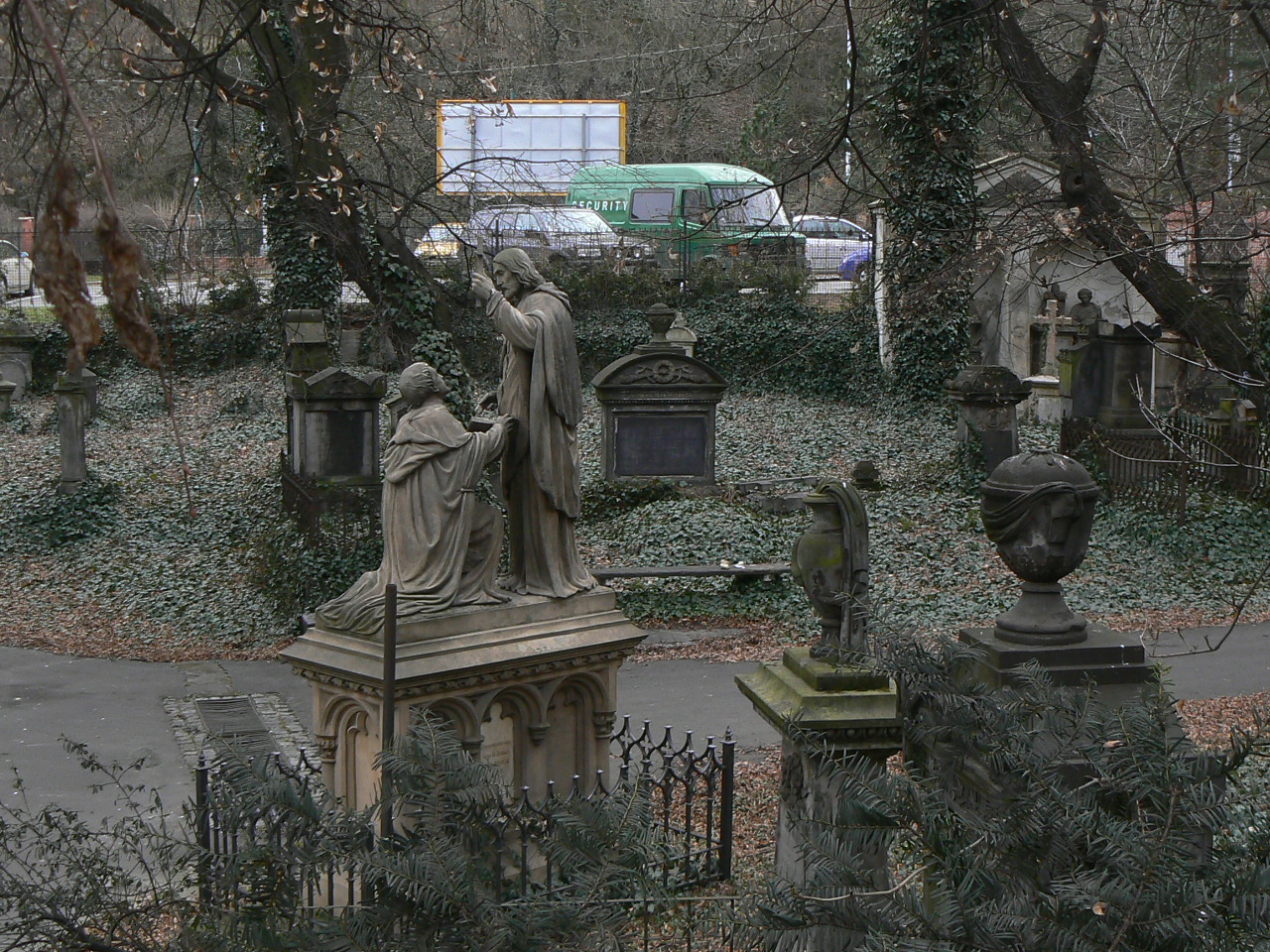
A memorial plaque on the façade honors Jan Václav Stich, a celebrated horn virtuoso better known abroad under his Italian stage name, Giovanni Punto. In the adjoining cemetery lies the church's benefactor, Bishop Thun-Hohenstein, who died in 1826 at his Cibulka estate in Košíře; his elaborate tomb was designed by the sculptor Václav Prachner.
What happened to the cemetery and the original chapel?
The cemetery that gave rise to the church remained in use until 1884, when Prague's expanding urban development forced its closure to new burials. The original St. Roch chapel, the church's predecessor, actually outlived the cemetery itself — it wasn't demolished until 1951, when the street was widened.
Today the church functions as an active Roman Catholic parish church belonging to the Prague-Košíře parish, and it is listed as a protected cultural monument as part of the Malá Strana Cemetery complex.
Frequently asked questions
Where exactly is the church located? On Plzeňská street in Prague's Smíchov district, within the grounds of the former Malá Strana Cemetery.
Is the church still in use? Yes, it is an active Roman Catholic parish church.
Where does the "Holy Trinity" dedication come from? From the 1713 rebuilding of the original St. Roch plague chapel, when it was rededicated to the Holy Trinity.
Is this the same church as the Baroque Holy Trinity Church on Spálená street in Prague 1? No — that is an entirely different, much older church (1708–1713) in Prague's New Town, today used by a Greek Catholic congregation. The Smíchov church is a separate, 19th-century cemetery church.
Who paid for the church's current building? Mostly Bishop Leopold Leonhard Thun-Hohenstein of Passau, who is buried in the adjoining cemetery.
Nearby places

Earn badges for the places you visit
Download NextOnTrip, discover new places and check off your trails.