About this place
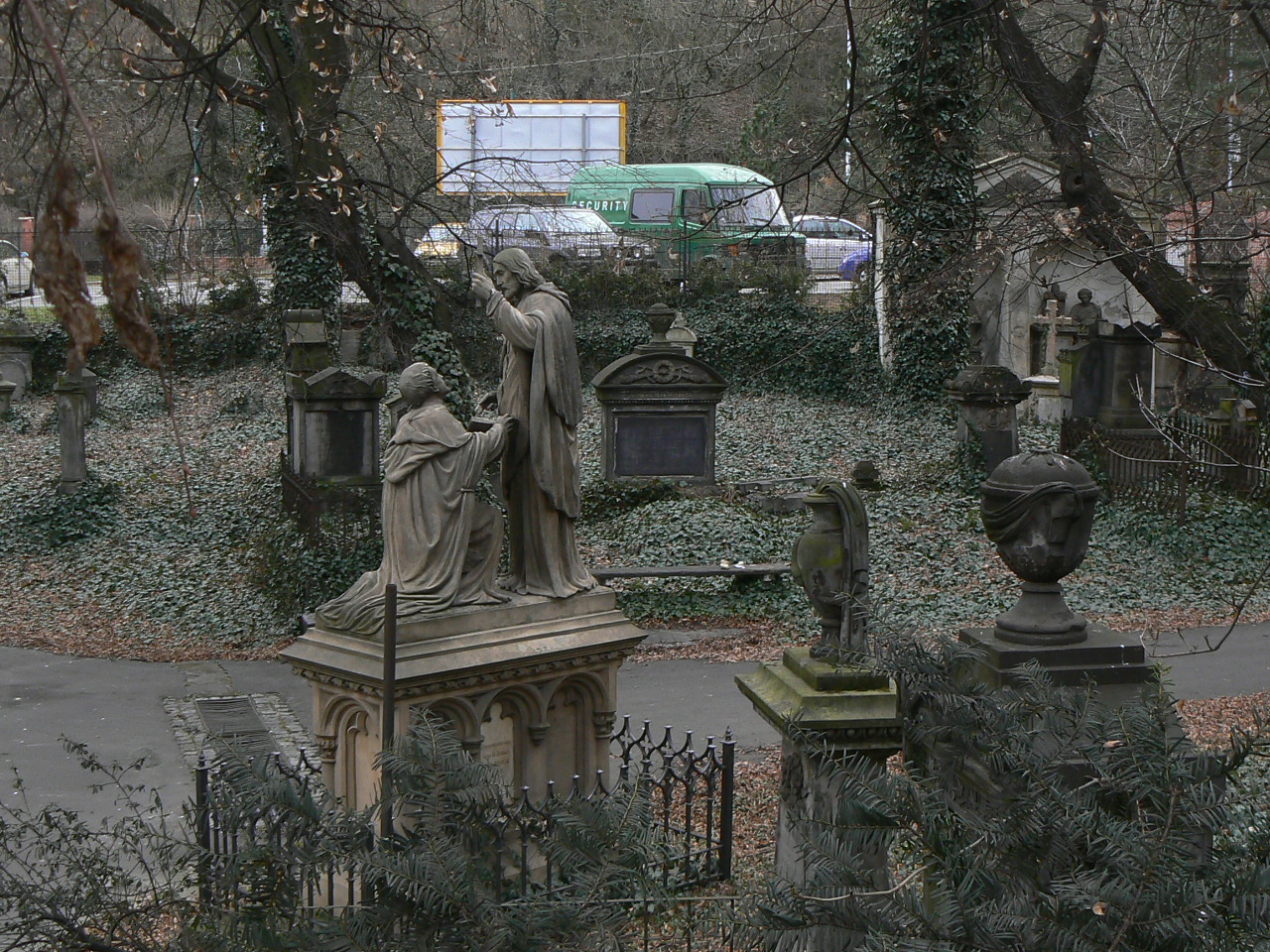
Malostranský Cemetery is a historic burial ground in Prague, located in the Prague 5 district on the boundary between the cadastral areas of Smíchov and Košíře. Today it's a quiet, green enclave tucked away from the city bustle, but for over a century it served as the main cemetery for residents of the left bank of the Vltava.
How did this cemetery come to be?
The cemetery was founded in 1680, during one of the plague epidemics that struck Prague and its surrounding districts. It was established next to the Church of St. Wenceslas, which no longer stands today — it was demolished in the 18th century. Among the first people buried here was Tomáš Pešina z Čechorodu, a respected historian and writer who died during that very epidemic. In its early years, the cemetery mainly served as a burial site for plague victims, only later taking on a broader role for Prague's left-bank districts.
Where does the name come from?
The name refers to the historic town of Malá Strana (today a Prague district), which the cemetery served as its main burial ground between 1787 and 1884. This change followed Emperor Joseph II's 1787 reform, under which the cemetery became the municipal burial site for residents of the left bank of the Vltava — Hradčany, Malá Strana, and later Smíchov as well. This period marked the cemetery's peak significance, when it served as the primary resting place for a substantial part of the city.
What buildings are worth seeing on the grounds?
Over the years, several sacred structures were built within the cemetery. The oldest is the small chapel of St. Roch, patron saint against plague, erected in 1703 — a natural addition given that the cemetery itself originated from the need to bury plague victims. In 1715, a Holy Trinity chapel was added, and between 1831 and 1837 a full Holy Trinity Church was built in its place, which still stands today as the site's architectural landmark. These layered structures trace how the cemetery's function and importance evolved over more than a century and a half.
What is the cemetery's literary connection?
The Malostranský Cemetery holds a lasting place in Czech culture — it was this very cemetery that inspired Jan Neruda, one of the most important 19th-century Czech writers, to write his poetry collection "Hřbitovní kvítí" ("Cemetery Flowers"), published in 1857. The melancholic atmosphere of the place, where history and nature intertwine, has long drawn writers seeking inspiration for reflective, contemplative work.
Can you visit the cemetery today?
Access to the grounds is currently restricted — due to incidents of vandalism, the cemetery is closed to casual visitors, and entry is generally only possible by prior arrangement. This has helped the site retain its quiet, off-the-beaten-path character, despite sitting close to the busy Smíchov and Košíře neighborhoods.
Frequently asked questions
When was Malostranský Cemetery founded? It was founded in 1680 during a plague epidemic, as a burial site next to the now-demolished Church of St. Wenceslas.
Why is it called "Malostranský" (Malá Strana) Cemetery? The name comes from the town of Malá Strana, for which the cemetery served as the main burial ground between 1787 and 1884, following Emperor Joseph II's reform.
What architectural landmarks can be found at the cemetery? The grounds include the chapel of St. Roch (1703), a Holy Trinity chapel (1715), and the Holy Trinity Church built on its site between 1831 and 1837.
Is the cemetery open to visitors? Due to vandalism, access is restricted — visits are generally only possible with prior arrangement.
What is the cemetery's literary connection? It inspired Jan Neruda's poetry collection "Hřbitovní kvítí" (1857), one of the notable works of 19th-century Czech poetry.
Nearby places

Earn badges for the places you visit
Download NextOnTrip, discover new places and check off your trails.