About this place
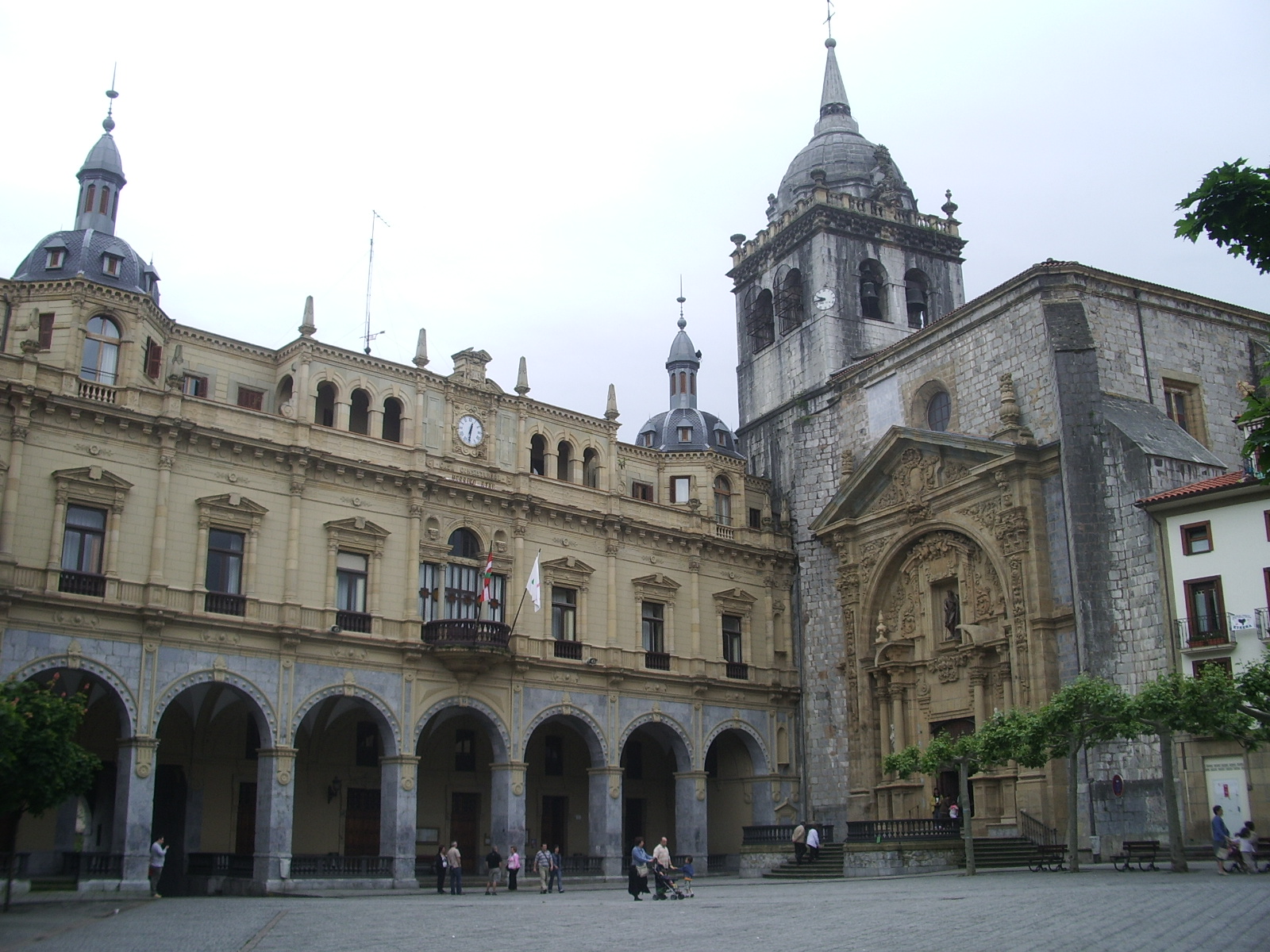
Hernani town hall stands in the heart of the old town of Hernani, a municipality in Gipuzkoa in the Basque Country, a short drive from San Sebastián. It's a working municipal building today, but its location and past make it a useful starting point for understanding how the old walled town was laid out.
Why the town hall sits exactly where it does
The historic core of Hernani had an oval layout, a shape common to fortified medieval towns across Gipuzkoa: a compact street grid ringed by a wall, with only a handful of gates allowing entry. The town hall wasn't set apart from that defensive ring — it formed part of the southern stretch of the town walls, and one of the entrances into the walled town was located right at this spot. Administration and defense were built into the same structure from the start.
The building you see today isn't the original
The current town hall is not the first one on the site. An earlier town hall was built here in the 17th century and stood for roughly two centuries before it was destroyed in 1875, during the final Carlist War. The building that replaced it went up in 1899, on the same location, and has served as the seat of Hernani's local government ever since — meaning today's structure is itself well over a century old, even though it postdates the original medieval fortifications by hundreds of years.
What's left of the town walls
Of the ring of walls that once enclosed the old town, only one section with an intact gate has survived: the Arco de Zapa, on what is now Calle Felipe Sagarna. It's the single point where visitors can still see, physically, what an entrance into medieval Hernani looked like. Most of the wall itself is gone, but the old town retained its historic street pattern and building lines closely enough that the former line of the fortifications can still be traced on foot, even where no stone remains.
How old is Hernani itself
The place-name Hernani appears in documents as early as 1014, but the town wasn't granted villa status — full town rights — until roughly the mid-13th century, with some historians placing the formal foundation closer to the late 13th or early 14th century. The exact date can't be pinned down because a fire in 1332, triggered by factional conflict, destroyed the town's archive along with its founding charter. Much of what's known about Hernani's earliest history therefore comes from outside records rather than the town's own documents.
Visiting the town hall and the old town
Because the town hall sits inside the historic centre, it's easy to pair a look at the building with a short walk through the surrounding streets, which lead toward the Arco de Zapa and past blocks that still follow the medieval layout. It's a compact route, but enough to see how a defended medieval settlement turned into the present-day town.
Frequently Asked Questions
Is the current town hall building itself historic? The building dates to 1899, so it's over 120 years old, but it isn't medieval — it replaced an earlier 17th-century town hall that was destroyed in 1875 during the last Carlist War.
Was the town hall part of the town's defensive walls? Yes. It formed part of the southern stretch of the walls, and one of the entrances into the walled town stood at this location.
Can you still see any of Hernani's old walls? One section survives: the Arco de Zapa, a gate on Calle Felipe Sagarna. It's the only physical remnant of the medieval fortifications still standing.
If the archives burned, how do historians know when Hernani was founded? The 1332 fire destroyed the town's own records, including its founding charter, so early dates rely on outside documentation — the name is first attested in 1014, with villa status likely granted sometime in the 13th century.
Nearby places


Earn badges for the places you visit
Download NextOnTrip, discover new places and check off your trails.