About this place
Grotte du Portel is a decorated cave in the commune of Loubens, in the Ariège department, tucked into the foothills of the French Pyrenees. It belongs to the same karst system as the famous Niaux and Les Trois-Frères caves, but unlike them, it cannot be visited — its significance lies entirely in what it hides, not in what can be seen on site.
What is hidden inside the cave?
The interior of Grotte du Portel is a genuine gallery of prehistoric rock art. Archaeologists have recorded 138 paintings and engravings scattered throughout all of the cave's galleries. Horses and bison dominate the imagery, joined by ibex, fish, and human figures. Alongside them are enigmatic signs and symbols whose meaning has never been fully deciphered — some are considered unique within the whole of Western European prehistoric art.
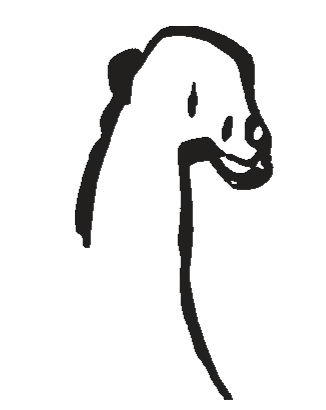
The best-known motif is the so-called "circus horse" (cheval du cirque), regarded as one of the most striking examples of Magdalenian artistic skill. Traces of human presence in the cave span a long stretch of time, from the Gravettian through to the Magdalenian — several thousand years of use — though the bulk of the paintings date to the Middle Magdalenian.
When and how was it discovered?
Grotte du Portel was discovered in 1908. Vézian worked on the site, alongside some of the biggest names in early prehistoric research — Henri Breuil, Émile Cartailhac, Jammes, and Régnault — the team that first brought this rich collection of paintings and engravings to scientific attention. Excavations also uncovered an extensive assemblage of flint and bone tools, attributed to the classic phase of Pyrenean Magdalenian culture. In 1969, the cave was listed as a French monument historique, formally recognising its exceptional scientific and cultural value.
Can you visit Grotte du Portel?
No — the cave is not open to the public. The reason is twofold: the narrow dimensions of its galleries, and the fragility of the paintings, which lie in close proximity to any visitor and are easily damaged by humidity, carbon dioxide, and temperature shifts brought in by crowds. It's the same dilemma that closed the original Lascaux cave to the public — rather than a physical visit, what's available today is the accumulated scientific literature on the site.
Régis Vézian's monograph on the cave, containing more than 400 illustrations, is worth seeking out — it's the most complete resource on the paintings and the history of research at Grotte du Portel available to anyone outside academic circles.
What else is worth knowing before visiting the area?
Even though the cave itself is closed, the area around Loubens — and Ariège more broadly — is one of the most important regions for rock art in Europe. Within a few dozen kilometres you'll find sites such as Niaux, where part of the galleries has been opened to visitors, offering a chance to see paintings from the same era and cultural sphere as those hidden inside Portel.
Frequently asked questions
Is Grotte du Portel open to tourists? No, the cave is closed to visitors to protect the paintings and because of the narrow dimensions of its galleries.
What period do the paintings date from? Mostly the Middle Magdalenian, though traces of use span a longer period, from the Gravettian to the Magdalenian.
What do the cave paintings depict? Horses, bison, ibex, fish, human figures, and mysterious signs and symbols, including the famous "circus horse."
When was the cave discovered? In 1908, and in 1969 it was listed as a French monument historique.
Nearby places

Earn badges for the places you visit
Download NextOnTrip, discover new places and check off your trails.