About this place
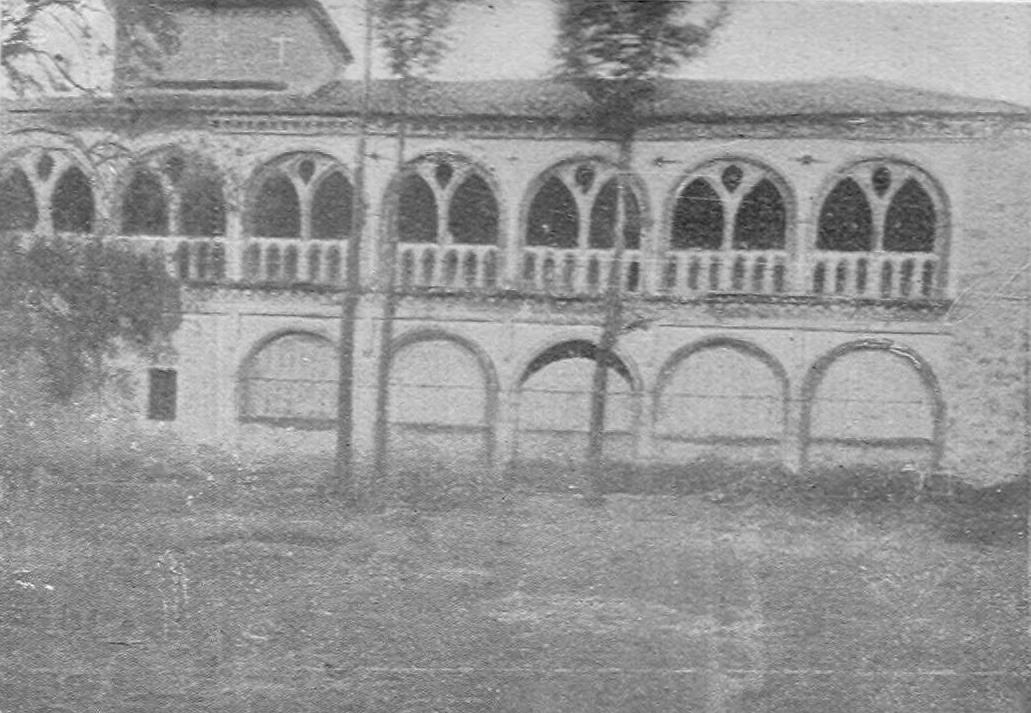
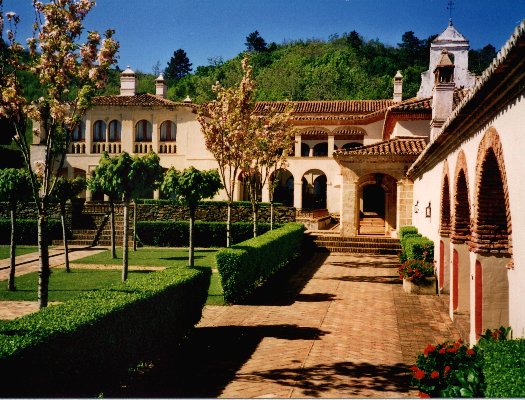
Granja de Valdefuentes is a former summer palace built by Jeronymite monks, tucked into the hills of the Villuercas range a few kilometres from Guadalupe in the province of Cáceres. It blends the history of one of medieval Spain's great monasteries with residential architecture, and its scale still surprises visitors expecting a modest rural building.
What is this place?
The Granja began as a summer retreat for the monks of the Monastery of Our Lady of Guadalupe, one of the most important religious centres in medieval Spain. The original structure dates back to the time of Father Yáñez, who died in 1412, but most of what visitors see today comes from a major renovation carried out between 1551 and 1554, commissioned by Philip II. The king wanted the complex to also serve as his own residence, so the works went far beyond the building's modest origins.
The building follows the so-called "Guadalupense" style — brick construction covered in mortar, typical of structures raised by the Jeronymite order in this region. Architectural historian Vicente Lampérez y Romea classified it as Gothic, though Renaissance elements are just as prominent.
What will you see there?
The entrance leads through a portico topped by a loggia, immediately giving the building a stately presence. Behind it lies a rectangular courtyard framed by two-storey Renaissance arcades, around which the various wings of the complex are arranged.
Inside, look out for the chapel with its wooden artesonado ceiling in Gothic-Mudéjar style — one of the most valuable decorative elements of the whole complex, combining carpentry techniques inherited from Muslim craftsmen with Christian iconography. The remaining service rooms are a reminder that the Granja was not purely residential — it also functioned as a working farm supplying the monastery with produce.
The building was specifically designed for use in autumn and winter, when the climate in the lower valley was milder than in Guadalupe itself, which sits higher in the mountains.
Why is it worth visiting?
The site also carries an interesting chapter of Spanish history: Granja de Valdefuentes was one of the places where Queen Isabella the Catholic rested during her stays in Extremadura. That adds a layer of symbolic weight beyond the architecture itself.
For travellers visiting Guadalupe, the Granja makes a natural addition to a visit to the monastery — it reveals the lesser-known, secular side of the order's activity, centred on farming and rest rather than liturgy and pilgrimage.
How do you get there?
Granja de Valdefuentes sits within the Villuercas-Ibores-Jara Geopark, a few kilometres from the centre of Guadalupe. The most convenient way to reach it is by car, along local roads that wind through the region's scenic hills — the drive itself is part of the appeal, with views over the surrounding valleys and olive terraces.
When should you visit?
Spring and autumn are the best times to visit, when temperatures in Extremadura are milder and the landscape around the building is at its most picturesque. Summers in this part of Spain can be quite hot, which is worth factoring into your plans.
Frequently asked questions
What was Granja de Valdefuentes? A summer residence and working farm belonging to the Jeronymite monks of Guadalupe monastery, remodelled in the 16th century on the orders of Philip II.
What is worth seeing inside? The Renaissance arcaded courtyard and the chapel with its Gothic-Mudéjar artesonado ceiling.
Does the site have any royal history? Yes — Queen Isabella the Catholic stayed here during her visits to Extremadura.
How close is it to the Guadalupe monastery? It lies just a few kilometres from the town, within the Villuercas-Ibores-Jara Geopark.
Nearby places

Earn badges for the places you visit
Download NextOnTrip, discover new places and check off your trails.