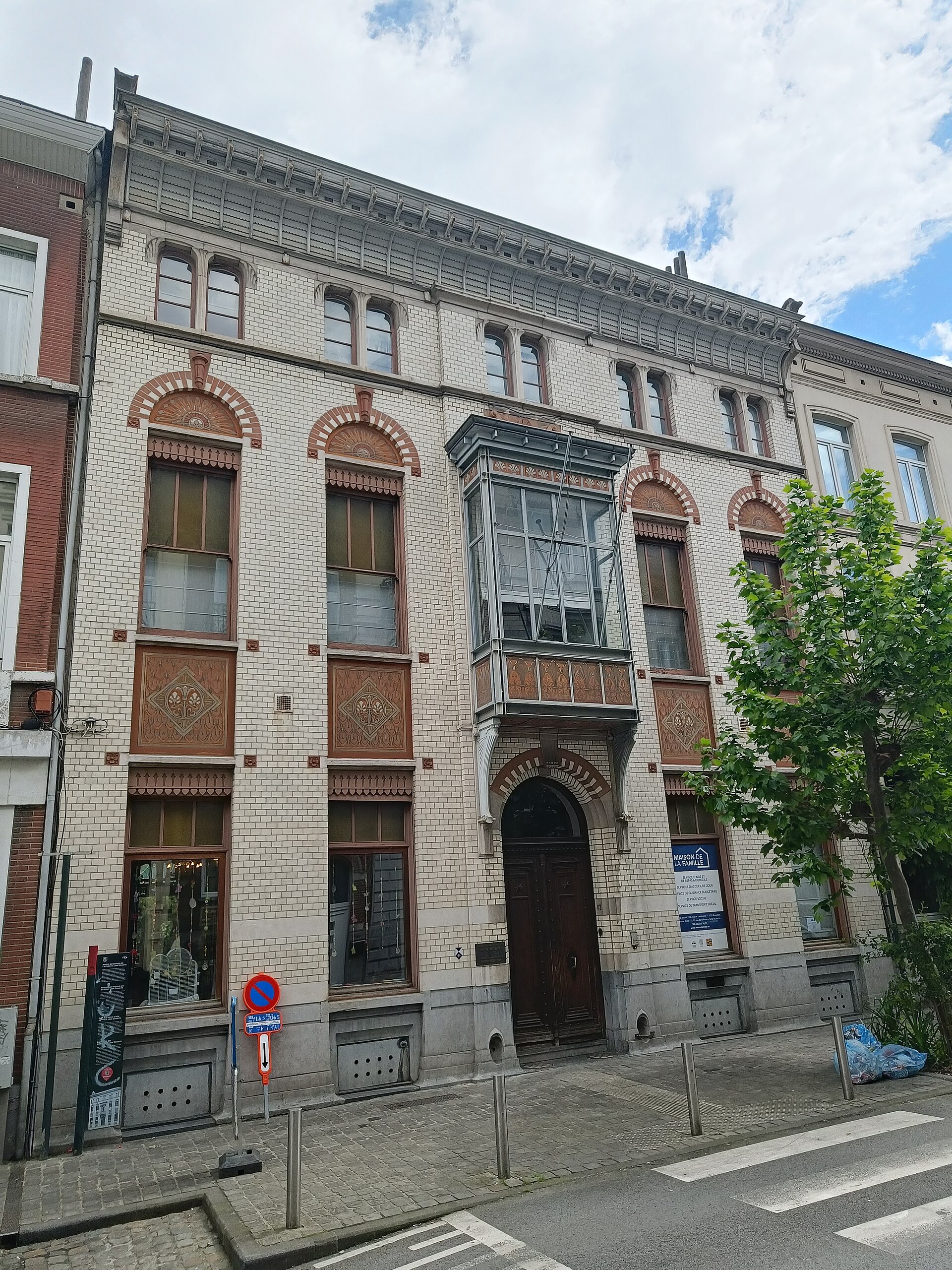
About this place
Govaerts House is an Art Nouveau townhouse at Rue de Liedekerke 112 in Saint-Josse-ten-Noode, one of the smallest and most densely populated municipalities of the Brussels-Capital Region. The building takes its name from architect Léon Govaerts, who built it as his own residence — a common practice among architects of the late 19th and early 20th centuries, who often treated their private homes as a showcase for the style they otherwise designed for clients.
What makes the facade distinctive?
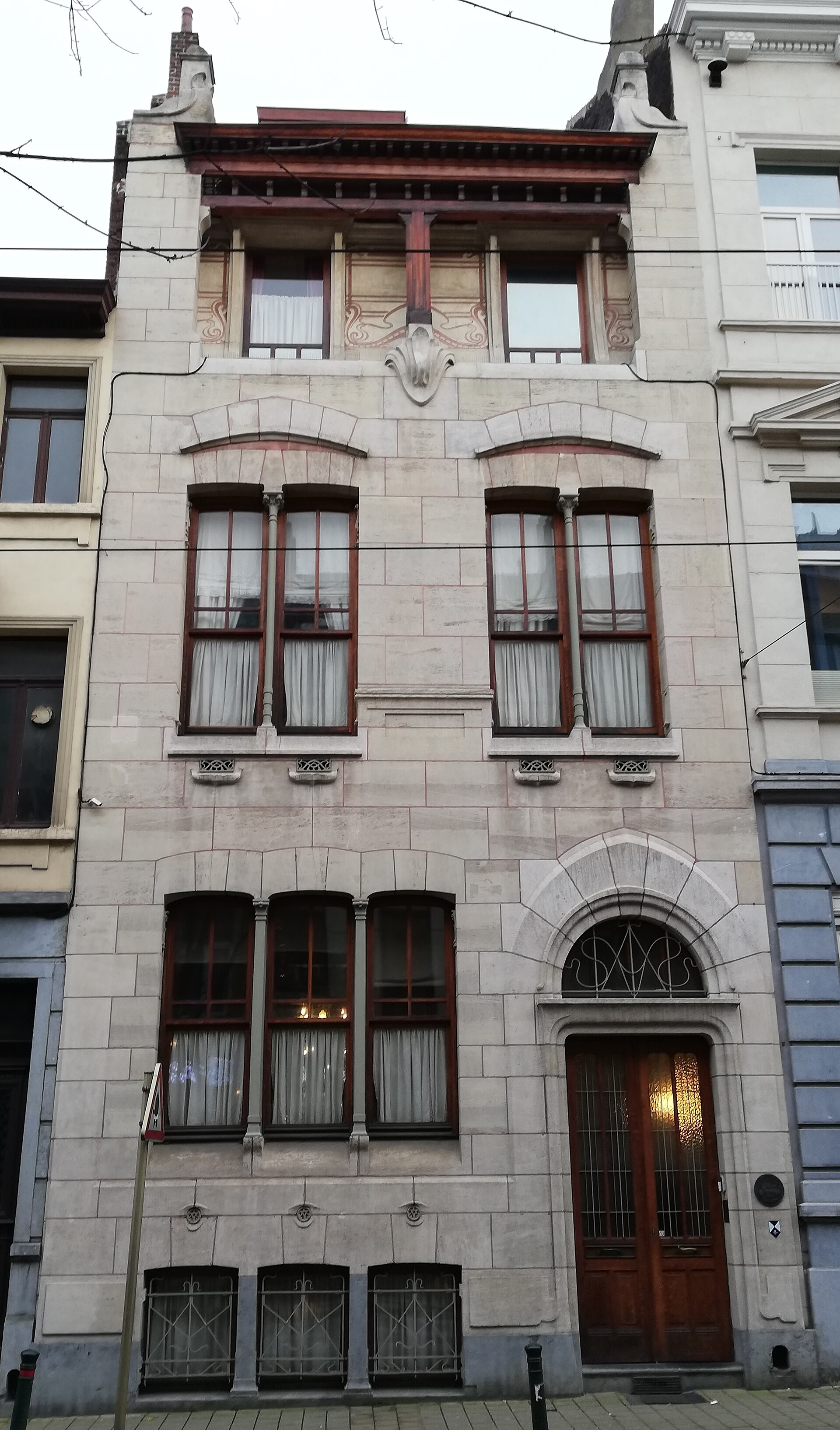
The house's facade is executed in the Art Nouveau style, a movement that reached one of its richest European expressions in Brussels through architects such as Victor Horta and Paul Hankar. The flowing, organic lines, asymmetrical window compositions, and decorative ironwork or carved stone detailing typical of the period set Art Nouveau buildings apart from the more austere eclectic architecture common on neighboring streets. Govaerts House fits this pattern as an example of residential architecture designed by its own creator for personal use, which allowed for greater formal experimentation than a typical commissioned project.
Who was Léon Govaerts?
Léon Govaerts practiced as an architect in Brussels around the turn of the 20th century and left several works in Saint-Josse-ten-Noode itself. In 1902 he designed a building at Rue Saint-Josse 13-15, and earlier, in 1868, after the municipality had acquired the property, he carried out the conversion of the town hall (Hôtel communal de Saint-Josse-ten-Noode). The work gave the town hall its Beaux-Arts form, with interior decoration entrusted to G. Charle. The renovated town hall was formally inaugurated on 14 May 1911 by mayor H. Frick. Its interiors still display works by 19th-century Belgian artists as well as busts of mayors and other figures tied to the municipality's history. In 1967 the town hall was extended with an annex at the corner of Rue de l'Alliance/Verbondsstraat, designed by architect Vandenhoutte.
This body of work shows Govaerts as an architect deeply embedded in the municipality's local building activity, responsible for both public buildings and private residences, including his own house on Rue de Liedekerke.
What is the building used for today?
The former architect's residence now serves as a recreational center for the municipality of Saint-Josse-ten-Noode. This shift from private home to a facility serving residents is a common trajectory for historic townhouses in Brussels' small, densely built municipalities, where local authorities frequently repurpose existing heritage buildings for public use rather than constructing new ones.
Frequently asked questions
Where exactly is Govaerts House located? The building stands at Rue de Liedekerke 112, in the municipality of Saint-Josse-ten-Noode, close to central Brussels.
Who designed the building? It was designed by architect Léon Govaerts as his own residence.
What architectural style is the facade? The facade is executed in the Art Nouveau style, characteristic of Brussels architecture around the turn of the 19th and 20th centuries.
Can the building be visited today? The building operates as a municipal recreational center, meaning it primarily serves the local community rather than functioning as a regular visitor attraction.
Did Léon Govaerts design other buildings nearby? Yes — he designed the building at Rue Saint-Josse 13-15 in 1902 and carried out the conversion of the Saint-Josse-ten-Noode town hall, formally inaugurated in 1911.
Nearby places

Earn badges for the places you visit
Download NextOnTrip, discover new places and check off your trails.