About this place
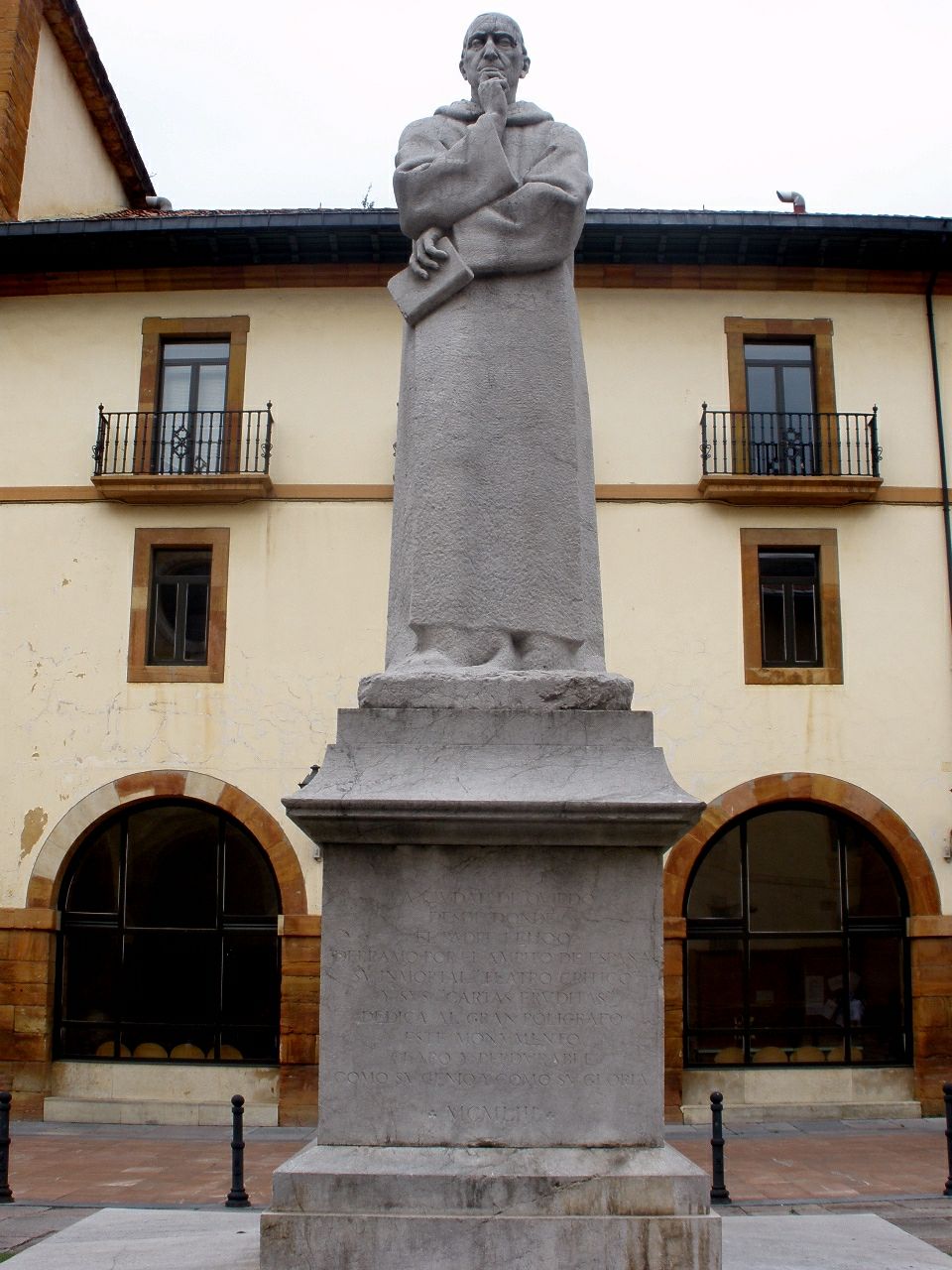
The Fray Benito Feijoo monument stands in Plaza de Feijoo in Oviedo, one of more than a hundred street sculptures that give this Asturian city its distinctive open-air gallery feel. Carved in stone by sculptor Gerardo Zaragoza in 1953, the statue portrays the Benedictine monk Benito Jerónimo Feijoo, one of the most influential Spanish writers and thinkers of the 18th century.
Who was Fray Benito Feijoo?
Benito Jerónimo Feijoo was a Benedictine monk, abbot of the Monastery of San Vicente, and professor of theology at the University of Oviedo, where he taught from 1710 to 1739. He became known for his essays challenging superstition and promoting scientific reasoning, playing a key role in bringing Enlightenment ideas to Spain. He lived at the San Vicente monastery from 1709 until his death, occupying a cell whose windows are still preserved in the building today.
Where exactly is the statue, and why does it face that way?
The sculpture is deliberately positioned to look directly at the facade and the windows of the cell where Feijoo spent most of his life. That former monastery building now houses the Archaeological Museum of Asturias, and much of its original architecture has survived intact. This quiet symbolic gesture — a monument gazing toward the very room where its subject lived — is one of the more thoughtful details tucked into Oviedo's public spaces.
Why is this monument worth a stop?
Oviedo is famous for its abundant street art, with over a hundred statues scattered across the city forming an informal open-air museum. The Feijoo monument is one of the older pieces in that collection, dating back to 1953, and its location right next to the archaeological museum makes it a natural stop while exploring the historic center. Plaza de Feijoo itself is a small, quiet square, ideal for pausing to take in the stonework up close.
How do you get to Plaza de Feijoo?
The square sits in Oviedo's historic center, within easy walking distance of the cathedral and the main old-town landmarks. It pairs naturally with a visit to the Archaeological Museum of Asturias, located directly across from the statue — the very building the monument was designed to face.
Frequently asked questions
Who created the Fray Benito Feijoo monument? The stone sculpture was made by Spanish artist Gerardo Zaragoza and dates from 1953.
Who was Benito Jerónimo Feijoo? He was a Benedictine monk, abbot of the Monastery of San Vicente, and professor of theology at the University of Oviedo from 1710 to 1739, remembered as one of Spain's most important 18th-century writers and thinkers.
Why does the statue face in that particular direction? It looks toward the facade and windows of the cell where Feijoo lived from 1709 until his death — the building now houses the Archaeological Museum of Asturias.
What else is nearby worth seeing? The Archaeological Museum of Asturias sits right across from the monument, and Oviedo's historic center nearby is dotted with dozens of other street sculptures worth including on the same walk.
Nearby places

Earn badges for the places you visit
Download NextOnTrip, discover new places and check off your trails.