- Fountains
- Recreation and entertainment
Fountain with Venus and cupid (Wallenstein Gardens)
About this place
Fountain of Venus and Cupid stands in the Wallenstein Garden (Valdštejnská zahrada) in Prague's Malá Strana, directly facing the monumental sala terrena of Albrecht von Wallenstein's palace — the same structure that overlooks the garden's famous bronze group of Hercules freeing Deianeira. A marble basin holding a bronze figure of the goddess of love with a winged boy at her side ranks among the garden's oldest sculptural elements, even though its path to this exact spot took longer than that of most of its neighbors.
Who created the Venus statue?
The bronze figure was cast in 1599 by Nuremberg sculptor and founder Benedikt Wurzelbauer. It was commissioned by Kryštof Popel of Lobkowicz, the emperor's highest chamberlain, to decorate his Renaissance-style garden at his residence on Hradčany hill. Wurzelbauer belonged to a respected circle of Nuremberg bronze-casters active at the turn of the 16th and 17th centuries, producing fountains and monuments for Central Europe's wealthiest noble houses.
How did the statue end up in the Wallenstein Garden?
In 1630, Albrecht von Wallenstein — imperial generalissimo and builder of the sprawling palace complex in Malá Strana — purchased the Venus figure from the Lobkowicz family and moved it into his newly laid-out garden. This was a period of intense construction, when Wallenstein was pulling in artworks and craftsmen from across Europe to assemble a residence that matched his political ambitions.
Why is the fountain's history so eventful?
The 17th century, dominated by the Thirty Years' War, did not spare Prague's art collections: in 1648 Swedish troops captured the city and carted off a large number of valuable works, and the fates of individual garden pieces grew complicated and scattered from that point on. The fountain's current form — the bronze Venus set into its marble basin — was only fixed in 1910, when the two elements were brought together into the arrangement visitors see today.
Where exactly does the fountain stand?
The fountain stands in the Wallenstein Garden on Valdštejnské náměstí in Malá Strana, directly in front of the sala terrena — the largest structure of its kind in Prague, decorated with frescoes depicting scenes from the Trojan War. The garden, one of the city's earliest fully Baroque layouts, is open to visitors free of charge during the summer season and ranks among the essential stops on any walk through Malá Strana.
Frequently asked questions
Who made the Venus statue? The bronze figure was cast in 1599 by Nuremberg sculptor and founder Benedikt Wurzelbauer, originally commissioned by Kryštof Popel of Lobkowicz.
When did the fountain arrive in the Wallenstein Garden? Albrecht von Wallenstein bought the figure from the Lobkowicz family in 1630 and placed it in his newly established Malá Strana garden.
Is what we see today the original 17th-century arrangement? Not exactly — the current pairing of the bronze figure with its marble basin only took shape in 1910, following the turbulent history of both pieces through the 17th and 19th centuries.
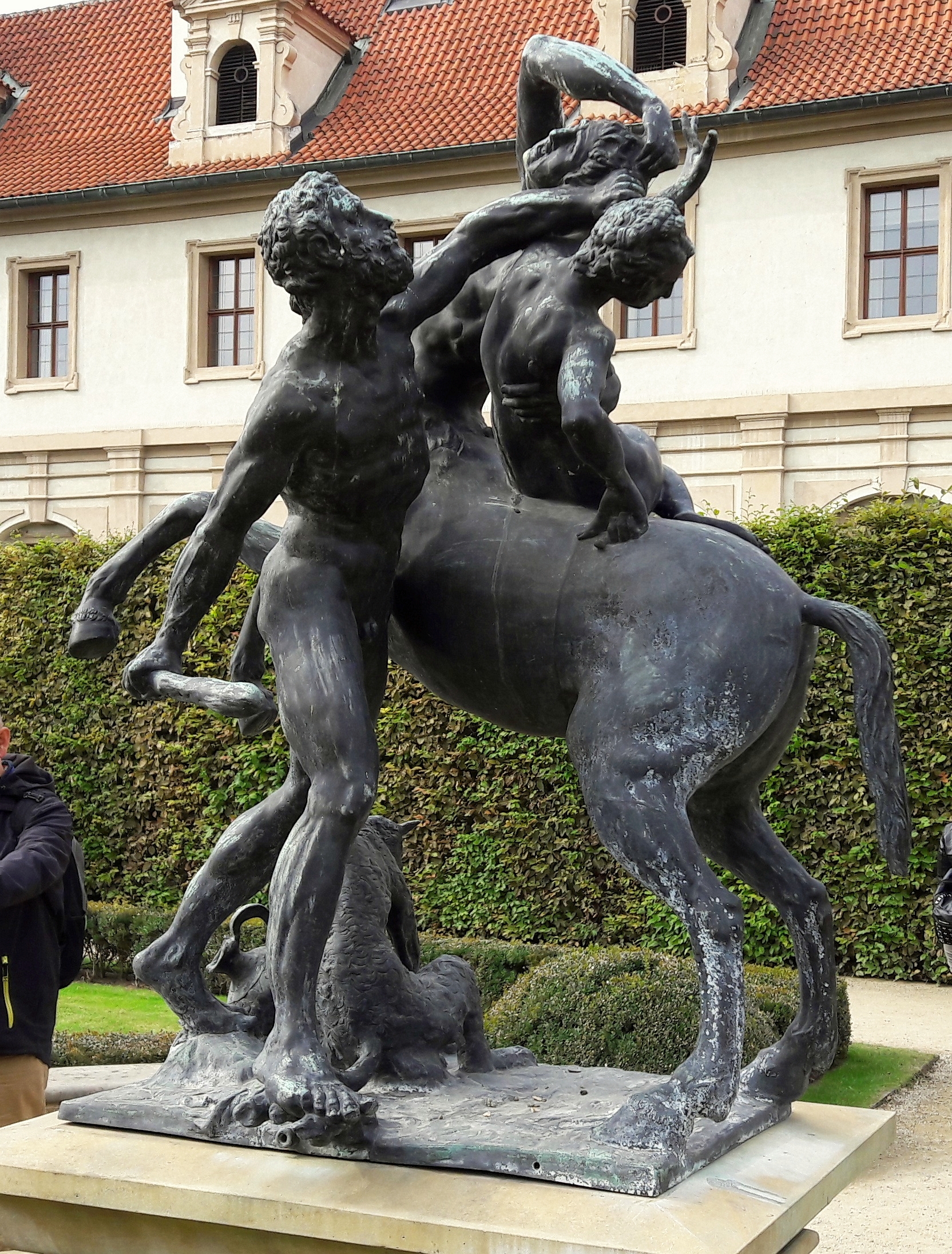
What else is worth seeing nearby? Right beside it stands the monumental fresco-covered sala terrena, along with the bronze group of Hercules freeing Deianeira — a copy of the work by Adriaen de Vries, who was active at the court of Rudolf II.
Nearby places

Earn badges for the places you visit
Download NextOnTrip, discover new places and check off your trails.