- Fountains
- Recreation and entertainment
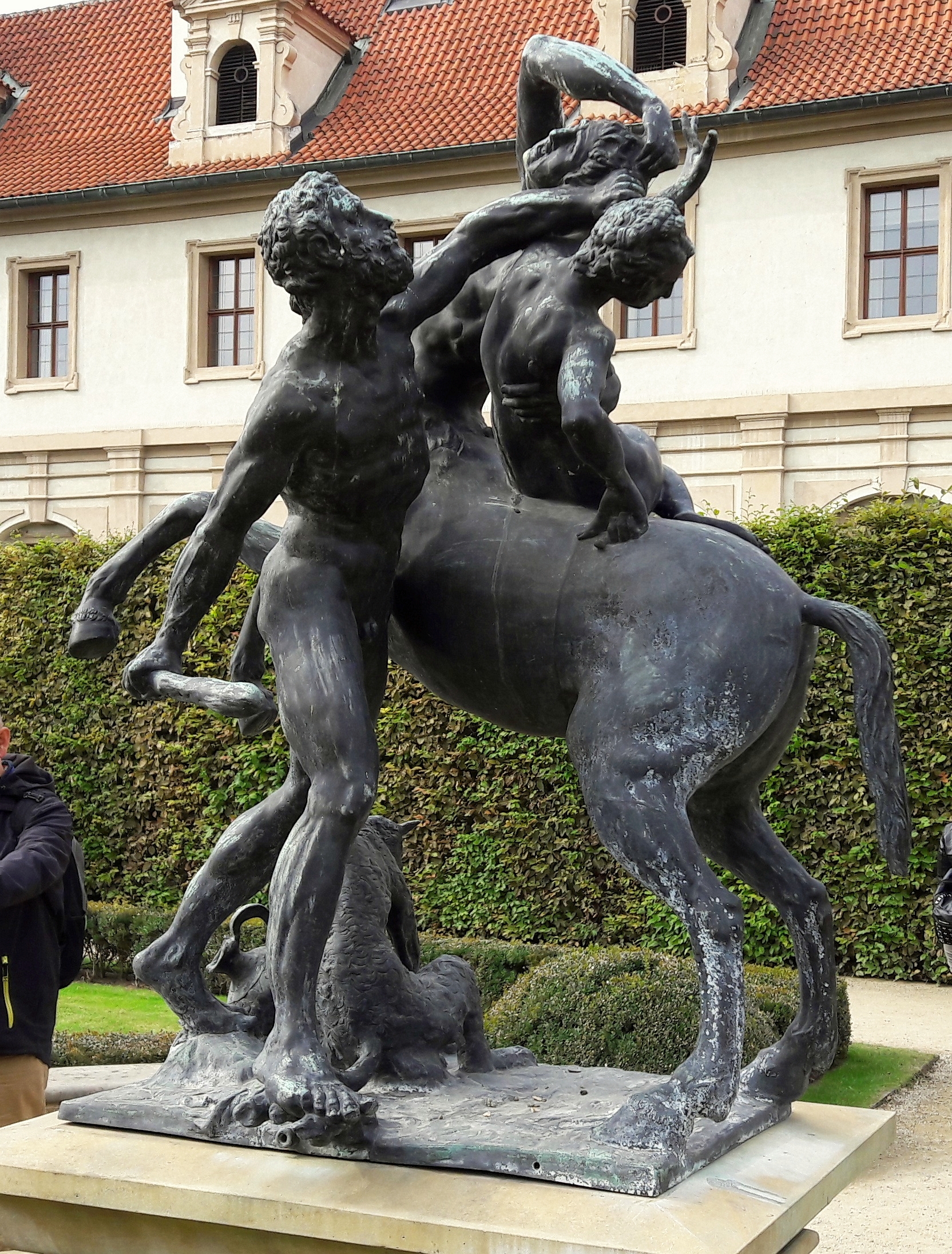
Fountain with Hercules and dragon in Wallenstein garden
About this place
Fountain with Hercules and Dragon is one of the most recognizable sculptures in Wallenstein Garden (Valdštejnská zahrada), the Baroque garden surrounding Wallenstein Palace in Prague's Malá Strana district — now the seat of the Czech Senate. It shows the mythical hero at the moment of confronting a beast, part of a sculptural ensemble that has shaped the garden's character for nearly four centuries.
Where in the garden does the fountain stand?
Wallenstein Garden was laid out between 1623 and 1629 on the initiative of Albrecht von Wallenstein, an imperial generalissimo of the Thirty Years' War, and ranks among the earliest Baroque gardens in Prague. The Hercules fountain sits in the smaller, more intimate section of the grounds, beside a large pond with an artificial island — a position that makes the statue visible from several of the paths circling the water.
What does the sculpture show?
The composition captures Hercules with his club raised, in the instant before he strikes the dragon lying at his feet. The scene draws on the mythological labors of Hercules and belongs to a wider sculptural program in the garden built around figures from Greek mythology. The original statues were the work of the Dutch Mannerist sculptor Adriaen de Vries, created in 1625–1626 as part of the garden's construction.
Why are today's statues copies?
De Vries's original bronzes never survived in Prague. In 1648, near the end of the Thirty Years' War, Swedish troops captured and looted the city, carrying off valuable artworks as spoils of war — among them the sculptures from Wallenstein Garden. The originals went to Sweden, where they still stand today at Drottningholm Palace near Stockholm, residence of the Swedish royal family. What visitors see in Prague now are faithful later copies of the lost originals.
What other sculptures are in the garden?
The Hercules fountain isn't the only trace of de Vries's work here. In front of the Sala Terrena, the garden's monumental loggia, stands another fountain by the same sculptor, depicting Venus and Cupid. As with the Hercules group, the original was carried off to Sweden, and what remains in Prague is a replica.
When is the best time to visit Wallenstein Garden?
Given its open, park-like layout, the garden is most rewarding in the warmer months, when the greenery and the pond with its artificial island are at their best. It's worth checking current visitor information before a trip, since access hours can vary with the season and with events held at Wallenstein Palace.
Frequently asked questions
Who does the fountain in Wallenstein Garden depict? It shows Hercules with his club, at the moment of confronting a dragon at his feet — a scene drawn from Greek mythology.
Who created the original statues? The Dutch sculptor Adriaen de Vries created the statues in 1625–1626 for Wallenstein Garden.
Is the fountain seen today the original? No — the original bronzes were taken by Swedish troops in 1648 and now stand at Drottningholm Palace in Sweden. Prague's garden displays faithful copies.
Where exactly in the garden is the fountain located? In the smaller section of the garden, beside a large pond with an artificial island, close to Wallenstein Palace — today the seat of the Czech Senate.
Nearby places

Earn badges for the places you visit
Download NextOnTrip, discover new places and check off your trails.