About this place
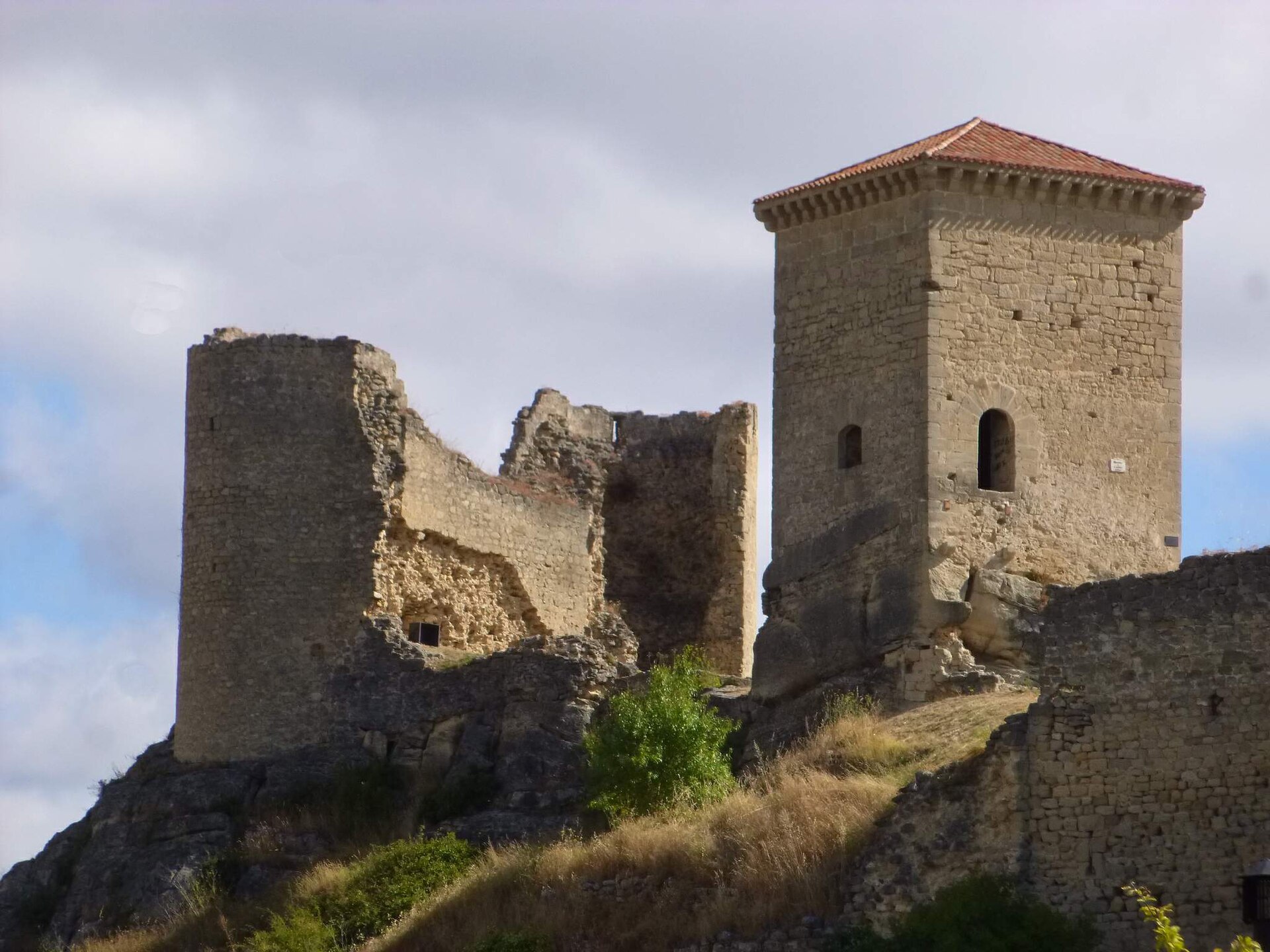
Fort Santa Engracia is the ruined eighteenth-century fortress guarding the Pancorbo gorge in Burgos, perched in the Obarenes mountains just above the village of Pancorbo.
Why was a fortress built at this exact spot?
The fort occupies a strategic ridge above a narrow pass that has carried the main route from Castile into northern Spain for centuries. Whoever held this gorge controlled the movement of troops and trade between Madrid and the Cantabrian coast — which is exactly why the Spanish crown chose this bottleneck for its defenses rather than any other location.
When was it built, and what triggered the decision?
Construction began under a royal order signed on 9 August 1794 by the Minister of War, issued after Spain went to war with revolutionary France the previous year. Officials feared a French push across the Pyrenees, and the Pancorbo gorge was identified as the critical chokepoint for defending Castile. Oversight of the works fell to Bernardo de Tortosa, Captain General of Old Castile, and construction wrapped up in 1797.
How large was the garrison, and what did the fort contain?
The completed complex could hold up to 3,575 people. Beyond its defensive walls and gun positions, it housed a hospital, clothing stores, a kitchen, a pantry, powder magazines, and cisterns to supply the garrison with water during a prolonged siege.
What role did it play in the war against Napoleon?
The fort's strategic value proved real, not just theoretical. French Marshal Moncey captured it on 10 March 1808, and Napoleonic troops held the position for five years, using it as an operations base controlling the corridor between Madrid and France. The tide turned in 1813: the neighboring Fort Santa María fell on 28 June, and Santa Engracia itself surrendered two days later, on 30 June, to General Enrique José O'Donnell.
What happened to the fort after the war ended?
The fortress survived the war against Napoleon, but not Spain's internal political conflicts. On 23 April 1823, troops of the French intervention force known as the Hundred Thousand Sons of Saint Louis demolished the works to keep liberal forces from garrisoning the position. Later in the nineteenth century, the site also served as a station in Spain's optical telegraph network — a chain of towers relaying signals across long distances before the electric telegraph took over.
What can visitors see today?
Today the fort survives as scenic ruins, open to the public free of charge and marked with information panels. Wooden walkways have been installed over the most deteriorated stretches of wall, letting visitors cross the trickier sections safely. A walk through the old fortress grounds opens onto sweeping views of the Pancorbo gorge and the surrounding Obarenes mountains. Pancorbo also holds an annual historical reenactment of the fort's capture, recalling the events of 1808.
Frequently Asked Questions
Is entry to the fort free? Yes, visiting the ruins of Fort Santa Engracia is free and open year-round.
How many people could the fortress hold? The complex was designed for a garrison of up to 3,575 people, complete with hospital and storage facilities.
Who captured the fort during the Napoleonic war? Marshal Moncey took it in March 1808, and French troops held it until 1813, when it surrendered to General O'Donnell.
Why was the fort destroyed if it survived the war against Napoleon? It was demolished in 1823 by troops of the Hundred Thousand Sons of Saint Louis, to deny liberal forces the ability to defend the position.
Nearby places

Earn badges for the places you visit
Download NextOnTrip, discover new places and check off your trails.