About this place
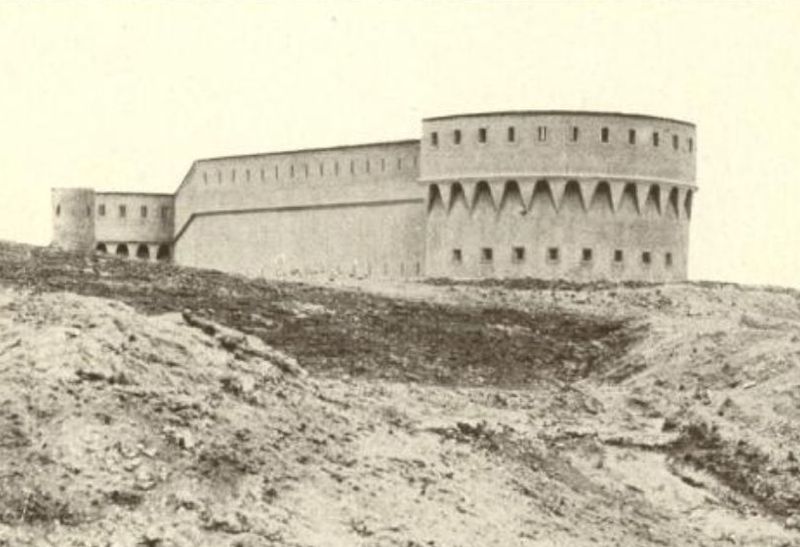
Fort of the Concepción is one of the outer defensive forts of Melilla, the Spanish exclave on the northern coast of Africa. Also known as the Fuerte de la Purísima Concepción or the Sidi-Guariach fort, it stands near the city's former border with Morocco and belonged to the network of fortifications that protected Melilla from Rif tribal attacks for decades.
Why was it built, and where does the name come from?
Construction began on 28 September 1893. The project was signed by military engineer Vicente García del Campo, though the actual work was carried out by Eligio Souza y Fernández de la Maza. The fort was meant to reinforce Melilla's land defenses in an area particularly exposed to raids by Rif fighters.
The chosen site proved explosive. The ground on which the fort was raised stood right next to a marabout — a Muslim shrine considered sacred by the local population. Starting construction so close to this site triggered serious tensions that escalated into the so-called Margallo War (1893–1894), one of the armed conflicts between Spain and the Rif tribes over control of the area surrounding Melilla.
What will you actually see there?
The fort follows a square layout typical of Spanish colonial fortifications of the period. Its rooms are arranged around an inner courtyard, at the center of which rises a square tower — the most recognizable feature of the whole complex. The thick walls and compact, block-like structure make its original military purpose obvious at a glance.
Worth knowing before you go: after losing its defensive role, the fort changed function more than once. It first served as the original barracks of the Regulares corps — military units composed mainly of Moroccan soldiers serving under Spanish command. Today the building houses a Centro de Acogida de Menores, a reception and care center for children. That means the interior is closed to visitors — the fort can only be seen from the outside.
How do you get there?
The fort sits near Melilla's former border zone, known as the Frontera de Melilla, on the city's outskirts. The easiest way to reach it is by car or taxi from central Melilla, a drive of just a few minutes. Given its current function, it's best treated as a brief stop while touring Melilla's other outer forts, rather than a destination in its own right.
Why is it worth a stop?
Fort of the Concepción is a physical record of Melilla's turbulent border history — a place where Spanish colonial ambition collided with local Rif resistance. The building is listed as a Bien de Interés Cultural (Site of Cultural Interest) under Spanish heritage law, confirming its historical value even though it now serves a social rather than a tourist function.
For anyone interested in Spain's colonial and military history, the fort is a notable point on the map of Melilla's outer fortifications, alongside sites like the Fuerte de Cabrerizas Altas. It offers a window into how the city's defense system was organized at the turn of the 20th century — and how the placement of a single building could shape the course of an armed conflict.
Frequently asked questions
Can you visit the inside of the fort? No. The building currently functions as a children's reception center (Centro de Acogida de Menores), so the interior is closed to the public. You can view it only from the outside.
Why is the fort also called Sidi-Guariach? The name refers to the fort's location — a nearby marabout, a Muslim holy site, whose proximity caused tensions when construction began in 1893.
What was the fort originally built to do? It was built to defend Melilla against Rif tribal attacks along the land border, as part of a wider network of outer forts constructed in the late 19th century.
What triggered the Margallo War? The direct cause was the start of construction on the fort near a marabout sacred to the local population, which escalated into open conflict between Spain and the Rif tribes in 1893–1894.
Nearby places

Earn badges for the places you visit
Download NextOnTrip, discover new places and check off your trails.