About this place
The Evangelical church in Zábřeh na Moravě is a neo-Gothic building from the early 20th century, standing on the southern edge of town on the bank of the Moravská Sázava river. Built for a small Protestant congregation, the church now belongs to the Czechoslovak Hussite Church, and its tall clock tower still marks the skyline of this part of Zábřeh.
Who built the church, and when?
The project was initiated by brothers Otto and Hermann Brass, German entrepreneurs who owned a local textile factory and dye works. Their backing allowed the small Evangelical congregation in Zábřeh to finally get a church of its own. The foundation stone was laid in 1896, but actual construction did not begin until several years later, taking place between 1902 and 1903.
What does the church look like?
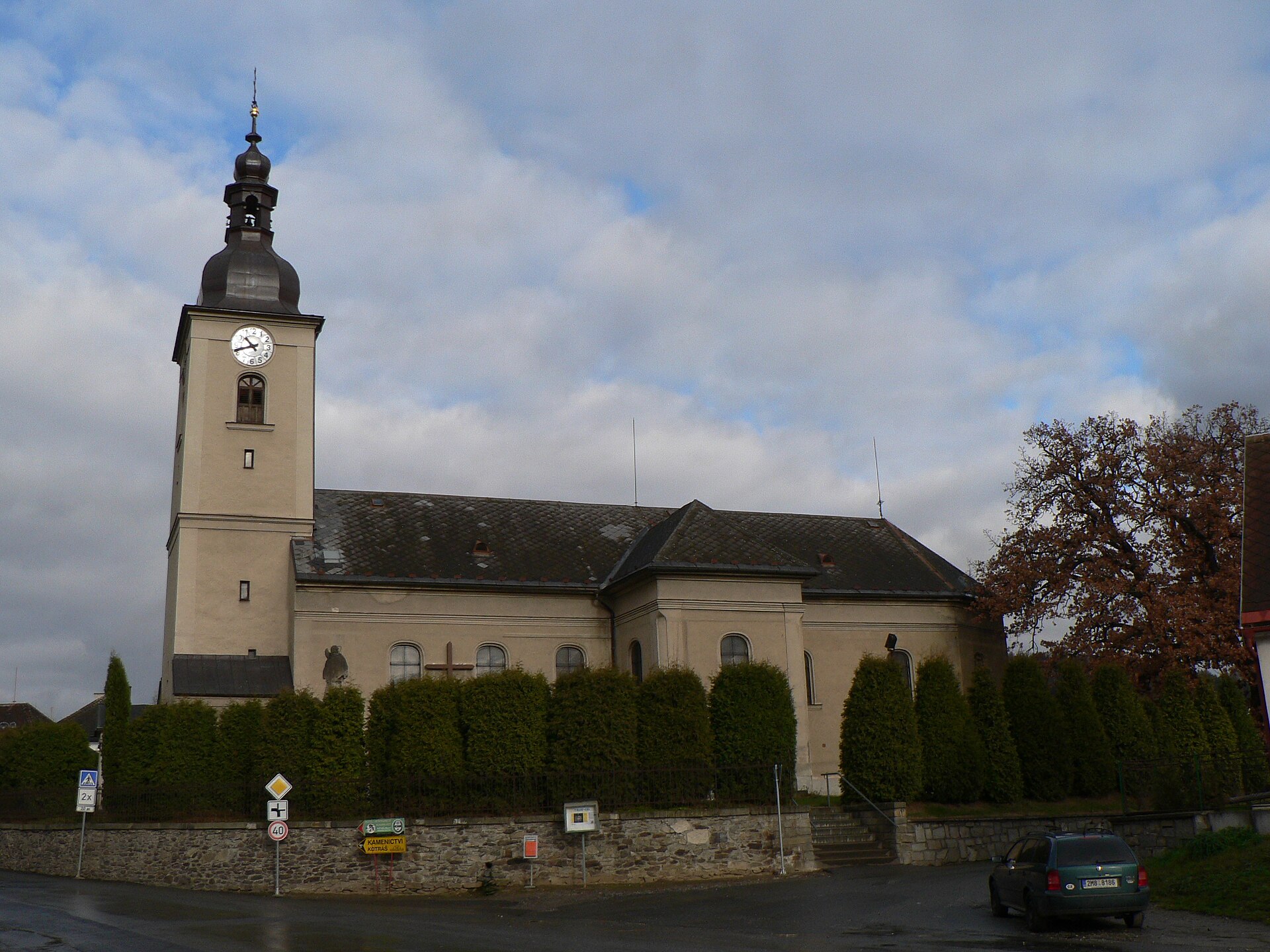
The building is neo-Gothic in style, with a richly decorated façade dominated by a 45-metre tower housing a bell chamber and clocks, visible from a large part of town. The church itself measures 27.7 metres in length and 15.6 metres in width. Besides the sacred space, the building also included office rooms and an apartment for the priest and his family — a common arrangement for Protestant churches of the period, combining liturgical use with parish facilities under one roof.
Where exactly does the church stand?
The church sits on the southern edge of Zábřeh, on the bank of the Moravská Sázava river, next to a former German industrial school. That school building later served as army barracks and today functions as residential housing. The riverside setting, surrounded by this older industrial-era architecture, reflects the context in which Zábřeh's German and Evangelical community developed around the turn of the 20th century.
Why does the church belong to a different denomination today?
The building's history mirrors the turbulent history of the region. It served the local German Evangelical community until the end of World War II. After 1945, following the expulsion of the German population from Czechoslovakia, the original congregation ceased to exist. Since 1946 the building has been used by the Czechoslovak Hussite Church, which is why it is sometimes referred to as the "Church of the Czechoslovak Hussite Church" even though it is the same structure originally built for Evangelicals.
What should visitors look out for?
The church's main draw is its neo-Gothic silhouette and distinctive tall tower, one of the taller architectural landmarks in this part of Zábřeh. It's worth taking a closer look at the decorated façade and the building's proportions, which combine the plainness typical of Protestant sacred architecture with decorative details common at the turn of the 19th and 20th centuries. A walk along the Moravská Sázava near the church also passes the former industrial school building, now residential housing, a reminder of the town's industrial past.
Frequently asked questions
When was the Evangelical church in Zábřeh built? The foundation stone was laid in 1896, and construction itself took place between 1902 and 1903.
Who funded the construction of the church? The project was initiated and financed by brothers Otto and Hermann Brass, owners of a local textile factory and dye works.
Which church uses the building today? Since 1946, following the expulsion of the German Evangelical population, the building has belonged to the Czechoslovak Hussite Church.
How tall is the church tower? The tower, which houses a bell chamber and clocks, is 45 metres tall.
Where exactly is the church located? On the southern edge of Zábřeh na Moravě, on the bank of the Moravská Sázava river, near a former German industrial school.
Nearby places

Earn badges for the places you visit
Download NextOnTrip, discover new places and check off your trails.