About this place
Església dels Caputxins is a small, unassuming church in Palma de Mallorca tied to the history of the Capuchin friars on the Balearic Islands. Sitting away from the main tourist routes, it draws few crowds, yet its backstory reveals as much about the old city as many better-known landmarks.
How to get there?
The church stands in Palma, within the area once enclosed by the city's old defensive walls, close to where the Jesus Gate (Porta de Jesús) used to stand. It's an easy stop by city bus or on foot — walking from the cathedral area takes roughly fifteen to twenty minutes. Visitors exploring Palma on foot can fold it into a route that traces the vanished city walls alongside some of the town's lesser-known corners.
What will you see?
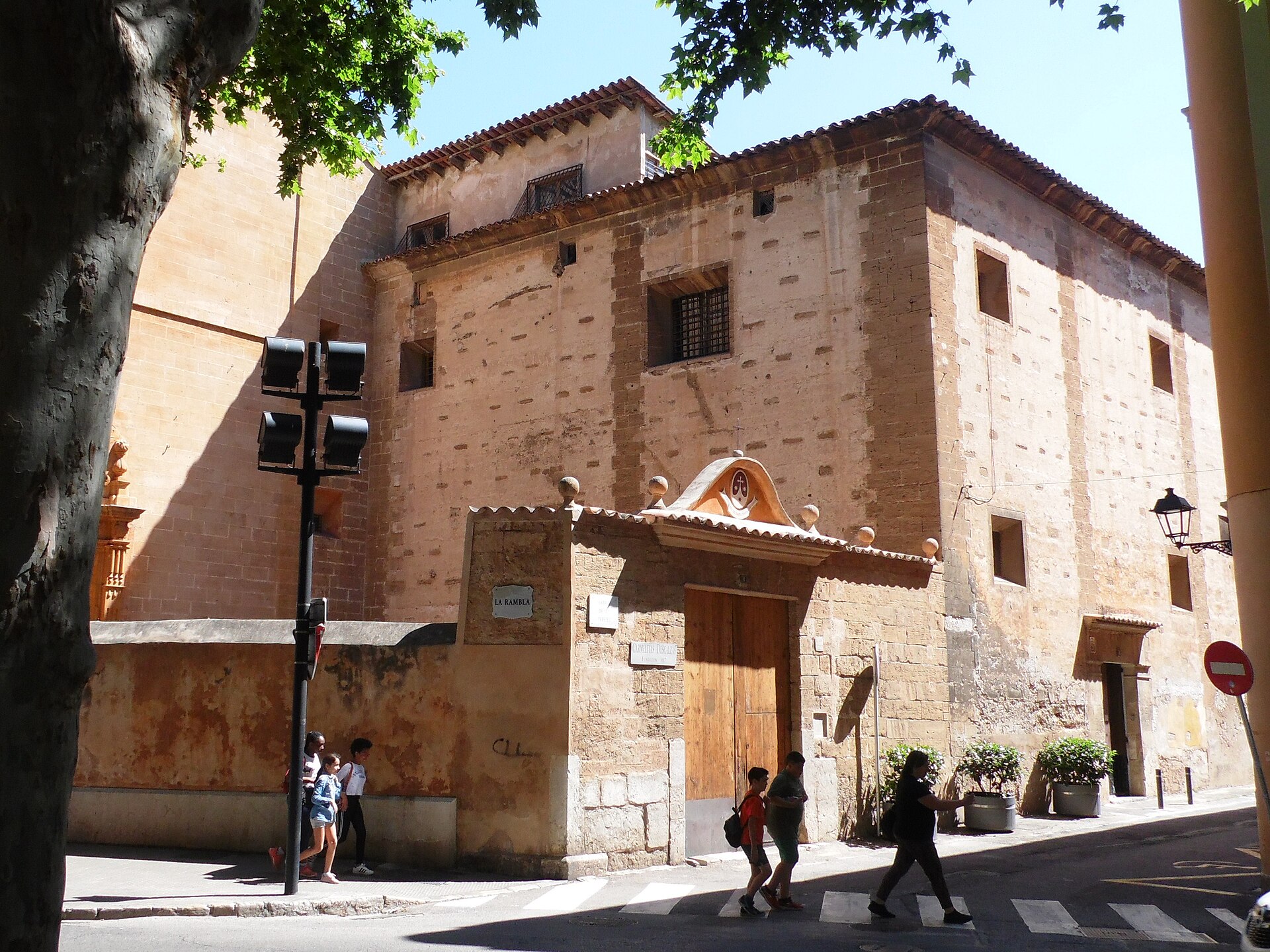
The building standing today is neoclassical — plainer and more restrained than the baroque churches clustered in central Palma. It isn't, however, the Capuchins' original home in the city. The friars first tried to settle in Palma in 1623, but opposition from other Franciscan branches delayed their arrival: the first religious, coming from the house in Zaragoza, only reached the city in 1626, and formal permission to operate wasn't granted until 1677.
The Capuchins' first convent went up between 1680 and 1683, outside the city walls near the Jesus Gate. It didn't last — in 1771 it was torn down under the pretext of improving the city's fortifications. Construction of a new convent began in 1778, and the church itself was blessed in 1791; this is the building that still stands on the site today.
The building's 19th-century fate mirrors the turbulent history of religious suppression in Spain: the 1835 disamortisation ended the convent's religious use, and the community was formally dissolved the following year, in 1836. The church itself was slated for demolition in 1861 but was spared. The former convent building, meanwhile, spent more than a century serving the provincial authorities as a prison — it wasn't relocated to the road to Sóller until 1968.
When should you visit?
The church can be visited year-round and doesn't attract the seasonal crowds that gather at La Seu Cathedral or the Almudaina Palace. Morning hours tend to be quietest, with good light on the neoclassical façade and calm surrounding streets. It's worth pairing a visit with a walk along the former line of Palma's city walls, where traces of the old gates — including the site of the now-vanished Porta de Jesús — can still be found.
Frequently asked questions
Is Església dels Caputxins the same building as the Capuchins' first convent in Palma? No. The first convent was built between 1680 and 1683 outside the city walls and was demolished in 1771. The current church dates from the late 18th century and was blessed in 1791.
Do friars still live in the convent building? The religious community was dissolved in 1836 following the suppression of religious houses. The convent building later served as a provincial prison until 1968.
What architectural style is the church built in? The church is neoclassical, which sets it apart from the baroque churches found in Palma's historic center.
Is admission to the church free? The church remains an active place of worship, and entry during opening hours is customarily free, as with most parish churches in Mallorca.
Nearby places

Earn badges for the places you visit
Download NextOnTrip, discover new places and check off your trails.