About this place
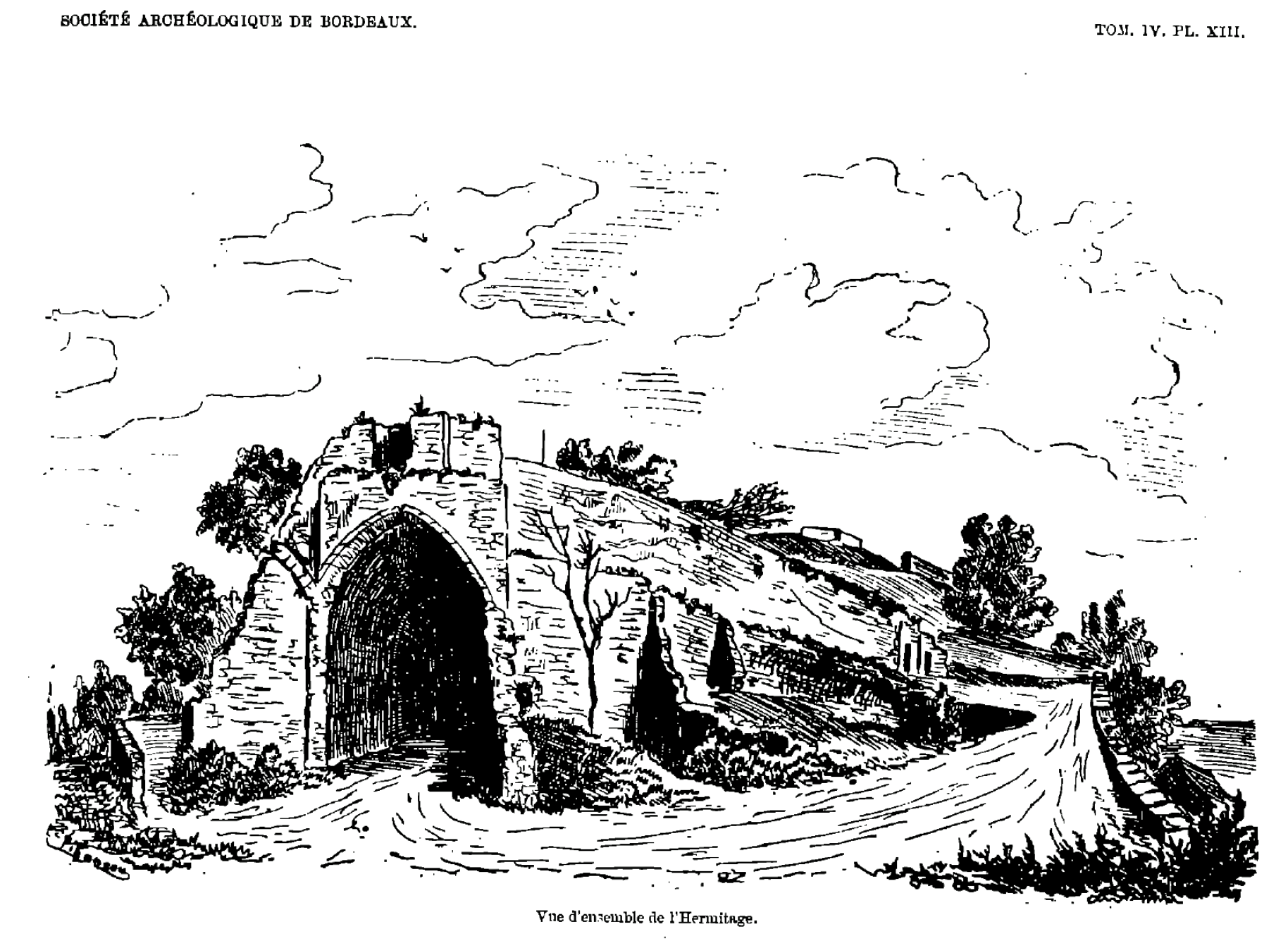
Ermitage Sainte-Catherine in Lormont is the ruined hermitage carved into the rock above the Garonne river, now part of a public park of the same name in Lormont, just across the river from Bordeaux.
What is this site?
The hermitage began as a rock-cut oratory built into the cliff known as "La Roque de Lormont," overlooking the Garonne. Written records only start in the 14th century, but the site was already inhabited in the early Middle Ages. Bordeaux's municipal council, the Jurade, recorded a grant of financial support to the local hermit as early as 1407.
How did the hermitage change over the centuries?
In 1446 the Carmelites of Bordeaux acquired the patronage rights and the land at "La Roque de Lormont" through a property exchange. During the 15th century the site was rebuilt, including a vaulted chapel roof and additional structures, some of which still cling to the rock face today. The sanctuary burned down in 1570 during the Wars of Religion. Toward the end of the 16th century a secular clergyman took over the hermitage without authorization, but the Carmelites regained control in 1614 and installed Pierre Compte as hermit. Between 1665 and 1671 the buildings were restored under Maur de l'Enfant-Jésus, who sought solitude "in the desert" there; Father André de Saint-Pierre became superior, assisted by Father Maur and Brother Roch de l'Assomption.
What happened after that?
From the late 17th century onward, the hermitage was gradually abandoned, and in 1791 it was sold off as national property during the Revolution. The Orléans Railway Company bought the site in 1838, intending to drive a tunnel through the rock, which accelerated its decay. Around 1850, retaining walls built for the Bordeaux–Paris railway line further reshaped the surroundings. The ruins were not restored until around 1980, when the local association Amis du Vieux Lormont uncovered bones and coins on site and rebuilt the old spring-fed fountain nearby.
What will you see there?
The former hermitage grounds are now part of the Parc de l'Ermitage Sainte-Catherine, a former quarry turned into a hilly park with a pond and several viewpoints over the Garonne and Bordeaux. The rock-cut remains of the oratory — wall fragments carved directly into the cliff — are still visible among the greenery, and a walk through the park combines this historical trace with genuinely scenic terrain.
How do you get there?
Lormont sits on the right bank of the Garonne, within the Bordeaux metropolitan area, directly across the river from the city center. The park and the hermitage ruins are reachable on foot from central Lormont and are a popular local walking destination, easily accessible by public transport from Bordeaux.
When should you visit?
Given the park's hills, pond, and viewpoints, a visit works best during daylight and clear weather, when the views over the Garonne and Bordeaux are at their best. The site is walkable in any season.
Frequently Asked Questions
What is the Ermitage Sainte-Catherine? It is the ruined rock-cut hermitage above the Garonne in Lormont, documented since the 14th century and now part of a municipal park.
Who managed the hermitage historically? From the 15th century, the Carmelites of Bordeaux held the patronage and appointed successive hermits, including Pierre Compte in 1614.
Can you still see the ruins today? Yes — fragments of the oratory carved into the rock remain visible within the Parc de l'Ermitage Sainte-Catherine, which is free and accessible on foot.
Is there anything else to see nearby? The park itself offers viewpoints over the Garonne and Bordeaux, plus a pond formed in the former quarry, making it a worthwhile stop beyond the historical ruins.
Nearby places

Earn badges for the places you visit
Download NextOnTrip, discover new places and check off your trails.