About this place
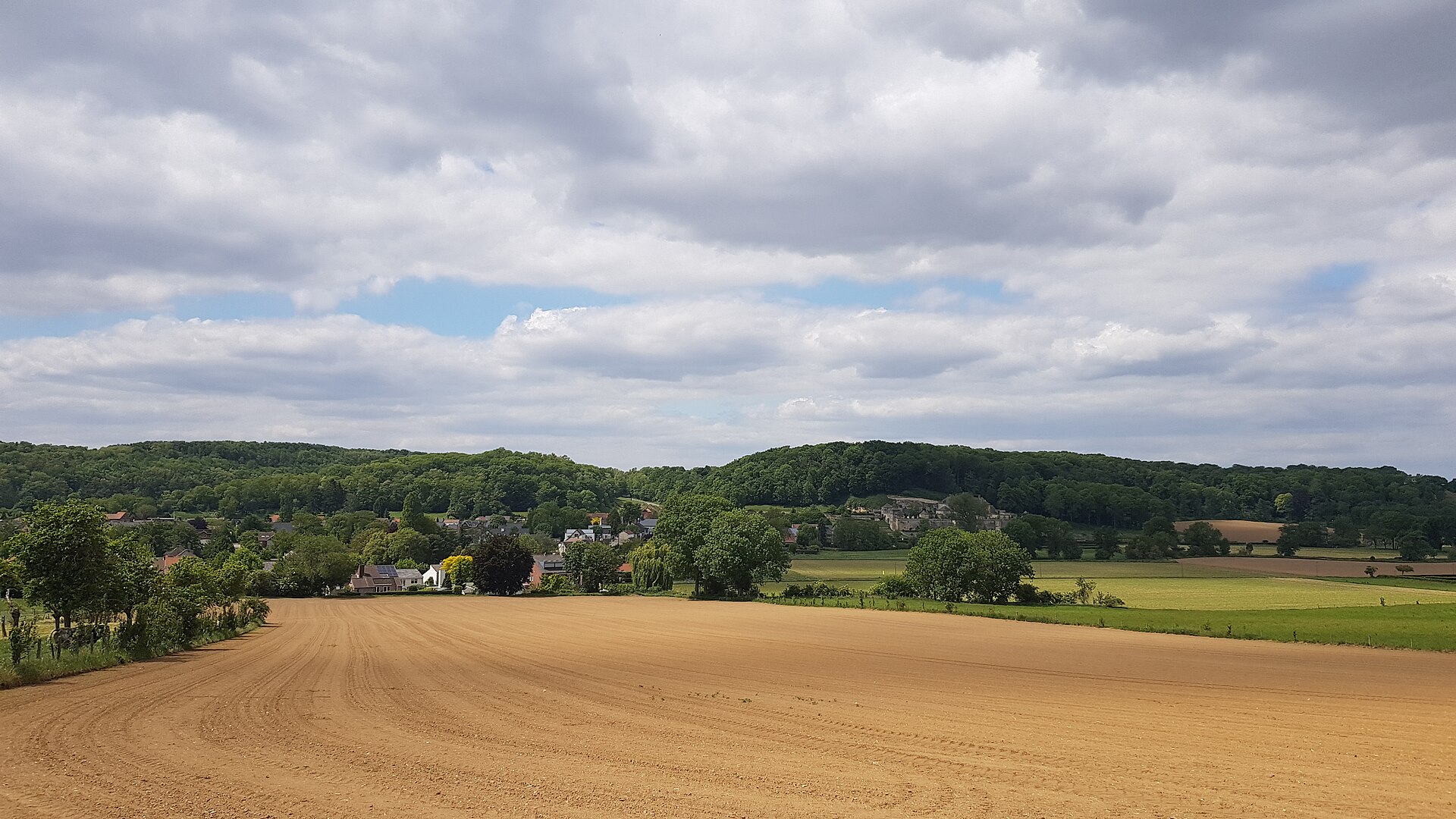
Côte de Hallembaye is a hill in the province of Liège, Belgium, best known as a demanding cycling climb crossing the plateau between the Meuse valley and the Jeker (Geer) valley. It lies near Loën, a small locality within the municipality of Visé, close to the Dutch border.
Where does the name come from?
The hill takes its name from Hallembaye, a village a few kilometers to the south, in the municipality of Oupeye. Although the climb itself sits within Visé, the historical link to Hallembaye survives in its name — a pattern common across the Pays de Herve region, where hill names often trace back to nearby settlements rather than the exact spot on the map.
Why does it matter to cyclists?
Côte de Hallembaye is one of the more challenging short climbs in this part of Belgium. The ascent runs about 767 meters, with an average gradient of roughly 7.7% and pitches reaching up to 11.2% at the steepest points. That profile makes it a compact but intense effort — the kind of short, sharp climb that defines many Belgian "côtes" and separates riders quickly despite the modest distance.
The road follows route N671 and runs along the western edge of the former CBR cement works at Lixhe. This industrial backdrop, typical of the Meuse valley borderlands, gives the climb a raw, working-landscape character quite different from the greener climbs found deeper in the Ardennes.
What role has it played in major cycling races?
Côte de Hallembaye holds a place in professional cycling history as part of the route of the Amstel Gold Race, one of the classic spring one-day races. The hill featured in the race route between 1993 and 2000, during the years when the finish line was still located across the border in Maastricht. Climbs like Hallembaye, unassuming as they may look on a map, could shape the outcome of the race by splitting the peloton on short, steep sections.
Beyond the Amstel Gold Race, the hill has also appeared in the routes of other multi-stage races, including the Eneco Tour and the Tour of Wallonia, confirming its standing as a recognizable landmark in the region's cycling geography.
What should visitors know before heading there?
For cycling enthusiasts, Côte de Hallembaye is a popular destination for testing legs against a climb once tackled by professional racers. The surrounding area also marks a transition from the Meuse valley toward the more undulating terrain of the Eben-Emael plateau, making the route interesting for its scenery as well as its sporting pedigree.
Frequently asked questions
How long is the Côte de Hallembaye climb? The ascent is approximately 767 meters long.
How steep is the hill? The average gradient is around 7.7%, with maximum pitches of up to 11.2%.
Was Côte de Hallembaye part of well-known cycling races? Yes, it featured in the Amstel Gold Race route between 1993 and 2000, and has also appeared in the Eneco Tour and the Tour of Wallonia.
Where exactly is the hill located? Near the locality of Loën, part of the municipality of Visé, in the province of Liège, next to the former CBR Lixhe cement works site.
Nearby places

Earn badges for the places you visit
Download NextOnTrip, discover new places and check off your trails.