About this place
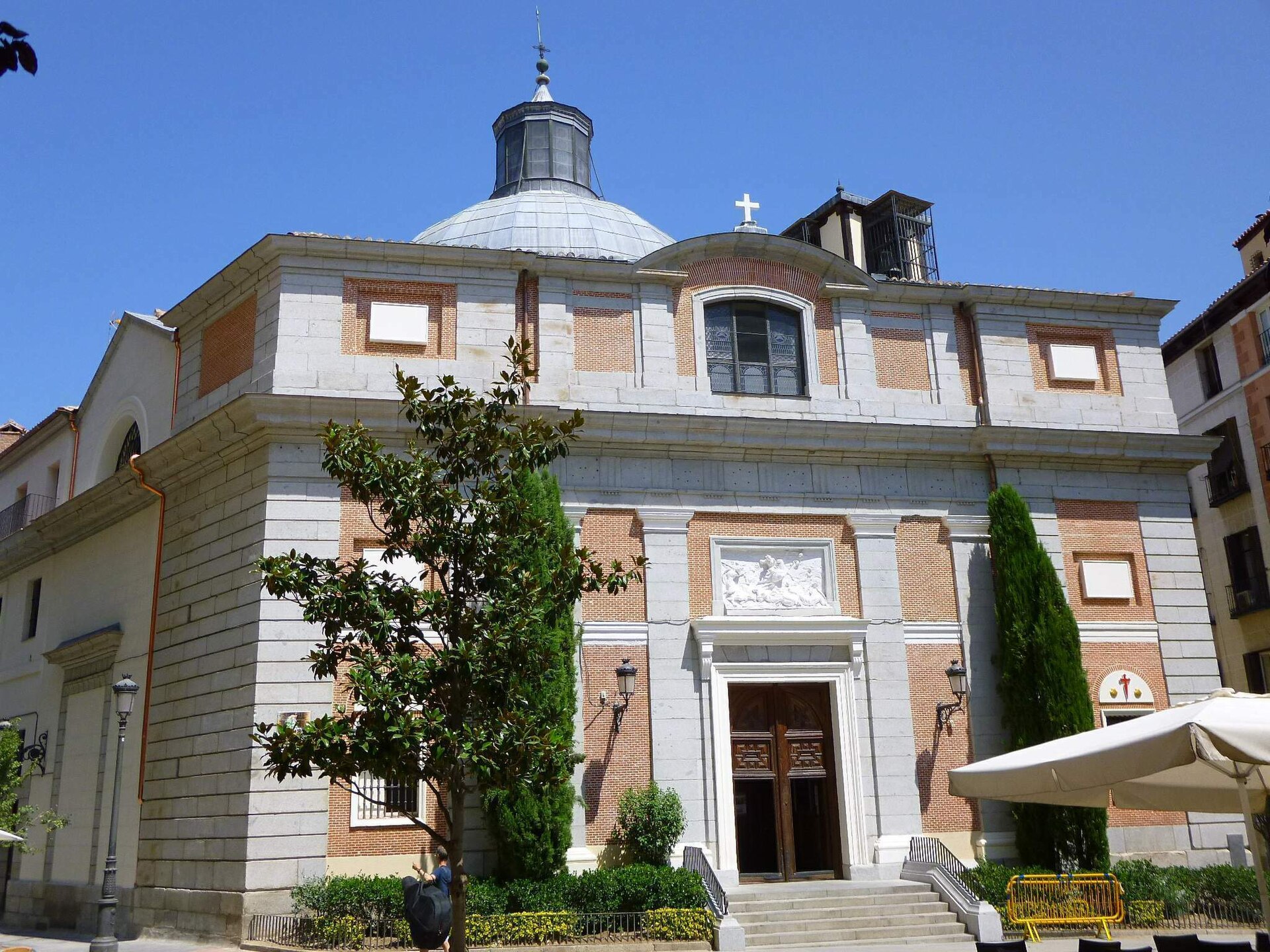
Convento e Iglesia de las Reparadoras is a convent and church complex on Calle de Torija in central Madrid, just a short walk from Plaza de España. The building carries a layered history stretching back to the 18th century, blending traces of former ecclesiastical authority with its current role as a home for a religious congregation.
How to get there?
The complex sits right in the heart of Madrid, on Calle de Torija, close to both Plaza de España and Gran Vía. Metro stations Plaza de España and Santo Domingo are within a few minutes' walk, and numerous bus lines serve the surrounding streets. For anyone exploring the Royal Palace area or strolling down Gran Vía, it fits naturally into a walking route through the city center.
What will you see?
The story begins in the mid-18th century, when authorities decided to build a new headquarters for the Supreme and General Council of the Inquisition, replacing a scattering of 16th- and 17th-century houses that no longer met the institution's needs. The first design, drawn up in 1792, came from Ventura Rodríguez, one of the leading figures of Madrid neoclassicism. Budget constraints and time pressure meant the project was eventually handed to his student, Mateo Guill, who scaled it down while preserving parts of the earlier structures.
That compromise left a visible imbalance in the building's facades: the front on Calle de Torija retained a genuinely monumental character, while the side elevations show signs of a more unified design that was never fully realized. Above the main entrance, a Latin inscription still reads "Exurge Domine et judica causam tuam" ("Rise up, Lord, and judge your cause") — a direct reference to the building's original judicial role under the Inquisition.
After the Inquisition was abolished in the early 19th century, the building stood empty for a time before being repurposed for government offices, including a stint housing the Ministry of Fomento (Development). The turning point came in 1894, when the property was acquired by the Madres Reparadoras congregation. The nuns carried out a substantial renovation of the complex and, on the adjoining Calle de Fomento, built a new and larger church with a Latin-cross floor plan in Neo-Romanesque style. Though its style sits somewhat apart from the rest of the ensemble, it has become one of the complex's most recognizable features.
When to visit?
Since the site functions as an active convent and church, mornings or early afternoons on weekdays tend to be the calmest time to visit, when foot traffic around Plaza de España is lighter than on weekends. Spring and autumn bring the most comfortable weather for exploring this part of central Madrid on foot, and the relatively quiet Calle de Torija lets visitors take in the facade's architecture without the crowds typical of nearby Gran Vía.
Frequently asked questions
What was this building originally used for? It was built in the mid-18th century as the headquarters of the Supreme and General Council of the Inquisition, before passing to the Madres Reparadoras congregation in 1894.
Who designed the building? The original 1792 design came from Ventura Rodríguez, but budget and time constraints led to a scaled-down final version by his student, Mateo Guill.
What does the inscription over the entrance mean? The Latin phrase "Exurge Domine et judica causam tuam" refers to the building's original judicial function tied to the Inquisition.
Is there a church attached to the convent? Yes — the Madres Reparadoras built a new Neo-Romanesque church with a Latin-cross floor plan on Calle de Fomento, a distinct element that contrasts stylistically with the rest of the complex.
Nearby places

Earn badges for the places you visit
Download NextOnTrip, discover new places and check off your trails.