About this place
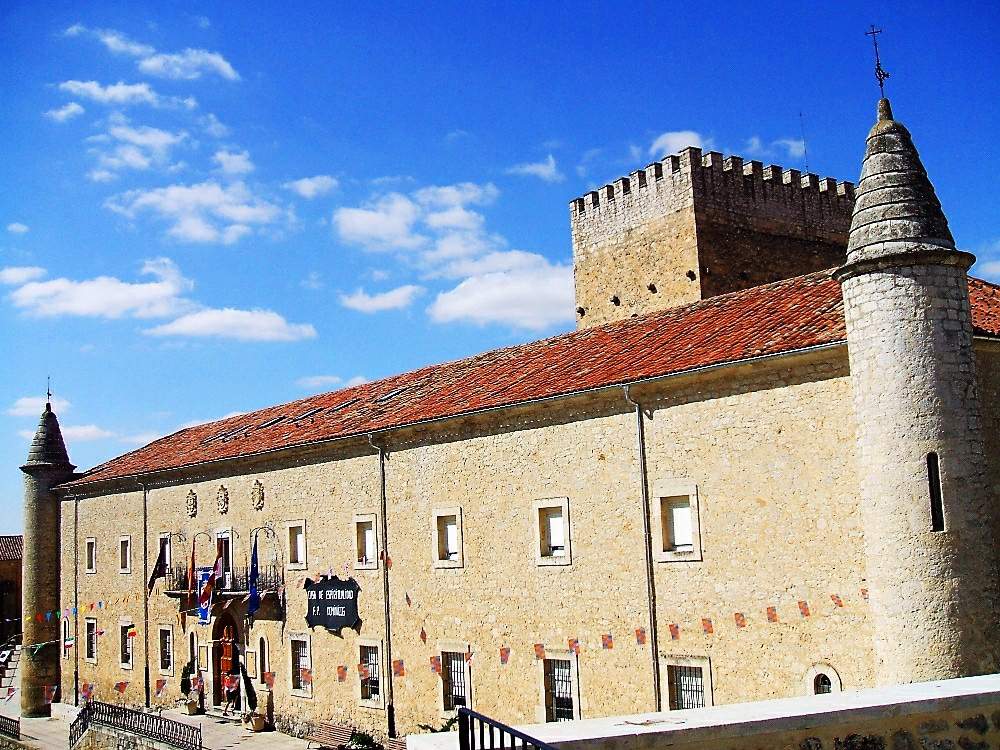
Convento de los Dominicos is a monastic complex in Caleruega, a small village in the province of Burgos, in the heart of Castile and León. The site carries deep religious weight: in 1170, Dominic de Guzmán was born here to Félix de Guzmán and Juana de Aza, and he went on to found the Dominican Order in 1216, later becoming the patron saint of Burgos province. Caleruega itself is far older as a settlement, tracing back to the 10th century (between 912 and 940), when the area sat along the defensive line of the Duero river during the Reconquista.
What will you see there?
The centerpiece is the friars' convent building, raised in the 20th century but designed in a style that echoes Romanesque architecture — thick walls, plain stone, and a sober, contemplative form. Inside the convent courtyard stands a much older structure: the Guzmán Tower, a roughly 17-metre-high fortified tower with walls two metres thick, a surviving piece of the medieval defensive system built by the Guzmán family. Tradition holds that the future saint was born within this very tower.
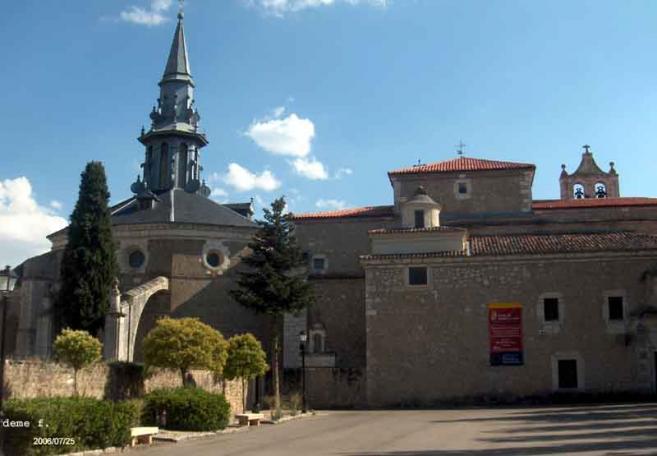
Next to the friars' convent stands a separate convent of Dominican nuns, founded under the patronage of King Alfonso X the Wise, who granted the nuns lordship over Caleruega so they could guard the birthplace of Dominic. It was the first convent of Dominican nuns in Spain and one of the most important in the entire Order, once holding the relics of the saint and his mother — a legacy that has drawn pilgrims here for centuries.
The modern chapter of the complex begins in 1952, when the Master of the Order and Father Venancio Diego Carro pushed to restore the site and give it a fitting setting. The friars' convent building went up in 1957, and over time it grew into the Casa de Espiritualidad Santo Domingo, a spirituality house that underwent a thorough renovation in 1991. Today the Dominican friars run it as a retreat house, welcoming pilgrim groups, school visits, and travellers looking for quiet.
How do you get there?
Caleruega sits in the province of Burgos, under an hour's drive from the city of Burgos along routes connecting the region toward Soria. Travelling by car is by far the easiest option, since the village is small and public transport is limited. The nearest larger transport hub is Aranda de Duero, just a short drive away, with bus and rail links to the rest of Spain.
When should you visit?
Spring and early autumn bring the mildest weather in Castile and the most scenic countryside, including the region's well-known lavender fields nearby. Summers can turn hot and dry, winters cold, but the convent itself, as a place of prayer and retreat, welcomes visitors year-round.
Frequently asked questions
Can you visit Convento de los Dominicos on your own? Yes, the convent grounds and the Guzmán Tower are open to visitors and pilgrims, though part of the building operates as a working retreat house, so it's worth checking opening hours before arriving.
Why does Caleruega matter to the Dominican Order? It's the birthplace of Saint Dominic de Guzmán, the Order's founder, which explains why the village holds both a friars' convent and a separate convent of Dominican nuns.
What's the difference between the friars' convent and the nuns' convent in Caleruega? The friars' convent is a 20th-century retreat house with the Guzmán Tower in its courtyard, while the nuns' convent, founded under Alfonso X, is the historic site that once held the relics of Saint Dominic and his mother.
How long does a visit take? Walking through the courtyard, the tower, and the immediate surroundings usually takes 45 minutes to an hour and a half, longer if you combine it with a visit to the nuns' convent as well.
Nearby places

Earn badges for the places you visit
Download NextOnTrip, discover new places and check off your trails.