About this place
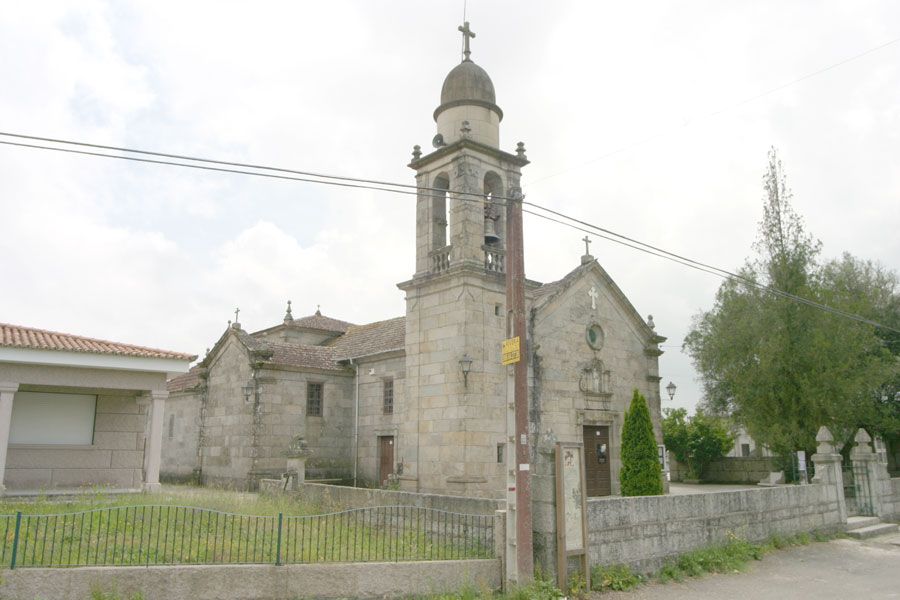
The Convent of San Diego de Cañedo is a Baroque Franciscan monastery complex located in Cañedo, within the parish of San Miguel de Ponteareas, at the foot of Mount Picaraña, in the province of Pontevedra, Galicia.
Where did this place come from?
The story of this hillside site goes back to the 15th century, when a pazo — a traditional Galician manor house — belonging to the Sarmiento family stood here. An earlier Franciscan convent nearby had been destroyed during the war with Portugal in 1642. It wasn't until the 18th century that Diego Sarmiento de Soutomaior (also recorded in some sources as José Francisco Sarmiento Velasco Isasi) donated the family pazo to the Franciscan order, who converted it into a convent dedicated to San Diego. Local lore also mentions an earlier presence of the Knights Templar at Cañedo, with the original place name — San Miguel de Cañedo — sometimes linked to their religious practice, though this remains legend rather than confirmed history.
What will you see there?
The convent church was built in 1777 on a Latin cross plan, with a rib-vaulted main nave flanked by two barrel-vaulted side aisles. A modest, simple cloister was added between 1784 and 1785, keeping the restrained character typical of Franciscan monastic architecture. Interestingly, the builders reused elements from the earlier structure: sections of the walls and a 16th-century entrance doorway survive from the original medieval pazo. The church façade features a statue of San Diego de Alcalá and two unfinished coats of arms that were never given their final sculptural decoration.
How did the convent's fortunes change over time?
In September 1835, the friars were forced to abandon the building under Mendizábal's disentailment decrees, which ordered the confiscation of Church property across Spain. The convent remained out of Franciscan hands for decades until the Franciscan Province regained control in 1916. Between 1916 and 1926 it functioned as a novitiate house, after which it became a house of philosophical studies for the order. This shifting history — from noble residence, to convent, to confiscation, to religious return — makes it a compelling window into the turbulent fate of Spanish ecclesiastical institutions across the 19th and 20th centuries.
How to get there and when to visit?
The convent sits right beside Ponteareas, a small town in the Rías Baixas area well connected by regional roads to Vigo and Pontevedra. Its position at the foot of Monte Picaraña makes the surroundings well suited to combining a visit to the monument with a short walk in nature. Spring and early autumn are the best times to come, when Galicia's mild temperatures and lush greenery around the convent are at their most appealing.
Frequently asked questions
Is the Convent of San Diego de Cañedo still used by friars today? Yes. After the Franciscans regained the building in 1916, it served first as a novitiate house and later as a house of philosophical studies, keeping its religious and formational role.
What is the oldest surviving part of the building? The oldest elements are sections of the walls and the entrance doorway dating from the 16th-century Sarmiento family pazo, incorporated into the later Baroque convent structure.
Why does the façade have unfinished coats of arms? The two heraldic shields on the façade were never completed with full sculptural decoration, left in a raw state — a common outcome when building works were interrupted or scaled back for financial reasons.
What was Mendizábal's disentailment and how did it affect the convent? It was an 1835 Spanish reform ordering the confiscation and sale of Church properties by the state. It forced the friars out of San Diego de Cañedo until the Franciscans returned in 1916.
Nearby places

Earn badges for the places you visit
Download NextOnTrip, discover new places and check off your trails.