About this place
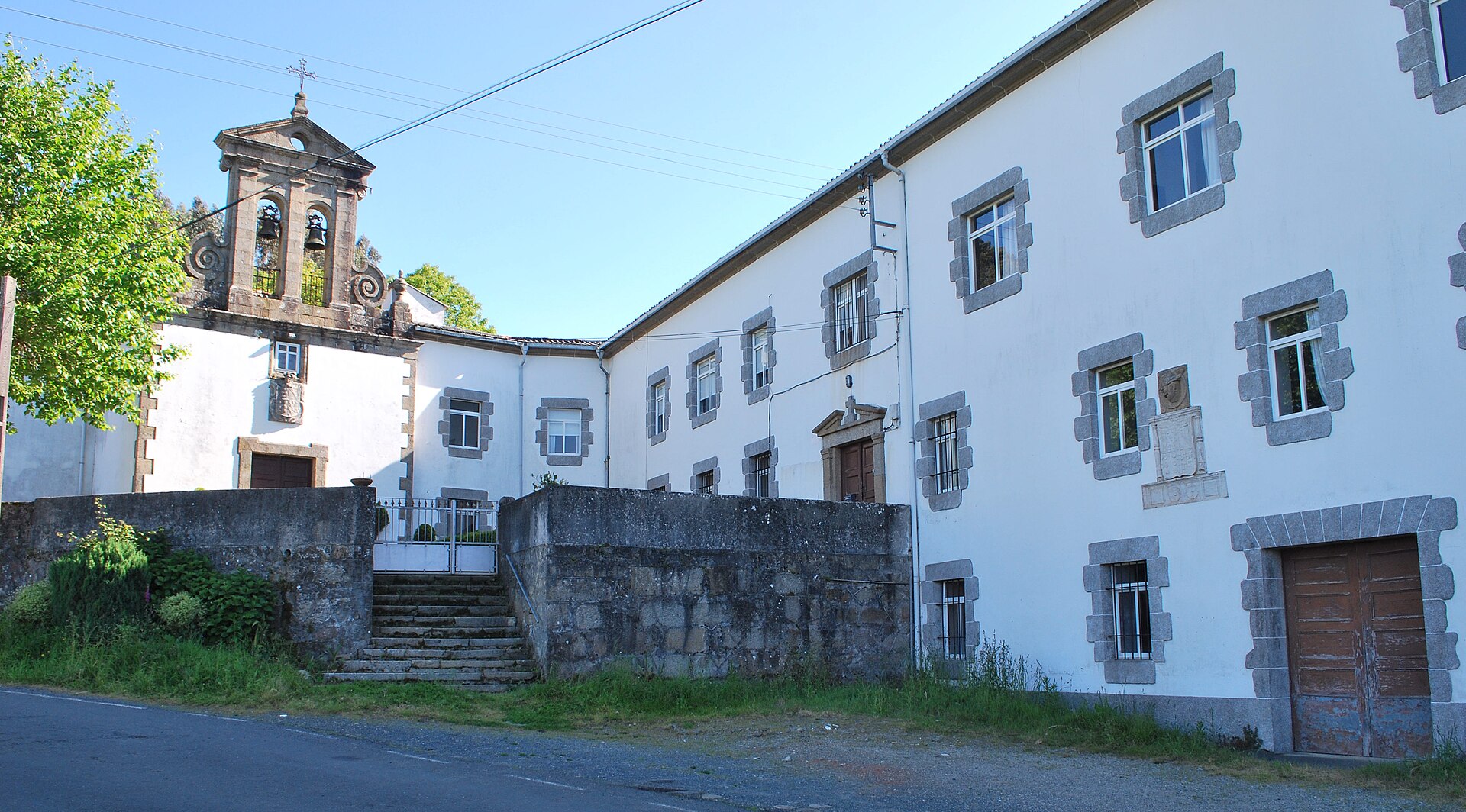
Convento de Baltar is a former Galician manor house, or pazo, turned religious convent, set in the rural district of Baltar within the municipality of Narón, in the province of A Coruña.
The estate was built at the end of the 16th century for Juan Pardo y Andrade as a noble family residence. Ownership and purpose shifted over the following centuries until 1910, when María de la Natividad Quindós y Villarroel, last Marquesa de San Sadurniño and heir to the property, handed the estate over to the Claretian Missionaries. Four years later the building underwent a major reconstruction and reopened as a formation house for future priests and a seminary for young missionaries. Since then it has been dedicated to the Immaculate Heart of Mary and remains in the hands of the Missionary Sons of the Immaculate Heart of Mary, within the Diocese of Mondoñedo-Ferrol.
What will you see there?
Despite repeated remodeling, the complex still carries traces of its aristocratic origins. Two large carved stone coats of arms survive from the original 16th-century construction, making them the oldest and most authentic feature of the whole ensemble. The grounds also include a chapel dedicated to the Sacred Heart, a Baroque-style fountain, and a sizeable hórreo — the traditional raised Galician granary — a reminder of the estate's earlier agricultural role. The whole complex sits within the quiet rural landscape of the O Val valley, making it a good example of noble architecture repurposed for religious life.
How to get there?
Convento de Baltar lies in the O Val area of the Narón municipality, close to Ferrol, in the northwest corner of Galicia. Driving from central Narón or Ferrol is the most practical option, taking only a short trip of around ten to fifteen minutes. Local buses connecting Ferrol with the surrounding parishes also serve the area, though schedules can be infrequent, so it's worth checking timetables locally before setting out. Given the rural setting, planning the trip ahead is recommended.
When to visit?
The convent still functions as an active religious formation house, so access to the interior may be limited depending on the community's current activities. Weekday daytime visits tend to work best, when there is less activity around the site and the exterior grounds — including the fountain and the area around the hórreo — can be explored calmly from outside. Spring and early autumn are particularly pleasant for walking through the surrounding countryside of the O Val valley, with lush greenery and mild temperatures.
Who is it for?
Convento de Baltar will appeal mainly to visitors interested in religious architecture and the history of Galicia's rural nobility. It also makes a worthwhile stop for anyone exploring the area around Ferrol who is looking for lesser-known, authentic sites that reveal Galicia's rural heritage — from carved family crests to traditional granaries.
Frequently asked questions
What was Convento de Baltar originally? It began as a pazo, a traditional Galician manor house, built at the end of the 16th century for Juan Pardo y Andrade.
When did the building become a convent? The estate was handed to the Claretian Missionaries in 1910 and rebuilt in 1914 to serve as a seminary and formation center.
What is worth seeing on the grounds? Two 16th-century carved stone coats of arms, the Sacred Heart chapel, a Baroque fountain, and a traditional Galician hórreo.
Can visitors go inside the convent? The building is an active religious community, so interior access is often limited — visitors should mainly expect to explore the grounds and exterior.
Nearby places

Earn badges for the places you visit
Download NextOnTrip, discover new places and check off your trails.