Save this place and discover nearby attractions with NextOnTrip
In the app you can add it to your favorites, see what else is worth visiting nearby on the map, and earn a badge for your visit.
The app is available for iPhone and Android.
About this place
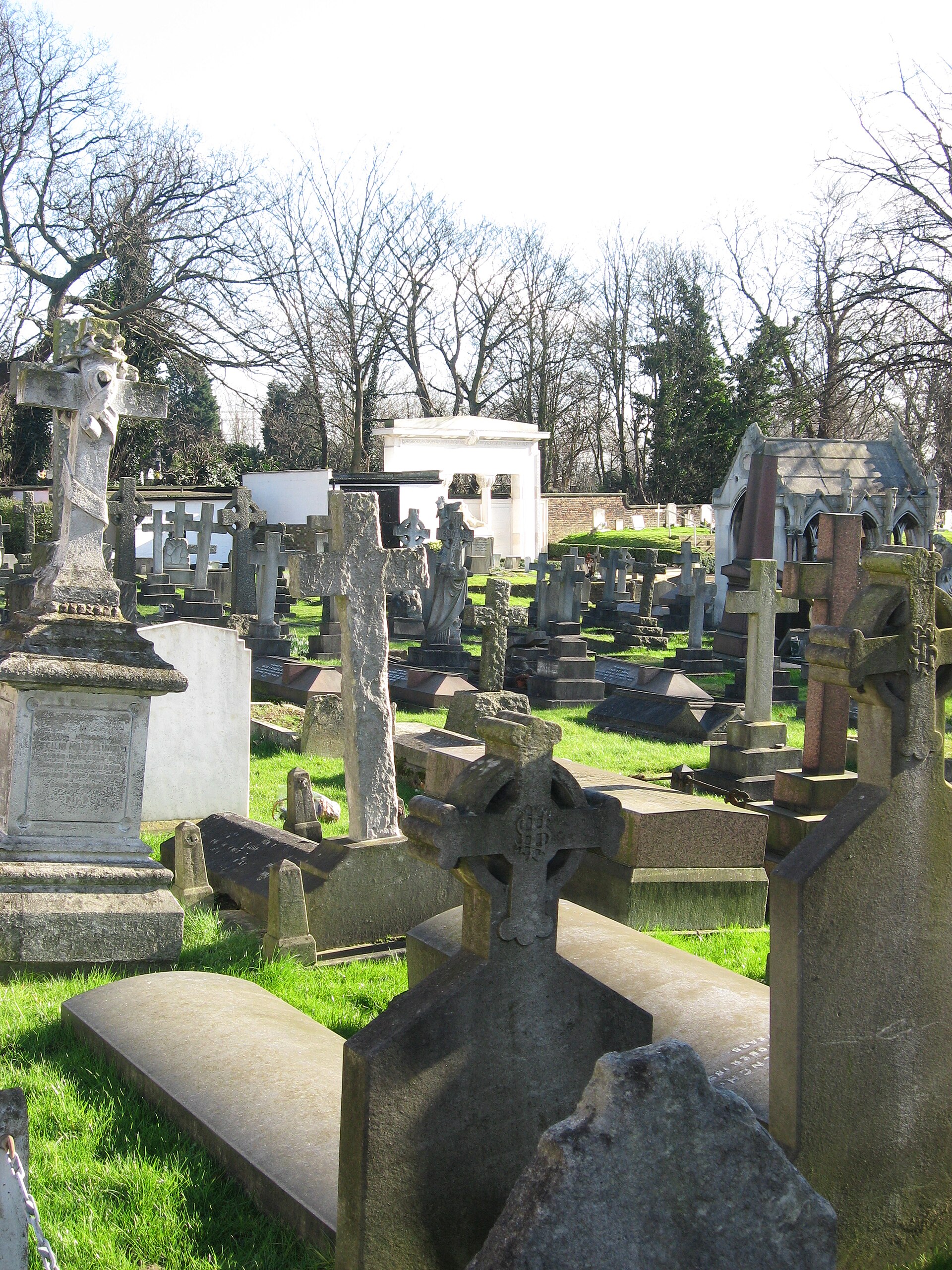
South Ealing Cemetery in London is a Victorian burial ground in the west of the city, founded in 1861. Today it is a quiet corner of local history, with two historic chapels, war graves and mature trees set among the streets of Ealing.
How did South Ealing Cemetery come about?
By the mid-nineteenth century the parish churchyard was running out of space. The Ealing and Old Brentford Burial Board therefore set up a new cemetery, opened in 1861 and known formally as Ealing and Old Brentford Cemetery. The grounds were later enlarged, with extensions in 1907 and 1940, which mirrors the growth of this western London suburb.
What is there to see at the entrance?
The highlight is the pair of chapels at the South Ealing Road entrance. A carriage arch joins them, topped by a clock and a small belfry. They were designed by Charles Jones, Ealing's municipal architect, and completed in 1861. Both buildings are Grade II listed, which gives them statutory protection in Britain.
The two chapels reflect the religious divisions of their day. The north chapel served Nonconformist congregations, while the south chapel served the Church of England. Neither is used for services now. Their condition is poor, and both appear on Historic England's Heritage at Risk Register. Volunteers and local groups, including the Ealing Parks Foundation, have worked on plans for restoration. In 2019 the chapels welcomed visitors during London Open House, the annual event that opens normally closed buildings for a weekend.
Who is buried here?
Burials include G. Cosens Prior (1855-1937), a solicitor and social reformer. Spencer Walpole, a politician and MP who died in 1898 and owned Pitshanger Manor, a well-known Ealing house, is also buried here. Most of the graves belong to ordinary local residents, and together they paint a portrait of the district across generations.
War graves
An important part of the site is its Commonwealth war graves: 184 service personnel are buried here. There is also the grave of Pierre Francois Van Wesemael, a Belgian soldier from the First World War. For anyone interested in twentieth-century history it is a moving stop, a reminder that the wars reached the quiet suburbs of London too.
Is the cemetery still in use?
The cemetery is closed to new burials, apart from the reopening of existing family graves. As a result it has a calm, historic atmosphere, closer to a small memorial park than to an active cemetery.
Who will enjoy a visit?
- fans of Victorian architecture who like sights off the main tourist trail,
- genealogists and anyone curious about local London history,
- walkers looking for peaceful corners of the city,
- visitors seeking Commonwealth war graves.
Frequently asked questions
When did South Ealing Cemetery open? In 1861, when the parish churchyard ran out of room.
Who designed the chapels? Charles Jones, Ealing's municipal architect.
Can I go inside the chapels? They no longer function as chapels and are in poor condition. They have opened to the public on occasion, for example during Open House in 2019, so check current event information before you go.
Are any notable people buried here? Yes, including the politician Spencer Walpole and the solicitor and social reformer G. Cosens Prior.
Does the cemetery still accept burials? No, other than reopened family graves.
Where is the entrance? The main entrance with the chapels is on South Ealing Road in west London.
Nearby places

Earn badges for the places you visit
Download NextOnTrip, discover new places and check off your trails.