Save this place and discover nearby attractions with NextOnTrip
In the app you can add it to your favorites, see what else is worth visiting nearby on the map, and earn a badge for your visit.
The app is available for iPhone and Android.
About this place
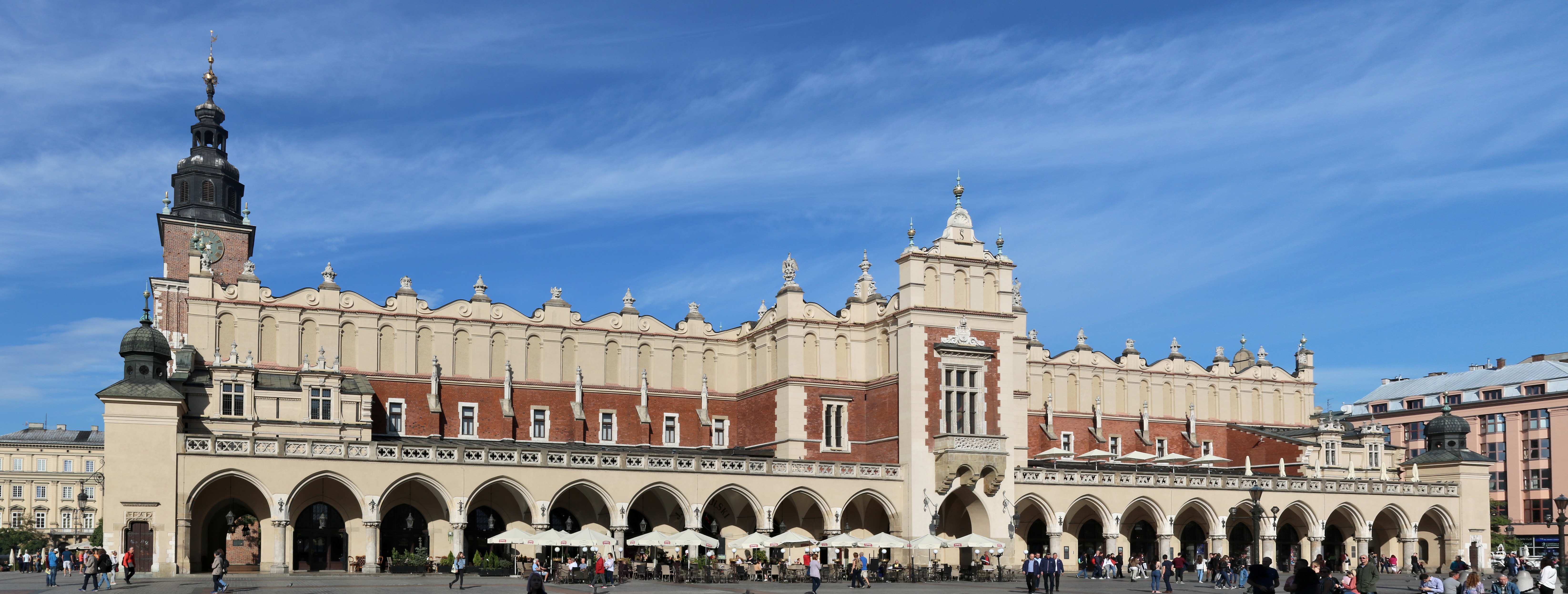
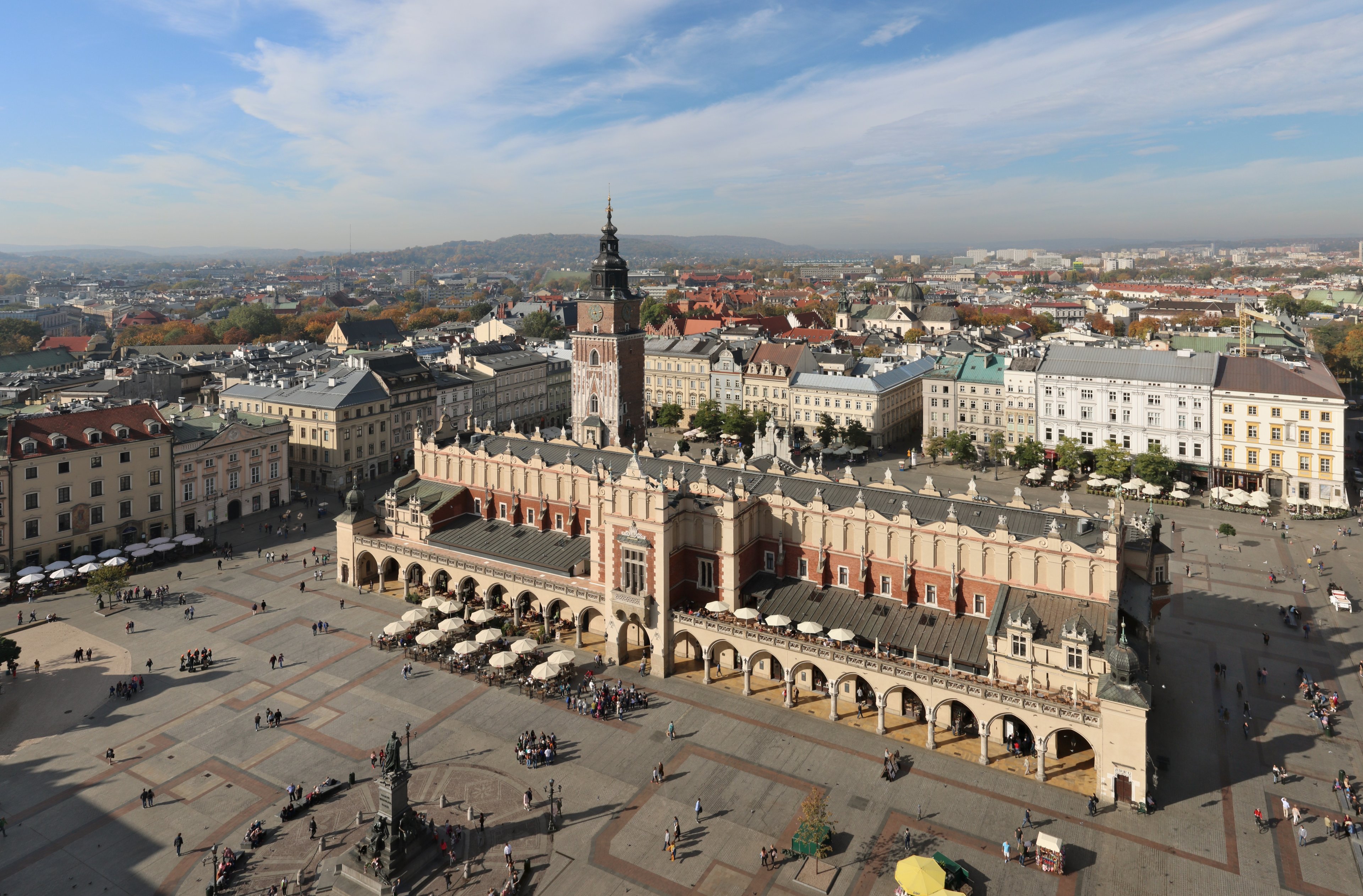
The Cloth Hall (Sukiennice) in Kraków is a historic market hall standing in Kraków's Main Market Square and one of Poland's most recognisable landmarks. Traders still fill the ground floor, mostly selling souvenirs and crafts, while the upper floor houses the Gallery of 19th-Century Polish Art, run by the National Museum in Kraków as its oldest branch.
Where does the name come from?
The Polish word sukiennice refers to a hall where cloth (sukno) was sold, and cloth was the main trade here. Kraków gained the right to deal in it under its town charter of 1257. Across medieval Europe, towns on busy trade routes put up halls like this one, usually in the middle of the market square and close to the town hall or the public weigh house.
How did the building develop?
It started as a simple lane lined with stalls and locked at night so merchants could leave their goods safely. As early as the 13th century the lane was given a wooden roof, which made it the first Cloth Hall. Casimir the Great funded a brick hall in 1358: a covered central passage 108 metres long, flanked by two rows of stalls and entered through pointed-arch arcades.
A fire destroyed the building completely in 1555. Between 1556 and 1559 Master Pankracy rebuilt it in Renaissance style, assisted by Giovanni Maria Padovano and Santi Gucci, among others. The attic dates from this period: a decorative parapet crowning the roof that also helped shield it from fire. It is lined with mascarons, grotesque human and animal faces carved by Santi Gucci. In 1601 a cross passage was cut through the hall from east to west.
What changed in the 19th century?
The Cloth Hall declined along with the rest of the city during the 1700s and 1800s. A thorough restoration followed in 1875–1879, during the partitions of Poland, led by Tomasz Pryliński on Jan Matejko's recommendation. The outer stalls were cleared away, pointed-arch arcaded galleries were built along both long sides, and projecting central bays topped with attics were added. The new mascarons, designed by Matejko, are caricatures of the city's mayors. The building has looked essentially the same ever since.
How did it become a museum?
In 1879, during celebrations for the writer Józef Ignacy Kraszewski, the painter Henryk Siemiradzki gave the city his canvas Nero's Torches. On 7 October that year Kraków City Council founded the National Museum, the first such institution on Polish soil, and gave it rooms on the Cloth Hall's upper floor, at first shared with the Society of Friends of Fine Arts. The opening exhibition followed on 11 September 1883, and in 1901 the museum took over the whole floor.
What can you see inside and around?
- Ground floor – a long hall of stalls selling souvenirs and crafts, with city coats of arms on the ceiling.
- Upper floor – the Gallery of 19th-Century Polish Art, with painting and sculpture ranging from the Enlightenment and Romanticism to Realism, Impressionism and early Young Poland.
- Rynek Underground – a Museum of Kraków route beneath the square, entered from the Cloth Hall, showing medieval remains and the foundations of the earlier hall.
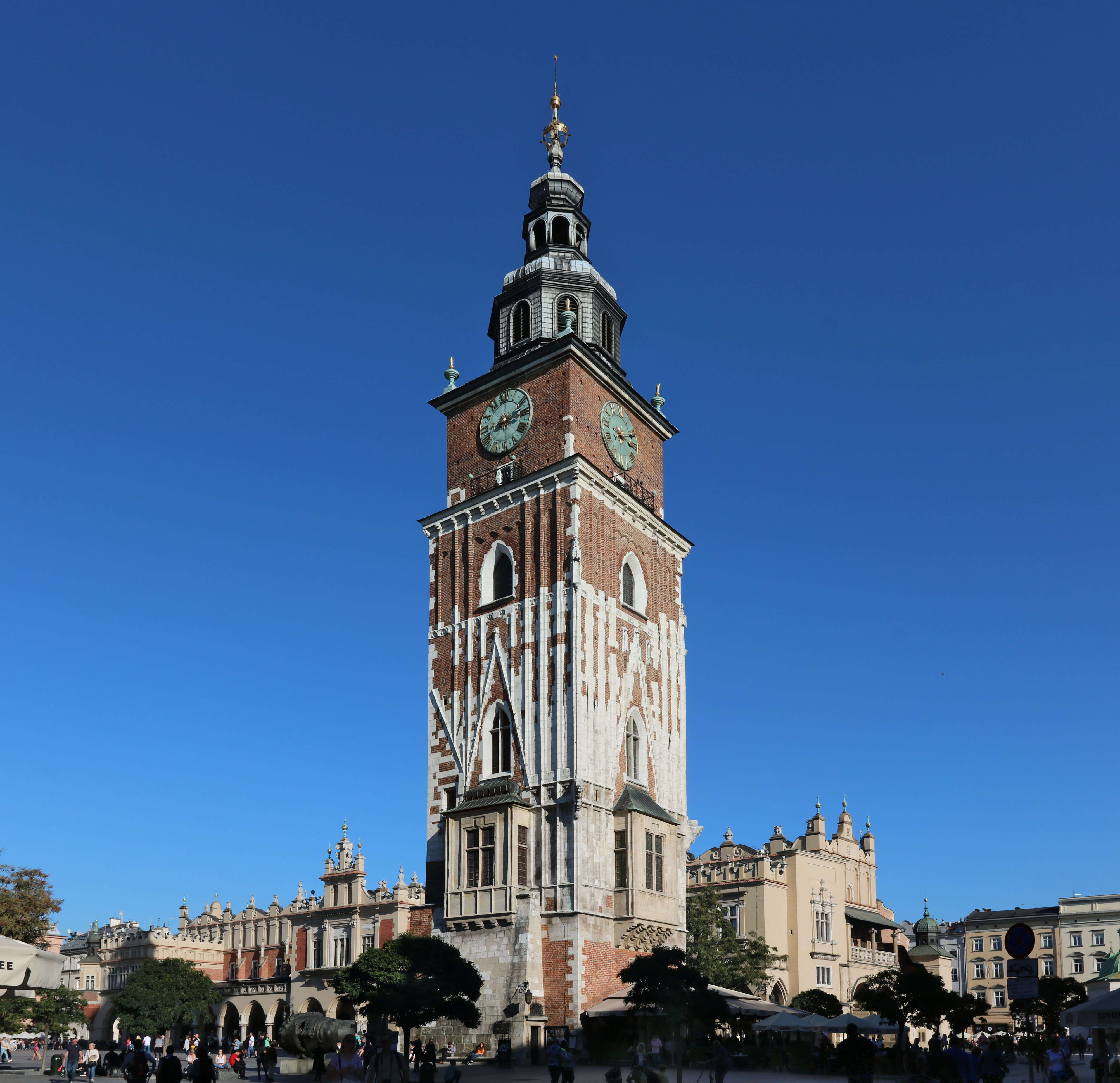
The Cloth Hall stands next to St Mary's Basilica and the Town Hall Tower, so it fits easily into a walk around the square.
Frequently asked questions
Is the Cloth Hall a museum? Partly. The upper floor is a gallery of the National Museum in Kraków, while the ground floor is given over to market stalls.
Who gave the Cloth Hall its present look? Its Renaissance form comes from the 1556–1559 rebuilding led by Master Pankracy. Tomasz Pryliński added the neo-Gothic arcades and central bays in 1875–1879.
What was traded here in the past? Above all cloth, which gave the building its name.
What are the mascarons on the attic? Grotesque masks. The Renaissance ones were carved by Santi Gucci; the 19th-century set, designed by Jan Matejko, caricatures Kraków's mayors.
Where is the Cloth Hall? Right in the middle of Kraków's Main Market Square, at the heart of the Old Town.
Nearby places

Earn badges for the places you visit
Download NextOnTrip, discover new places and check off your trails.