About this place
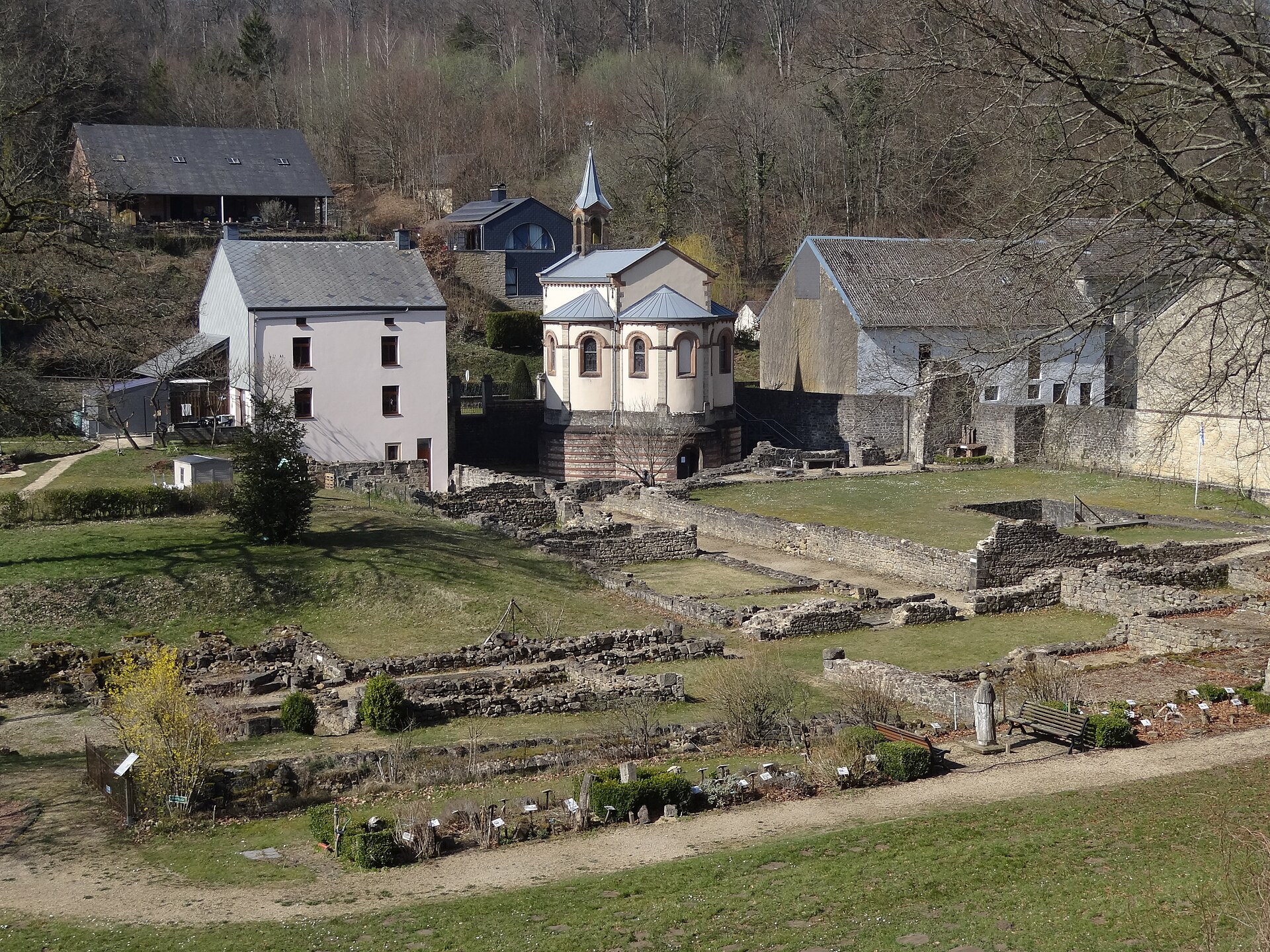
Clairefontaine Abbey (also known as the Abbey of Notre-Dame de Clairefontaine) is a former Cistercian nunnery in Wallonia, standing near the small hamlet of Clairefontaine, which belongs administratively to the city of Arlon. Today the remains of the abbey serve as both a tourist site and a place of pilgrimage, drawing visitors interested in the religious history of the region and the monastic architecture of medieval Europe.
When was the abbey founded?
The community was established in the middle of the 13th century as a house of Cistercian nuns, the female branch of the Cistercian order known for its austere way of religious life and its distinctive style of monastic building. The abbey remained active for centuries before being officially suppressed in 1796. That date places its closure within the broader wave of religious institutions dissolved across Western Europe at the end of the 18th century, a period of major political upheaval that reshaped the fate of many monasteries. After the community was disbanded, the abbey buildings gradually fell into disrepair, yet enough of the structure survived to remain visible and visitable today.
Where exactly is it located?
The abbey sits in Wallonia, the French-speaking part of Belgium, right next to the hamlet of Clairefontaine. Although the hamlet itself is a small, rural settlement, it falls under the administrative authority of Arlon, one of the more significant towns in Luxembourg Province. The location is notable for its proximity to the border: the Luxembourgish town of Eischen lies only about 3 kilometres (1.9 miles) away. This short distance means the abbey is visited both by travellers touring Belgium and by those exploring the neighbouring Grand Duchy of Luxembourg, for whom a stop at the abbey fits naturally into a cross-border itinerary.
Why visit Clairefontaine Abbey?
For anyone interested in monastic history and religious architecture, Clairefontaine Abbey offers a chance to encounter the remains of a community that endured for more than five centuries before its dissolution. The site combines historical value with an ongoing spiritual role — it continues to serve as a destination for pilgrimage, which sets it apart from many other monastic ruins that have become purely museum-like attractions. The surrounding countryside, typical of rural Wallonia, makes for a quiet visit away from the busier towns of the wider region.
How to get there
Thanks to its position close to the Luxembourg border, the abbey is reasonably accessible from both sides of the frontier. Travellers can orient their route around Arlon, the city to which Clairefontaine administratively belongs, or around Eischen on the Luxembourgish side. The site's geographic coordinates are approximately 49.6658°N, 5.8660°E, which makes it easy to pinpoint on a map when planning a visit to the area.
Frequently asked questions
When was Clairefontaine Abbey founded? It was founded in the middle of the 13th century as a Cistercian nunnery.
Is it still an active monastery? No — the religious community was officially suppressed in 1796. The surviving buildings now function as a tourist site and place of pilgrimage.
Where exactly is the abbey located? In Wallonia, next to the hamlet of Clairefontaine, which administratively belongs to the city of Arlon, about 3 kilometres from the Luxembourgish town of Eischen.
Can a visit be combined with a trip to Luxembourg? Yes — since Eischen is only a few kilometres away, the abbey can easily be included in an itinerary that covers both Belgian and Luxembourgish sights in this border region.
Nearby places

Earn badges for the places you visit
Download NextOnTrip, discover new places and check off your trails.