About this place
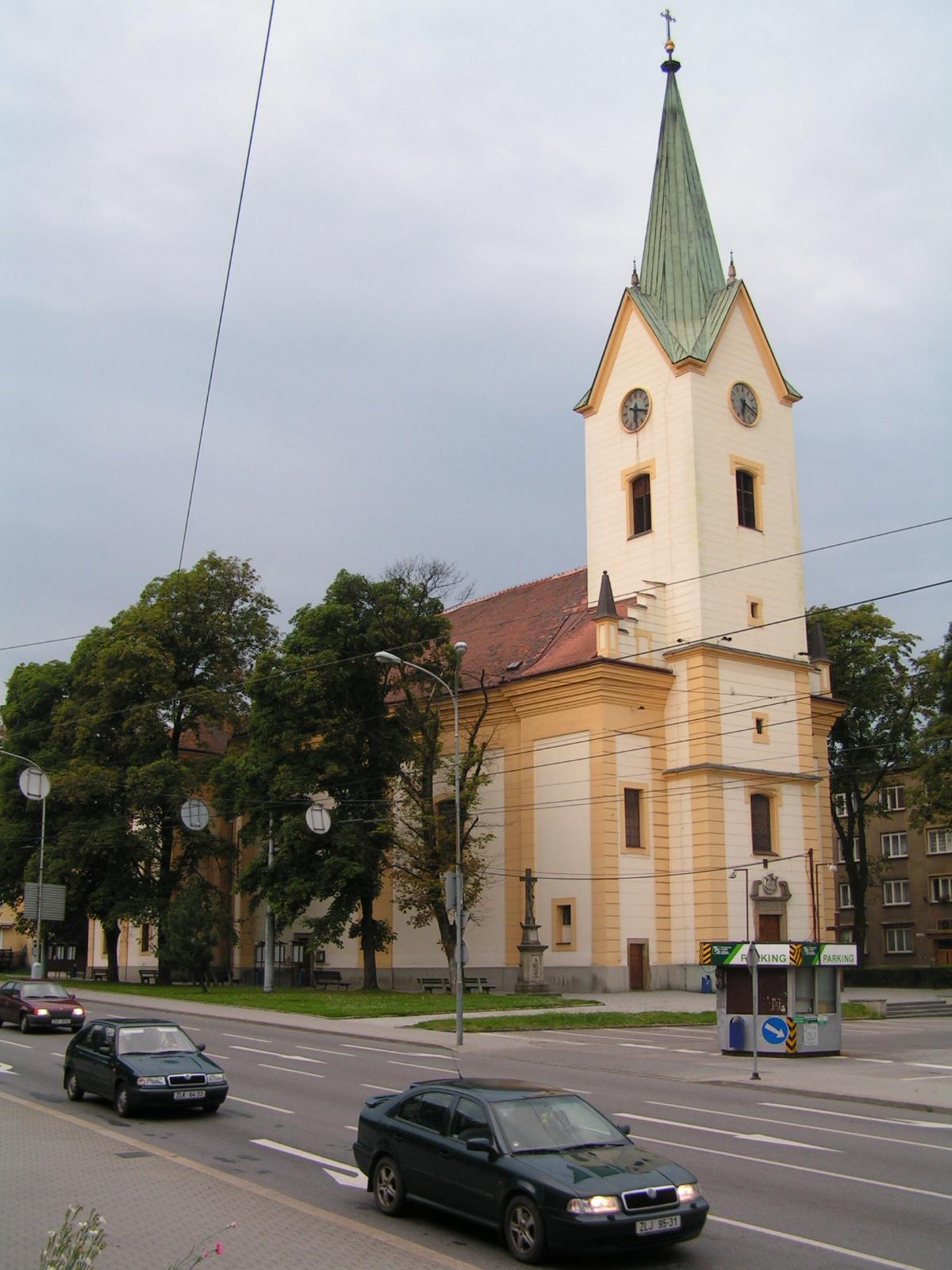
The Church of the Nativity of the Virgin Mary stands in Štípa, a district of Zlín in eastern Moravia, and ranks among the most important Marian pilgrimage sites of the Olomouc Archdiocese.
Where does the pilgrimage tradition come from?
The story goes back to the 14th century, when, according to local legend, a statue of the Virgin Mary was discovered in the surrounding forests. A small chapel was first built to house it, later growing into a cemetery church that still stands just a short walk from today's church. That older, Gothic building dates from the second half of the 14th century and was enlarged by the Sternberg family. In the late 18th century, during the Josephine reforms that dissolved monasteries and closed many churches across the Habsburg lands, the old church was deconsecrated and the miraculous statue was moved to the new church.
Who financed the church standing here today?
Construction of the Baroque church began in 1616. It was made possible by a bequest from the noblewoman Lukrécia Nekešová of Landek, who before her death obliged her husband, Albrecht von Wallenstein, then lord of the Lukov estate, to build a church and monastery on the site, leaving a substantial sum for the purpose. Wallenstein, one of the best-known military commanders of the Thirty Years' War, carried the project through, resulting in one of the largest and most architecturally significant church complexes in the entire Olomouc Archdiocese.
What is worth seeing inside?
The church is a single-nave building with a semicircular presbytery and a vaulted ceiling. Its interior stands out for rich decoration: the ceiling is covered with paintings depicting scenes from the life of the Virgin Mary, and the Stations of the Cross date from 1905. Between the 18th and 19th centuries the church also served as a burial vault for the Seilern family — a marble tombstone of Count Christian August Seilern, an imperial diplomat, from the early 19th century, survives on the right side of the nave. The organ is another highlight, regarded as one of the largest and best-preserved instruments built by František Čapek and Max Zachistal of Krems.
What else defines the atmosphere of the site?
The church stands next to a former monastery and is surrounded by extensive sculptural decoration. A group of protected linden trees frames the whole complex, which is why the Štípa site is valued as much for its natural setting as for its architecture. It remains an active parish church, drawing both pilgrims and visitors exploring the area around Zlín. The church also takes part in the nationwide "Night of Churches" event, when it opens for guided visits with extended hours.
How to get there and when to visit?
Štípa lies within the administrative boundaries of Zlín, so the easiest way to reach the church is by car or local bus from the city centre — the ride typically takes under twenty minutes. It's worth pairing the visit with a short walk to the older Gothic church nearby, since together the two buildings tell the full story of this pilgrimage site. As it is a working parish church, plan your visit outside of Mass times for a quieter look at the interior.
Frequently Asked Questions
Is the church in Štípa still an active pilgrimage site? Yes, it is one of the most important Marian pilgrimage churches of the Olomouc Archdiocese, tied to the legend of a miraculous statue of the Virgin Mary found in the nearby forests.
Who paid for the church's construction? The noblewoman Lukrécia Nekešová of Landek left funds obliging her husband, Albrecht von Wallenstein, to build the church and monastery; construction began in 1616.
What is the older church standing next to it? It's a Gothic building from the second half of the 14th century, enlarged by the Sternberg family — originally home to the miraculous statue of the Virgin Mary before it was moved to the new church.
Whose tomb can be found inside the church? The nave holds the marble tombstone of Count Christian August Seilern, an imperial diplomat — the church served as a burial vault for the Seilern family in the 18th and 19th centuries.
Nearby places

Earn badges for the places you visit
Download NextOnTrip, discover new places and check off your trails.