About this place
Church of the Assumption of the Virgin Mary in Kájov is a Gothic pilgrimage church in the village of Kájov in South Bohemia, a few kilometers from Český Krumlov. It ranks among the oldest and most significant Marian pilgrimage sites in the Czech lands.
Where does Kájov's pilgrimage tradition come from?
The earliest written record of Kájov dates back to 1263, when the village was mentioned in the founding charter of the Cistercian monastery at Zlatá Koruna, issued by King Přemysl Otakar II. From that point on, the site developed into a center of Marian devotion that drew pilgrims from across the region.
Why does the current building date from the 15th century?
The original church did not survive the turbulent Hussite Wars — it was destroyed once in 1422 and again in 1469. The late Gothic structure standing today was built in the following decades, during the 1470s and 1480s, and has survived largely unchanged since then.
What makes the church's architecture unusual?
The building follows a rare double-nave layout, with both naves of similar height and width — a design that gives the interior an unusually broad, hall-like character compared to the single-nave Gothic churches typical of the region.
What draws pilgrims to Kájov?
The main altar holds a late Gothic statue of the Madonna known as the Kájov Madonna (Panna Marie Kájovská), the object of centuries of pilgrimage. Local tradition links the altar to a spring of healing water, said to lie beneath the site where the church was later built — a legend that remains central to the sanctuary's identity today.
What other buildings belong to the pilgrimage complex?
The Church of the Assumption is not an isolated building. It forms a complex together with an adjoining smaller church dedicated to the Dormition of the Virgin Mary, and a parsonage building that incorporates a chapel of St. John of Nepomuk. A separate structure, the cemetery chapel of St. Teresa, stands nearby in the same village but is not physically connected to the main church.
What protection status does the Kájov complex hold?
Because of its historical and architectural importance, the entire pilgrimage complex in Kájov was declared a National Cultural Monument in 1995 — the highest level of heritage protection in the Czech Republic.
How do visitors reach Kájov?
Kájov lies in the South Bohemian Region, only a few kilometers west of Český Krumlov, one of the most visited towns in the Czech Republic. Because of this proximity, the church is often visited as a side trip from Krumlov itself.
FAQ
What is the Kájov Madonna? It is a late Gothic sculpture of the Madonna and Child placed on the church's main altar, venerated as a pilgrimage object for centuries.
Is this the only religious building in Kájov? No — the complex also includes a smaller church of the Dormition of the Virgin Mary and a chapel within the parsonage, while the separate cemetery chapel of St. Teresa stands elsewhere in the village.
When was the current church built? In the second half of the 15th century, after the earlier church was destroyed during the Hussite Wars.
How far is it from Český Krumlov? Kájov is only a few kilometers west of central Český Krumlov.
Nearby places
-

Church of the Death of the Virgin Mary in Kájov
Kladné
-
Kaple sv. Terezie
Kájov
-
Statue of Saint Wenceslaus on the Cloak Bridge in Český Krumlov
Czeski Krumlov
-
Statue of Saint Anthony of Padua on the Cloak Bridge in Český Krumlov
Czeski Krumlov
-
Statue of Saint John of Nepomuk on the head of Edvard Beneš Bridge in Český Krumlov
Czeski Krumlov
-
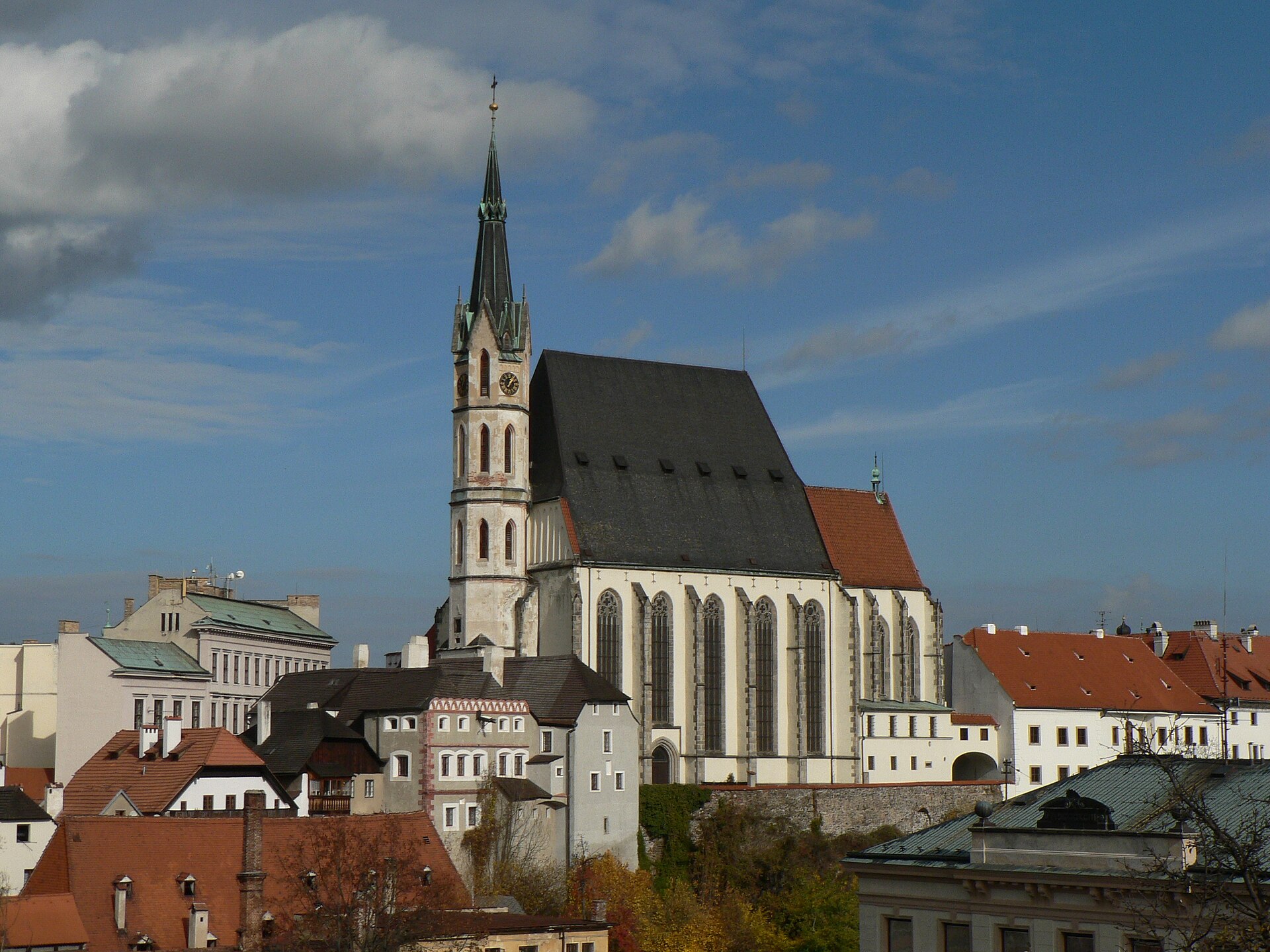
Church of Saint Vitus
Český Krumlov
Earn badges for the places you visit
Download NextOnTrip, discover new places and check off your trails.