About this place
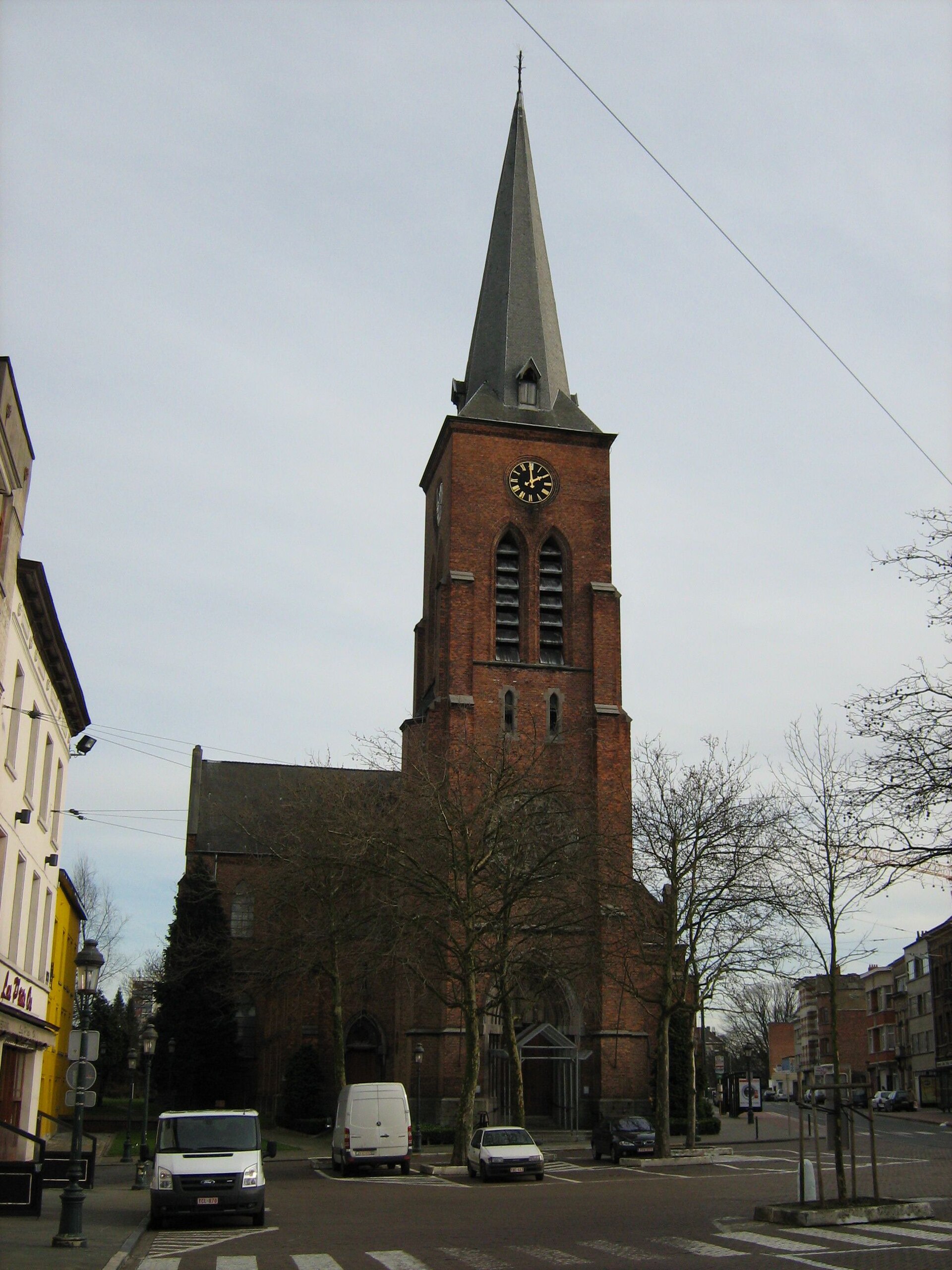
The Church of St. Peter in Jette, a municipality within the Brussels-Capital Region, is a red-brick Gothic Revival building constructed between 1878 and 1880 to a design by architect Charles Demaeght. It stands on the eastern side of Cardinal Mercier Square, right next to Jette railway station, making its silhouette one of the first landmarks travelers notice when stepping off the train.
Where exactly does the church stand?
The current building replaced an earlier, smaller chapel that had previously occupied part of what is now Cardinal Mercier Square. As Jette expanded during the 19th century, the growing parish required a larger, more prominent church, and the new structure was built directly beside the station, cementing the square's role as the heart of the district.
What architectural style does the building represent?
The church was designed in the Gothic Revival style, which was widely favored in Belgium during the second half of the 19th century. Its red-brick construction, tall proportions, pointed-arch windows, and vertically emphasized façade give the building a sense of lightness despite its solid, substantial structure.
What can visitors see inside?
The interior holds several features considerably older than the building itself. The oldest object in the church is a stone baptismal font dating from 1597, which survived from the earlier chapel and was carried over into the new church when it was completed. Also notable are two oak confessionals from the early 18th century, decorated with carved medallions depicting Saint Jerome and Saint Gregory.
In the left side aisle stands the tomb of the de Villegas family, crafted from black marble with the family's coat of arms rendered in white marble. The de Villegas were the last lords of the County of Saint-Pierre-Jette, directly tying this funerary monument to the district's history before it became part of the Brussels urban area.
What role does the church organ play?
The Romantic-style organ was built in 1898 by brothers Adrien and Salomon Van Bever. Although younger than the other historic furnishings, the instrument remains an important part of the church's fittings and continues to be used during services and organ concerts.
Did religious organizations once operate at the parish?
Yes — the parish was home to religious fraternities, lay organizations dedicated to spiritual purposes, active from the 18th century until the early 20th century. Such fraternities were a common feature of parish life at the time, organizing devotions, celebrations, and mutual support among their members.
Frequently asked questions
When was the Church of St. Peter in Jette built? It was constructed between 1878 and 1880, designed by architect Charles Demaeght.
Where is the church located? On Cardinal Mercier Square in Jette, directly adjacent to Jette railway station.
What is the oldest object inside the church? A stone baptismal font from 1597, older than the current building itself.
Whose tomb is found inside the church? The tomb of the de Villegas family, the last lords of the County of Saint-Pierre-Jette, located in the left side aisle.
Who built the church organ? Brothers Adrien and Salomon Van Bever built the Romantic-style organ in 1898.
Nearby places

Earn badges for the places you visit
Download NextOnTrip, discover new places and check off your trails.