Save this place and discover nearby attractions with NextOnTrip
In the app you can add it to your favorites, see what else is worth visiting nearby on the map, and earn a badge for your visit.
The app is available for iPhone and Android.
About this place
Church of St Mary and St Nicholas, Wilton
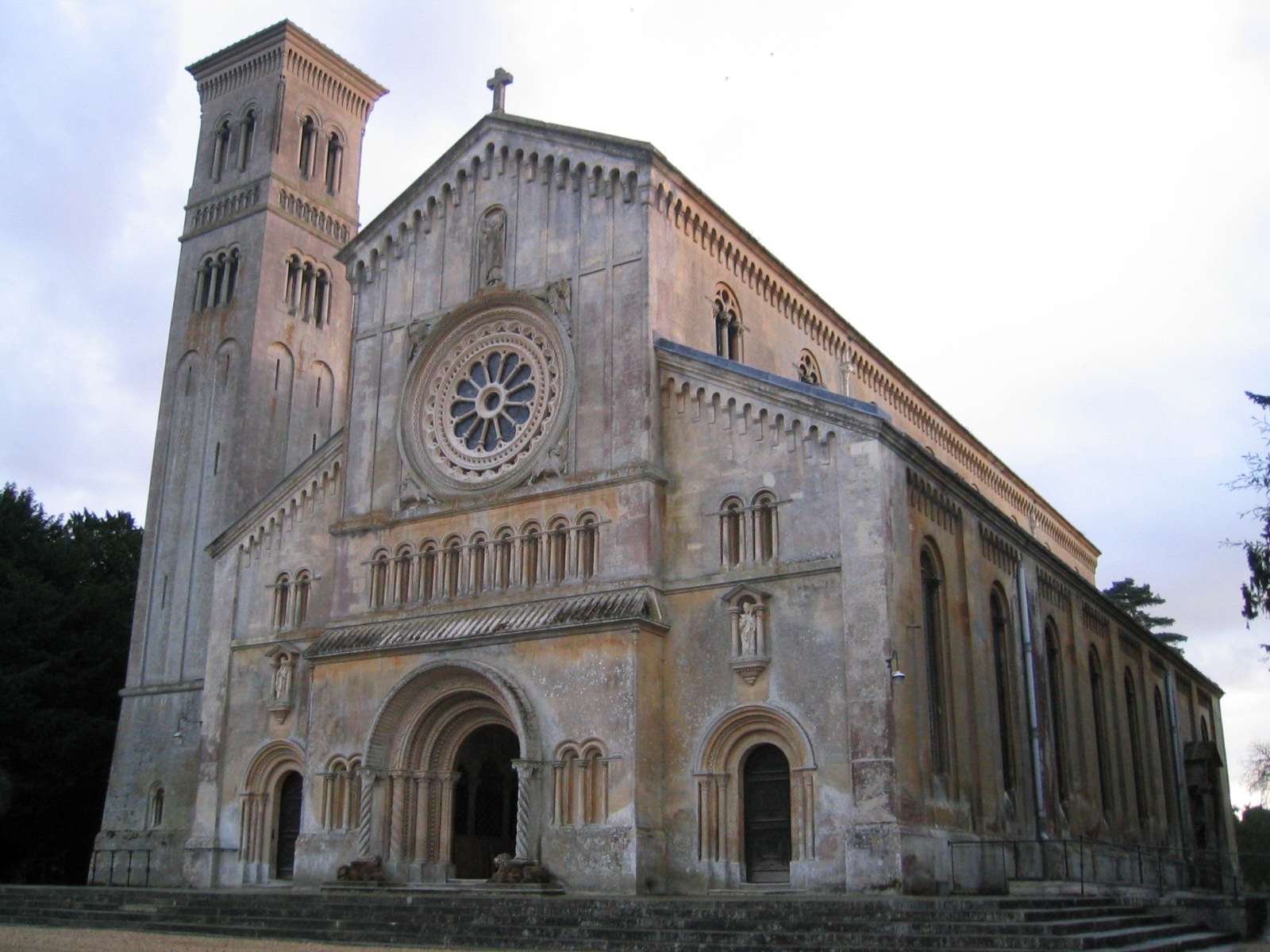
Church of St Mary and St Nicholas in Wilton, Wiltshire, is a Grade I listed Anglican parish church that looks far more like northern Italy than southern England. Built in the 1840s on West Street, it is one of the most unusual Victorian churches in the county and a rewarding stop for anyone interested in architecture, history or simply a quiet, beautifully decorated interior.
What is the church and why does it look Italian?
The building was raised between 1841 and 1844 to designs by Thomas Henry Wyatt and David Brandon. Instead of the Gothic Revival style then fashionable for English churches, the architects chose a Romanesque Revival design inspired by North Italian churches, with Tuscania often mentioned as one model. The plan is basilican: a central nave flanked by aisles and finished with apses. The result stands out sharply from the typical English parish church.
The commission came from the Herbert family, the Earls of Pembroke, who live at nearby Wilton House. Sidney Herbert and his mother, the Russian-born Dowager Countess of Pembroke, are named as the driving force behind the project. The cost was around £20,000, a large sum at the time.
Why was a new church built?
The old church of St Mary, standing in the market square, had fallen into serious disrepair by the early 19th century. The new building replaced it and stands partly on the site of a medieval church of St Nicholas, which explains the double dedication.
What should you look at outside?
- The west front, decorated with Lombard arcading and a rose window featuring a tetramorph, the symbolic figures of the four evangelists.
- The recessed portal, whose columns rest on stone lions, a motif typical of Italian Romanesque doorways.
- The campanile, a free-standing bell tower of roughly 105 to 108 feet (about 32 metres), connected to the church by a short cloister.
What is inside?
The interior is where the church shows its richness. Visitors find Flemish woodcarving, Cosmatesque-style marble work and stained glass, some of it dating back to the 14th century and brought in from older buildings. There are mosaics by Gertrude Martin and a three-manual organ by William Hill. The bells were cast at the Whitechapel foundry in London.
Practical information
The church is cared for by the Friends of Wilton Church and is usually open daily from about 9:30 until dusk. Opening times can change, so check locally before a special trip. Wilton is a small town near Salisbury, so the church combines easily with a visit to Wilton House or a day exploring Salisbury and its cathedral.
Frequently asked questions
Who designed the church? Thomas Henry Wyatt and David Brandon, in the early 1840s.
What architectural style is it? Romanesque Revival in the North Italian manner, with a basilican plan.
Is the church listed? Yes, it has Grade I status, the highest level of protection in England.
Can I go inside? Usually yes; it is normally open during the day, maintained with the help of the Friends of Wilton Church.
Who paid for it? The Herbert family, led by Sidney Herbert and his mother, the Dowager Countess of Pembroke.
Nearby places

Earn badges for the places you visit
Download NextOnTrip, discover new places and check off your trails.