About this place
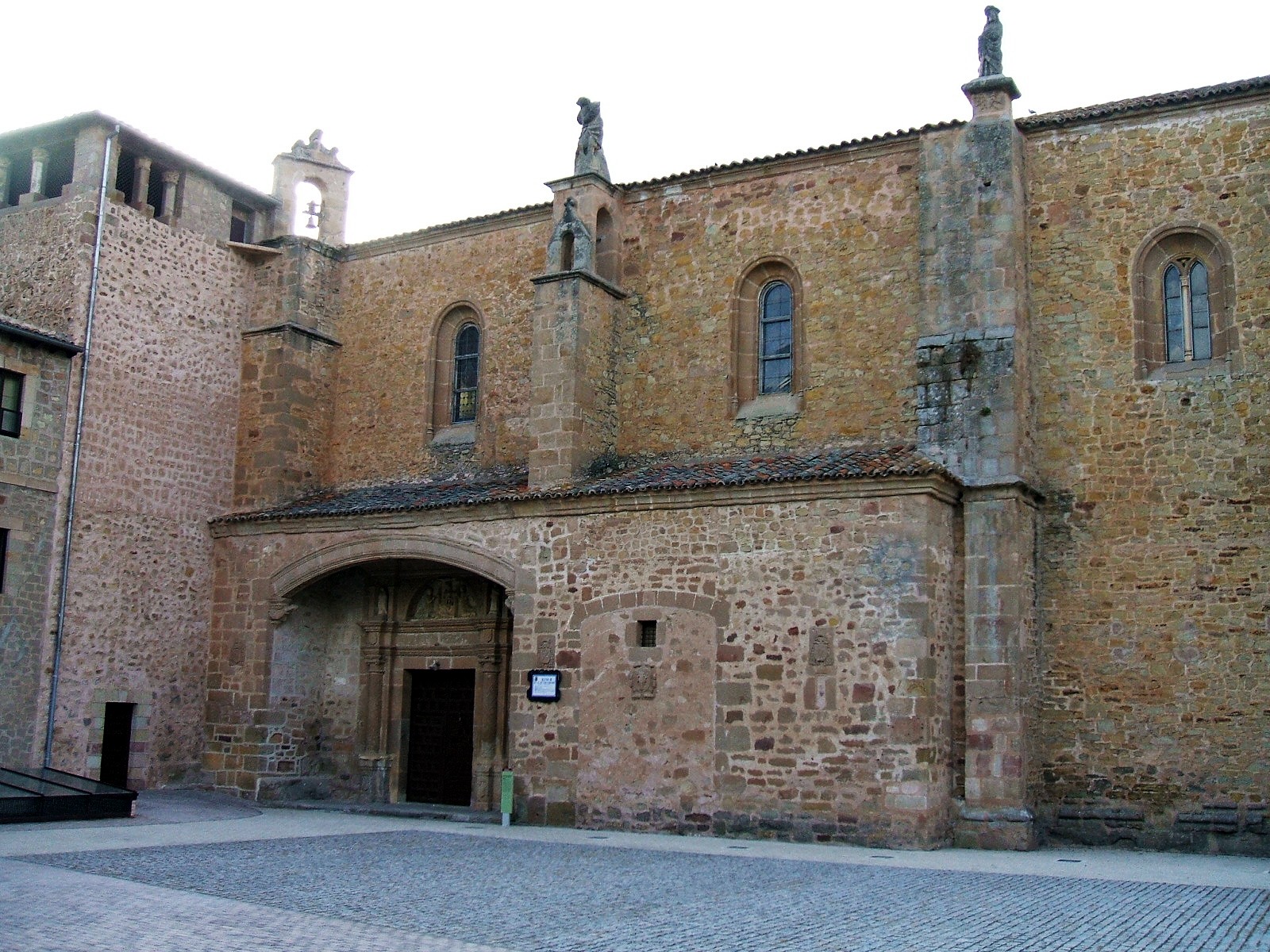
Church of Santísima Trinidad is a Romanesque religious landmark in Atienza, a small walled town in the province of Guadalajara, in Spain's Castilla-La Mancha region. Standing within the town's second line of defensive walls, the building has served as a museum of sacred art since 2003.
How do you get there?
Atienza sits in the northern part of Guadalajara province, an area known for its well-preserved medieval townscape and a hilltop castle overlooking the town. The church stands within the old town, along the line of the former defensive walls, so the easiest way to reach it is on foot, walking through the town's main streets from the central square toward the castle hill. Because Atienza's historic core is compact, exploring it doesn't take long, and the church is one of the essential stops on any walking tour of the town's monuments.
What will you see?
The church's history goes back to the late 12th century — a brotherhood (cofradía) bearing the same name, Santísima Trinidad, is already recorded in Atienza in 1159. From the original Romanesque building, what survives is chiefly a harmonious, semicircular apse, lit by three windows closed with round arches and resting on capitals carved with vegetal motifs. This is the oldest and most valuable architectural element of the whole structure.
The rest of the church was substantially rebuilt between the 15th and 16th centuries, when it took on its present layout of three naves divided into three bays and covered with ribbed vaulting — a common solution in the late Gothic and early Renaissance architecture of the region. The contrast between the older, plainer apse and the later, more elaborate nave is one of the reasons the building draws attention from architectural historians.
Since the museum opened in 2003, the church's interior has served an exhibition role, combining a museum of sacred art with a collection dedicated to the brotherhood of La Caballada, a historic tradition tied to the town's defense that is still kept alive today. Among the works on display are pieces well regarded in the region: a sculpture of Christ known as the Cristo del Perdón, attributed to Luis Salvador Carmona, an image of the Virgin Mary attributed to the same sculptor, and a painting attributed to Luca Giordano. The main altarpiece remains the interior's central focal point.
When is the best time to visit?
Atienza and its monuments are best explored in the warmer part of the year, when longer days and settled weather make walking through the hilly old town more comfortable. The town takes on a special atmosphere during the annual celebrations linked to the brotherhood of La Caballada, a tradition with medieval roots that is closely tied to the church's own history — it's worth checking the local events calendar in advance if experiencing these festivities firsthand is part of the plan.
Frequently Asked Questions
Is the Church of Santísima Trinidad still used for religious services? Today the interior functions mainly as a museum of sacred art, open since 2003, displaying historic sculptures, paintings, and items connected to the local brotherhood.
What is the oldest surviving part of the church? The oldest still-legible part is the Romanesque apse from the late 12th century, with its three round-arched windows and capitals carved with vegetal motifs.
What artworks can be seen inside? The collection includes a sculpture of Christ, the Cristo del Perdón, attributed to Luis Salvador Carmona, an image of the Virgin Mary, and a painting linked to Luca Giordano.
What is the La Caballada brotherhood connected to the church? It is a historic brotherhood active in Atienza since the Middle Ages, first recorded in 1159, whose traditions and memorabilia are now presented as part of the exhibition housed in the former church.
Nearby places

Earn badges for the places you visit
Download NextOnTrip, discover new places and check off your trails.