About this place
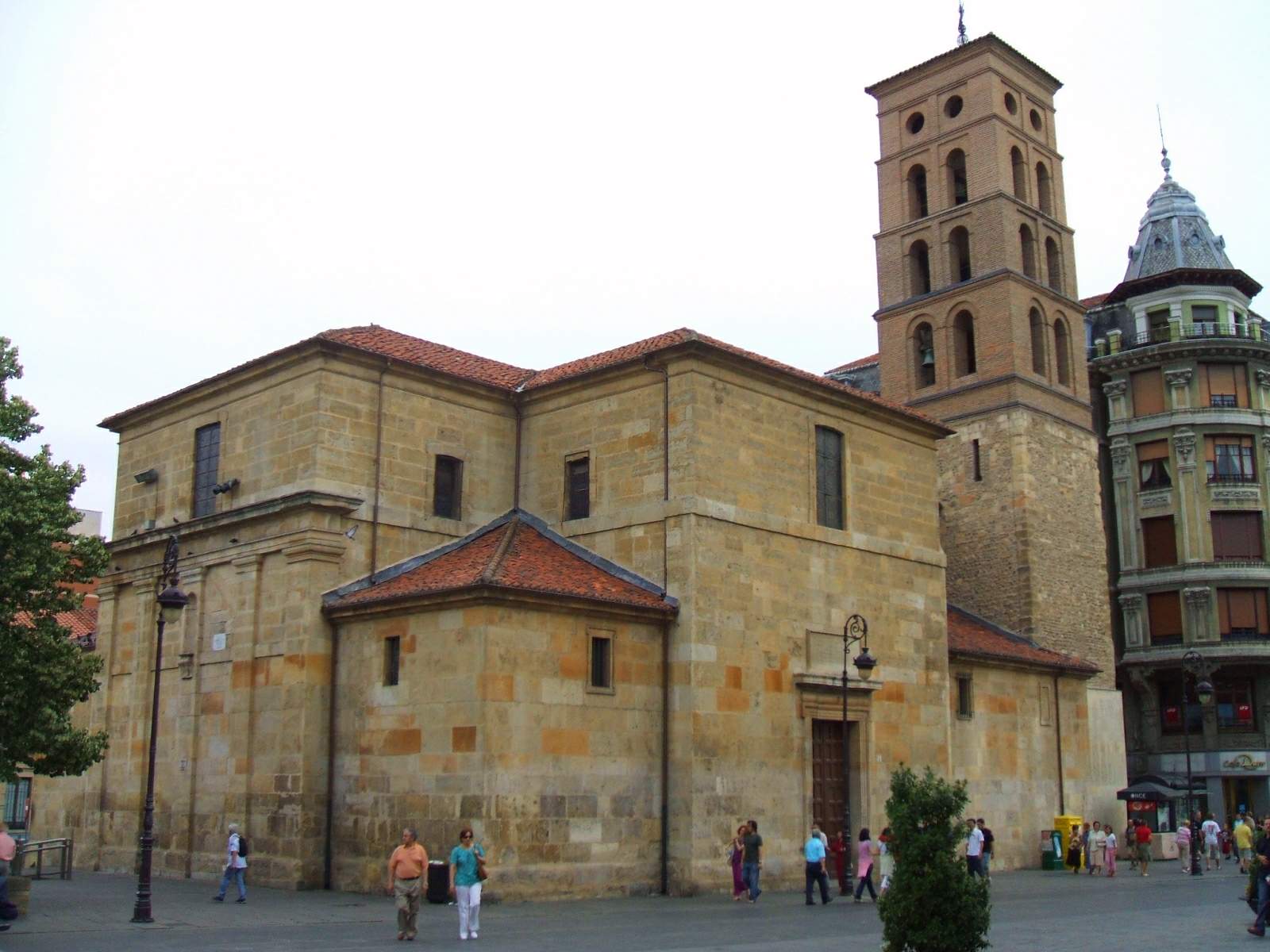
Church of Santa Marina la Real, in León, is one of the city's oldest parishes by dedication, though the building standing today has a far more layered history than the name suggests.
Why does this church have such an old-sounding dedication?
A parish dedicated to Santa Marina, a Galician martyr, already existed in León in 1032. King Alfonso VI later granted it as a convent to the collegiate church of San Isidoro, and the two remained linked for centuries. Yet the building visitors see today does not stand on that original site — it only arrived at its current location in 1782, having previously stood along the northern stretch of León's medieval city walls.
How did a Jesuit college end up carrying this name?
The structure now known as Santa Marina la Real was not built for that parish at all. It began as the church of a Jesuit college, founded in 1571 under the dedication of San Miguel y los Ángeles. The college owed its existence to Juan de San Millán, whom Philip II appointed Bishop of León. Jesuits used the building until 1767, when Charles III's decree expelled the order from Spanish territory. Only after the Jesuits left did the parish of Santa Marina move in, bringing its centuries-old dedication to a building that had never been built for it.
Who designed the church that stands here now?
The church visible today dates from the late 17th century and was designed by architect Juan Guardado. His design was considerably larger than the original Jesuit chapel, leaving room for an elaborate decorative interior. The plasterwork covering the walls and ceilings, completed in 1684 by Tomás and Celedonio Ruiz, is one of the building's defining features and a strong example of Baroque decoration as practiced in León at the time. Compared to its restrained exterior, the interior comes as something of a surprise.
What is the main artistic highlight inside?
The church's organ is widely considered one of the finest Baroque instruments in León. It was built in 1749 by Pedro Liborio Echevarría for the monastery of Santa María de Villaverde de Sandoval and later moved to Santa Marina la Real. Restored in 1982, it remains a significant piece of the region's musical heritage. Together with the 17th-century plasterwork, the organ gives the interior a richness that sets it apart from many parish churches of comparable size in the city.
Frequently Asked Questions
Is the current church building the same one that existed in 1032? No. The parish dedication dates back to the 11th century, but the building itself was constructed as a Jesuit church and only took on the name Santa Marina after the Jesuits were expelled in 1767.
When did the church move to its present location? It relocated in 1782, having previously stood near the northern section of León's city walls.
What should visitors look for inside? The 1684 Baroque plasterwork by Tomás and Celedonio Ruiz, and the 1749 organ built by Pedro Liborio Echevarría, originally made for the monastery of Villaverde de Sandoval.
Who designed the current building? Architect Juan Guardado, who built the church in the late 17th century on a larger scale than the original Jesuit chapel.
Nearby places

Earn badges for the places you visit
Download NextOnTrip, discover new places and check off your trails.