About this place
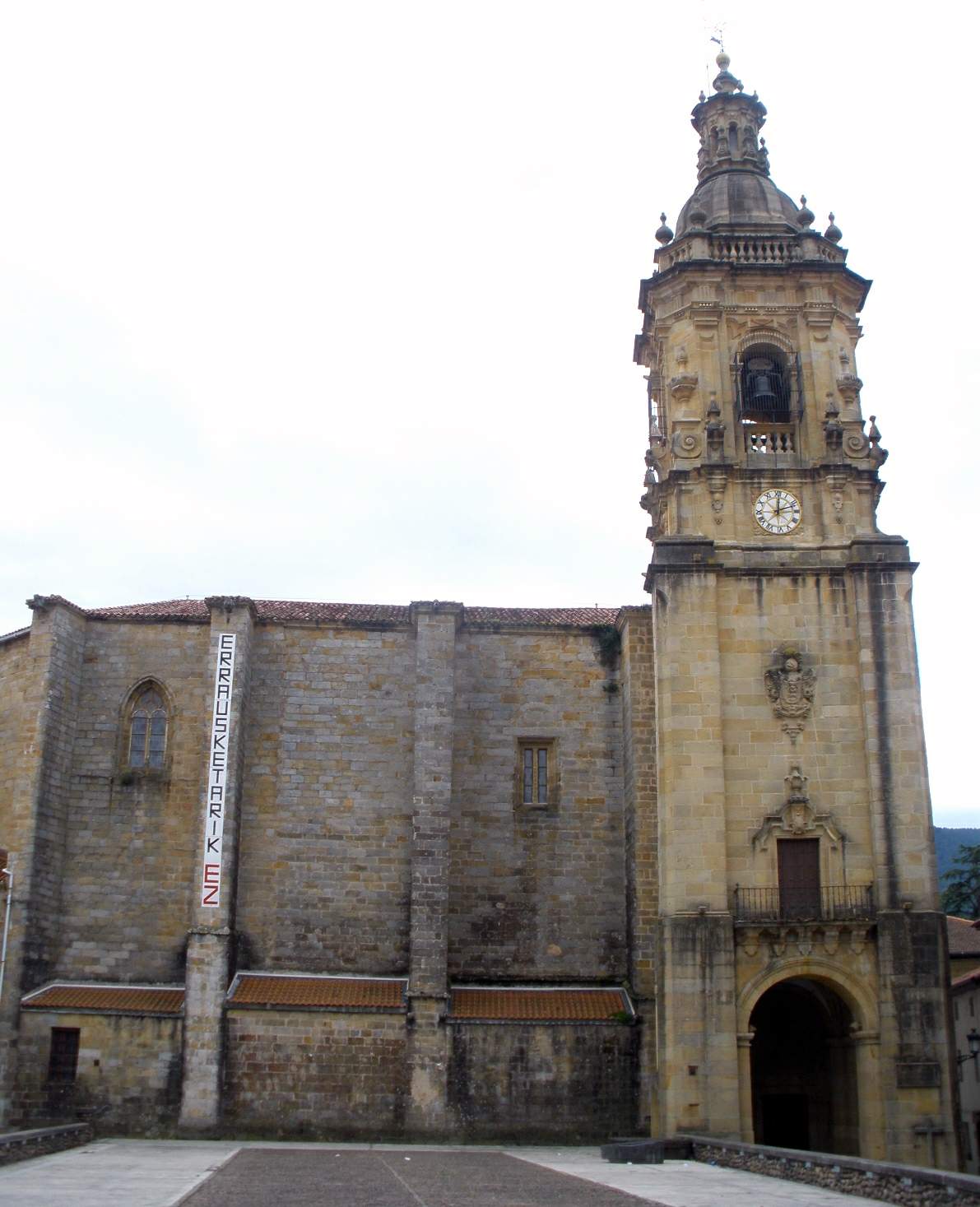
The Church of San Nicolás de Bari stands at the heart of Orio's old town, a small fishing port in the Basque Country perched right at the mouth of the Oria river. Built up in layers across several centuries, the church remains both an active parish and the clearest architectural landmark for anyone exploring the village.
Where does the town's connection to this church come from?
Orio itself grew for centuries as a parish named after San Nicolás — a small port enclave that fell, in jurisdictional terms, under San Sebastián. For generations the church has offered a resting point to travelers, merchants, and pilgrims making their way toward Santiago de Compostela, since Orio has long sat along a branch of the Camino de Santiago. That pilgrim traffic shaped the building's role: a place to pause, pray, and shelter before continuing the journey.
What does the architecture tell you?
The structure standing today is a Renaissance work raised in the 16th and 17th centuries on top of an earlier 13th-century church. Traces of that original building are still visible inside — at the back of the church, beneath the current pews, you can see the tombs that the older structure once housed.
Stylistically, the church blends Baroque grandeur with classical restraint: the scale and drama typical of the Baroque sit alongside the balance and elegance of more classical forms. The building rests on an extensive raised platform, partly supported by heavy arches resting on massive pillars, and is wrapped by a broad perimeter vestibule that runs around the entire structure like a covered walkway — a feature typical of Basque religious architecture.
What will you see inside?
The centerpiece is the main altarpiece, worked in Baroque style with twisting Solomonic columns that frame an oval niche holding the image of San Nicolás de Bari. The choice of patron saint is no accident: Saint Nicholas of Bari is traditionally venerated as the protector of sailors and fishermen, a fitting match for a town whose identity has always been tied to the sea and to the river mouth on which it sits.
Walking through the interior, it's worth pausing on the contrast between the older 13th-century remnants and the later Renaissance-Baroque expansion — a rare chance to trace several centuries of local religious history within a single space.
How do you get there?
The church sits in Orio's historic center, easily reached on foot within the old town, right along the Oria riverside. The village lies in the province of Gipuzkoa, close to San Sebastián, making it a convenient stop along the Basque coast. Orio is best reached by car or local bus; the town center itself is compact and entirely walkable, so visitors can head straight for the old quarter and the church on arrival.
When is the best time to visit?
Spring and early autumn suit Orio well, when the Cantabrian coast enjoys mild weather and the town is quieter than during peak summer. Pairing a visit to the church with a walk along the old town and riverside makes for a natural, unhurried way to spend a short stop.
Frequently asked questions
Can the church be visited every day? It functions as an active parish, so access to the interior depends on service times and opening hours — it's best to check current times locally or at the tourist information point.
Is there an entrance fee? As a working place of worship, the church generally does not charge admission, though visitors should be mindful of any services taking place.
What's the most interesting feature inside? The Baroque altarpiece with its Solomonic columns and the visible remains of the older 13th-century church beneath the pews are the two details most worth seeking out.
Why is San Nicolás de Bari the church's patron saint? He is traditionally regarded as the protector of sailors and fishermen, a choice that directly reflects Orio's centuries-old identity as a fishing community at the mouth of the Oria river.
Nearby places

Earn badges for the places you visit
Download NextOnTrip, discover new places and check off your trails.