About this place
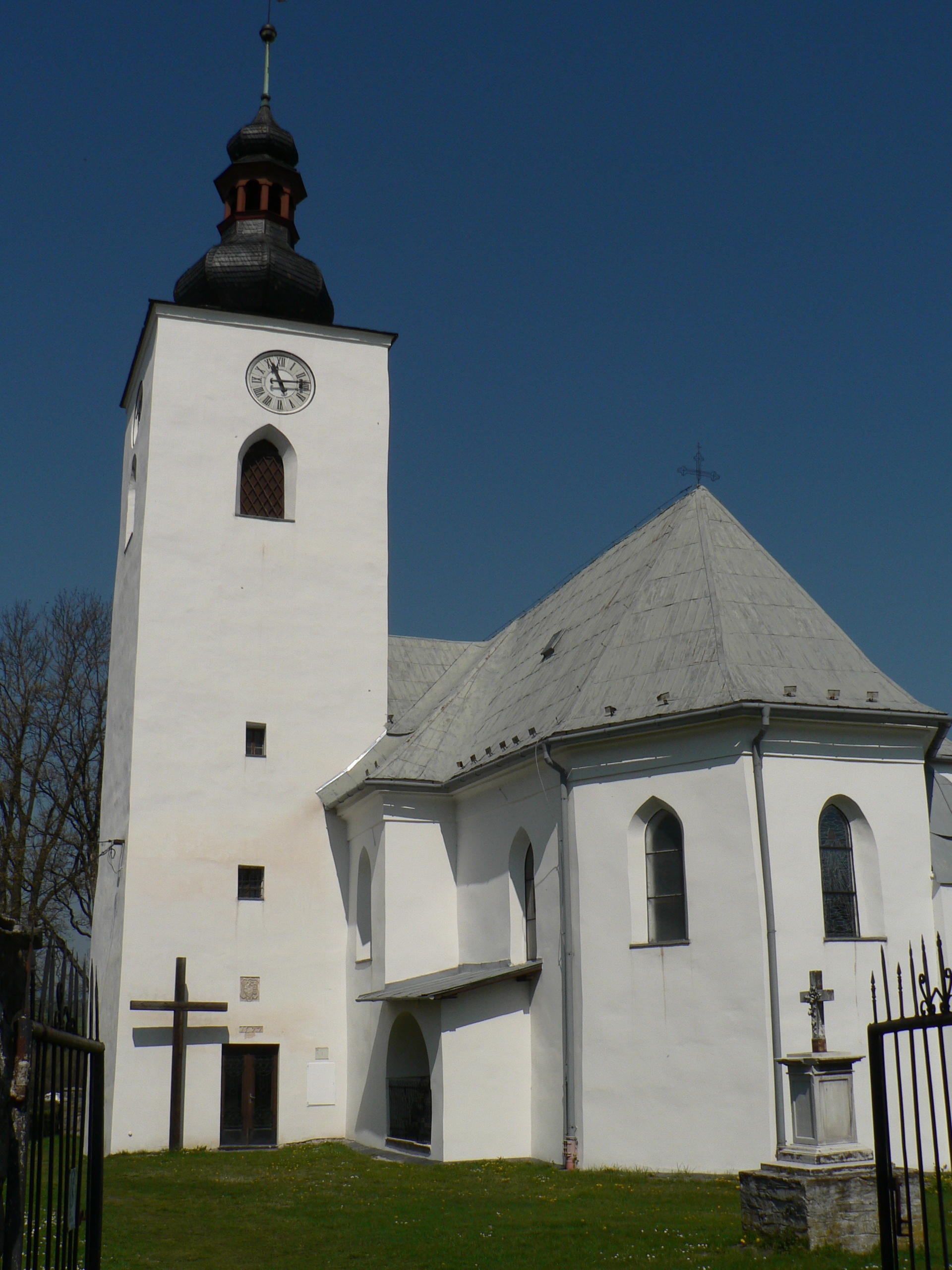
Church of Our Lady of Help (Czech: Kostel Panny Marie Pomocné) stands on Uhlířský vrch, a hill roughly two kilometres southwest of the centre of Bruntál. It is a single-nave Baroque pilgrimage church, built in the mid-18th century on the site of an earlier wooden chapel. It should not be confused with Bruntál's other churches — St Adalbert's, the Church of the Assumption of the Virgin Mary, or the Hussite church — as this is a separate building with its own history and its own tradition of Marian devotion.
Where does the pilgrimage tradition on this hill come from?
The story begins with a legend about August Oswald of Liechtenstein, provincial administrator of the Teutonic Order (Řád německých rytířů). During the Thirty Years' War he defended Sovinec Castle against Swedish troops and is said to have vowed that, if the castle held, he would build a chapel on the hill. The Swedes captured Sovinec anyway in 1642, but Liechtenstein kept his promise: between 1653 and 1655 a wooden chapel was built on Uhlířský vrch, marking the start of the site's pilgrimage tradition.
When was the current stone church built?
The original wooden chapel was eventually replaced by a masonry church. The single-nave pilgrimage church seen today was built between 1755 and 1758, designed by Friedrich Gans. It follows the Baroque style typical of pilgrimage churches in Silesia and Moravia at the time — a compact, unadorned form built around its function as a place of prayer and rest for pilgrims.
What can visitors see inside the church?
At the heart of the interior is a painting of Mary Help of Christians, a copy of the so-called Passau Madonna, a work attributed to Lucas Cranach the Elder. This image gave the church its dedication and turned it into a pilgrimage destination for the faithful from the Bruntál area. The Mariahilf motif — Mary as Help — was extremely popular across Central Europe in the 17th and 18th centuries, and copies of the Passau painting found their way into many newly built pilgrimage churches in the region.
What is the avenue leading to the church?
A distinctive feature of the church's surroundings is a four-row avenue of linden trees leading up from Bruntál. The main, central row of the avenue is 12 metres wide, flanked by two side avenues, each 4 metres wide. The avenue has been protected as a cultural heritage landscape feature since 1973 and forms an integral part of the pilgrimage site — it was along this avenue that processions historically made their way up to the hill.
What happened to the church in the 20th century?
The church fell into disrepair during the second half of the 20th century, a fate shared by many pilgrimage churches in the region during the postwar decades when such sites were often neglected. The situation changed after 1989, when the church was restored. It has been listed as a kulturní památka — a protected Czech cultural monument — since 1958.
Why is Uhlířský vrch worth a visit?
The Church of Our Lady of Help is a place where religious history and landscape come together: the hill above Bruntál, the historic linden avenue, and the Baroque architecture form a coherent whole typical of Central Europe's old pilgrimage sites. It makes for a rewarding walk from town for anyone interested in sacred architecture and regional history.
Frequently asked questions
Where exactly is the church located? On Uhlířský vrch, about two kilometres southwest of the centre of Bruntál.
Is it a parish church or a pilgrimage church? It is a pilgrimage church, built as a destination for Marian devotion centred on the painting of Mary Help of Christians.
What painting does the church hold? A copy of the Passau Madonna, attributed to Lucas Cranach the Elder.
When was the current stone church built? Between 1755 and 1758, designed by Friedrich Gans, on the site of an earlier wooden chapel dating from 1653–1655.
Is the church a protected monument? Yes, it has been listed as a Czech cultural monument since 1958, and the linden avenue leading to it has been protected since 1973.
Nearby places

Earn badges for the places you visit
Download NextOnTrip, discover new places and check off your trails.