About this place
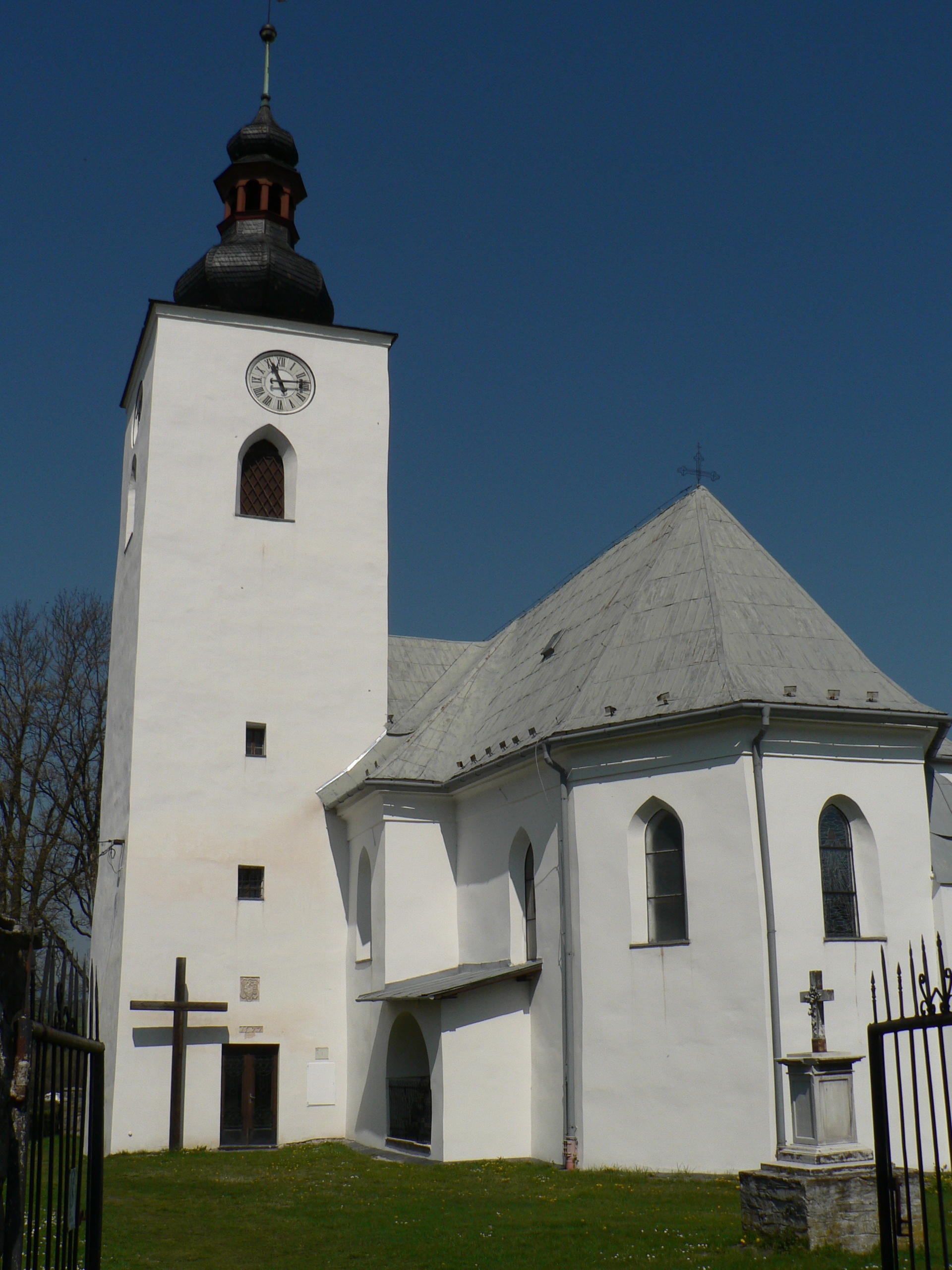
Church of the Immaculate Conception stands in Staré Město, today a part of the town of Bruntál in the Moravian-Silesian Region of the Czech Republic. It ranks among the oldest surviving stone religious buildings in the area, with roots tracing back to the very founding of Bruntál itself.
What is the connection between this church and the founding of Bruntál?
The story of the church cannot be separated from the story of Bruntál, one of the earliest towns in the Czech lands to receive municipal rights, established before 1213. The settlement was founded by the Moravian margrave Vladislav Jindřich (Vladislaus Henry), who granted the incoming settlers — mostly miners and merchants tied to the nearby gold mines — the right to self-government modeled on Magdeburg law. Early Bruntál was not a single compact town but a scattered network of mining settlements built around the ore deposits. The spiritual heart of that network was the Church of Our Lady in what is now Staré Město, which explains both the church's age and the settlement's name: "Staré Město" literally means "Old Town," marking it as the predecessor of the later, relocated town center of Bruntál.
How did the building change over the centuries?
The oldest surviving section is a Romanesque structure dating to the middle of the 13th century, portions of which are still preserved in the walls. During the first quarter of the 15th century, at the latest by 1419, the church underwent a Gothic reconstruction that reshaped its form and decoration. A further transformation came before 1655, when Baroque elements were added. The building reached its present-day appearance in 1787, following another round of construction work. As a result, the church layers together traces of nearly five centuries of rebuilding, from its Romanesque core to its Baroque-influenced final form.
What did archaeologists find beneath the church?
In 2002, excavation work carried out under the present-day sacristy uncovered evidence of the site's ancient origins: nine Roman denarii together with a massive, roughly three-meter-thick section of rounded Romanesque stone wall. The find suggests that the ground around the church held significance even before the medieval settlement fully developed, and that older construction layers lie hidden beneath what is visible today.
Why does the church stand out in the local landscape?
The church's tower and position make it a clear landmark within Staré Město, visible across this part of Bruntál. For visitors exploring the region, it offers a tangible link between the town's origins as a mining settlement and the later development of ecclesiastical architecture in Northern Moravia.
Frequently asked questions
Where exactly is the church located? In Staré Město, now part of the town of Bruntál, in the Moravian-Silesian Region of the Czech Republic.
What is the oldest part of the building? Romanesque wall sections from the middle of the 13th century, partly revealed during archaeological work in 2002.
Did the church change architectural styles over time? Yes — from its Romanesque origins, through a Gothic rebuilding completed by 1419 and Baroque work before 1655, to the appearance it received in 1787.
How is the church connected to the history of Bruntál? It served as the spiritual center of the mining settlements from which Bruntál later grew, which is why the site is called "Staré Město" (Old Town) relative to the newer town center.
What did the archaeological excavation reveal? Nine Roman denarii and a thick, rounded section of Romanesque stone wall found beneath the sacristy.
Nearby places

Earn badges for the places you visit
Download NextOnTrip, discover new places and check off your trails.