About this place
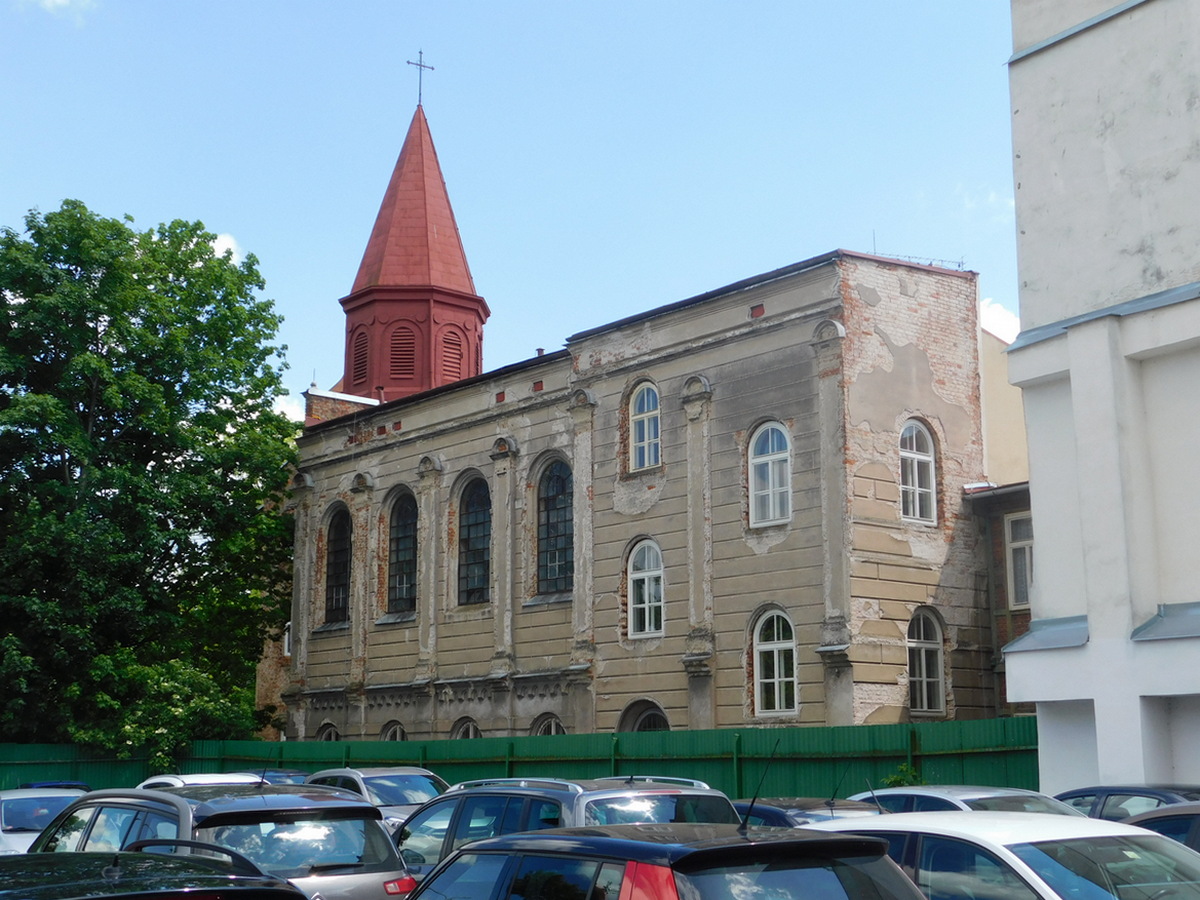
The Church of Saint John the Baptist is one of the oldest surviving religious buildings in Jihlava, standing alone on Jánský kopec (St. John's Hill) above the left bank of the Jihlava River, near the junction of Havlíčkovy and Polenská streets. The church predates the town's official founding and has long been tied to the history of local silver mining.
How old is the church really?
The building is older than historians once believed. In 1984, archaeologists discovered the foundations of a Romanesque church beneath the current floor, dating to the last decade of the 12th century - meaning a place of worship stood here before Jihlava was formally founded as a town. On the site of that original Romanesque structure, the present church was built in Gothic style in the mid-13th century. It was rebuilt in 1695 and subsequently given a Baroque appearance that largely survives today.
Was this Jihlava's first parish church?
Yes. Before the Church of St. James the Elder (built in 1257) rose in the newly founded mining town, the church on St. John's Hill served as the parish church for the mining settlement that predated the town itself. Once St. James took over as the main parish church, the Church of St. John the Baptist became a subsidiary (filial) church - a role it still holds today, falling under the Jihlava parish of St. James.
What does the church look like inside?
The building is oriented on an east-west axis, with a rectangular nave and a square sacristy attached to the north side of the presbytery. The presbytery itself is covered by a barrel vault. Inside stand three Baroque altars, dedicated respectively to St. John the Baptist, St. Norbert, and St. John of Nepomuk.
What is the church's connection to silver mining?
St. John's Hill and its church served as the starting point of Jihlava's famous mining processions, a tradition dating back to 1799 and revived in 1890 through the efforts of J. Haupt. To the right of the western entrance hangs a painting of a sleeping miner, bearing the German inscription "Es war und ist nicht mehr" ("It was and is no more") - a tribute to the vanished glory of Jihlava's medieval silver mining industry, once one of the pillars of the town's wealth.
Can visitors enter the church?
The church is accessible to visitors mainly during Mass, held on Wednesdays at 5:00 PM and Sundays at 8:00 AM. The building is listed as a protected cultural monument.
Where exactly is the church located?
The church stands in the Jihlava district of the Vysočina region, on St. John's Hill above the left bank of the Jihlava River, at geographic coordinates 49.4078 N, 15.5906 E.
Frequently asked questions
Who is the church on St. John's Hill dedicated to? It is dedicated to St. John the Baptist, and one of its three Baroque altars honors him directly.
Is this the oldest church in Jihlava? The Romanesque foundations uncovered in 1984, dated to the late 12th century, make it one of the oldest religious sites tied to the area's earliest settlement, predating the town's official founding.
Why did the church lose its parish status? In 1257, the newly built Church of St. James the Elder in the center of the newly founded mining town took over as the parish church, leaving St. John's Hill church as a subsidiary chapel.
What does the sleeping miner painting near the entrance mean? It is a 19th-century allegory commemorating the decline of Jihlava's once-thriving silver mining industry, marked with the German inscription "It was and is no more."
When are services held at the church? On Wednesdays at 5:00 PM and Sundays at 8:00 AM.
Nearby places

Earn badges for the places you visit
Download NextOnTrip, discover new places and check off your trails.