About this place
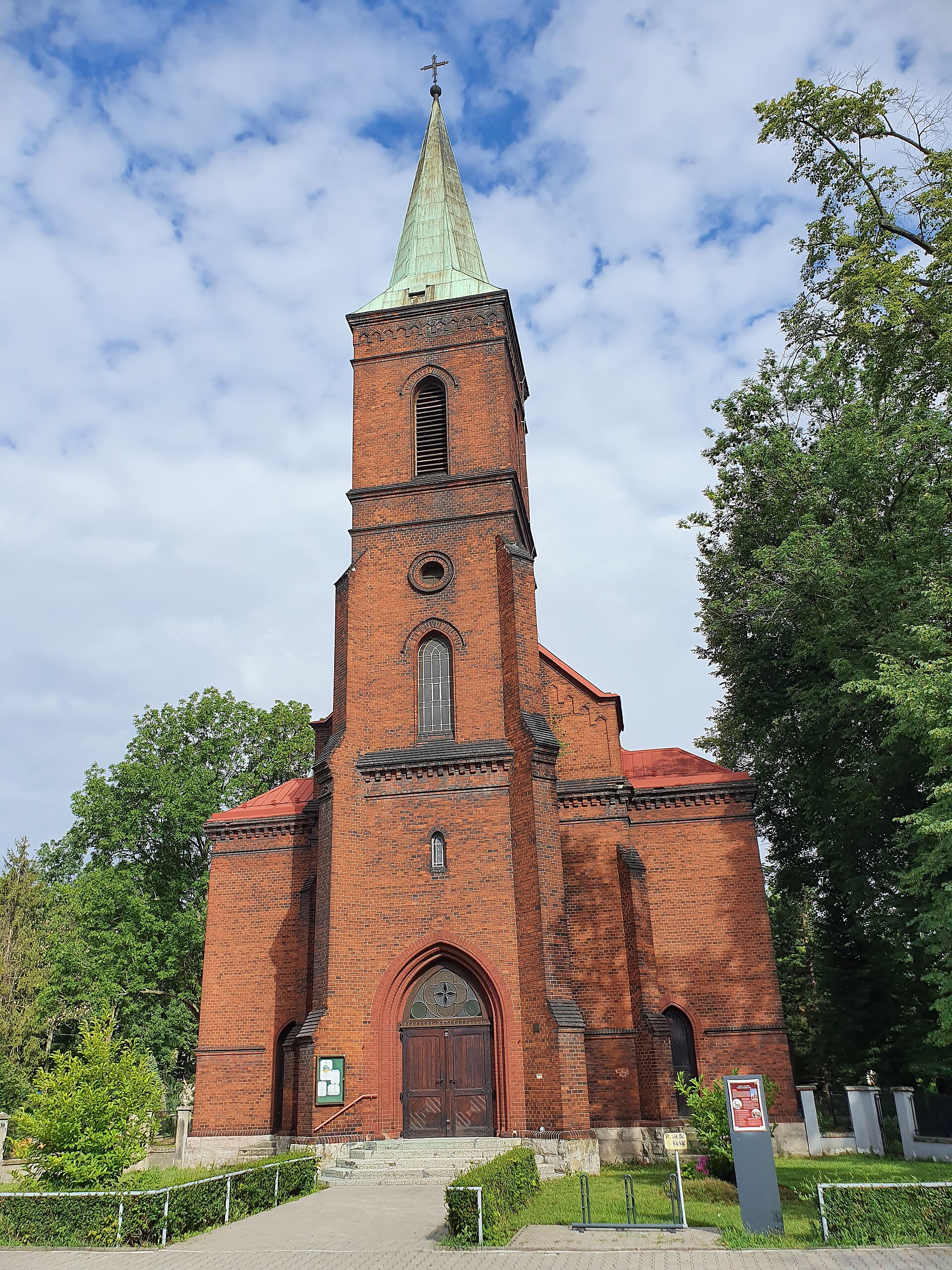
The Church of Saint John the Baptist is a Baroque parish church standing on a low rise above the right bank of the Lutyňka stream, right in the centre of the village of Dolní Lutyně in Czech Silesia (Moravian-Silesian Region, Karviná District, Czech Republic). The building is listed as a cultural monument of the Czech Republic and remains the village's most recognisable landmark.
What is the history behind the church?
Dolní Lutyně first appears in written records in 1305, under the name Luthina. A wooden church already stood on the site before 1365, serving the local parish for centuries. The present masonry church, built in Baroque style, went up between 1740 and 1746, funded by Count Mikuláš Taafe, who chose to replace the ageing wooden structure with a permanent stone building. The new church received its blessing in 1746, but its formal consecration had to wait until 9 September 1759, when it was carried out by the Bishop of Wrocław, Count Schaffgotsch.
What does the church look like?
The building is a single-nave, oriented masonry structure with side chapels attached to the main body. A four-sided tower rises above the west front, topped with a domed, barrel-vaulted roof with rounded edges and a spire. Above the gabled roof of the main nave sits an additional small, polygonal ridge turret — a feature typical of Baroque village churches in this part of Silesia.
What can visitors find inside?
The tower holds a set of bells, the oldest and most valuable of which came from the earlier wooden church: cast in 1447, it ranks among the oldest surviving historic bells in the region. Originally four bells hung in the tower, but several were requisitioned for war material during both World Wars; after the Second World War, three modern bells were installed to replace the losses.
The church's organ tradition goes back to 1728, when a Baroque organ was first installed in the older wooden church and later moved into the new building. The current instrument was built by the organ-building workshop of Karel Neusser of Nový Jičín, a respected Moravian organ maker.
Inside, the church preserves several Baroque altars. The main altar, dedicated to the church's patron, Saint John the Baptist, was restored and gilded in 1705. In 1713 a gilded side altar of the Holy Cross was added, facing an altar dedicated to Saint Barbara on the opposite side. A side chapel houses a further altar dedicated to the Mother of God.
Where exactly is the church located?
The church stands in Dolní Lutyně, a village that merged in 1975 with the neighbouring, previously independent village of Věřňovice (formerly Willmersdorf). Perched on a gentle rise in the village centre above the Lutyňka valley, the church is clearly visible from the surrounding area, making it an easy landmark for anyone exploring this part of Czech Silesia.
Frequently asked questions
Who funded the current church building? Count Mikuláš Taafe financed its construction between 1740 and 1746, replacing an older wooden church with a permanent Baroque structure.
How old is the oldest bell? The oldest surviving bell dates to 1447 and was carried over from the earlier wooden church, making it more than 570 years old.
Is the church a protected monument? Yes, it is listed as a cultural monument of the Czech Republic.
When was the church consecrated? The formal consecration took place on 9 September 1759, performed by the Bishop of Wrocław, Count Schaffgotsch, even though the building itself was completed and blessed back in 1746.
Nearby places

Earn badges for the places you visit
Download NextOnTrip, discover new places and check off your trails.