About this place
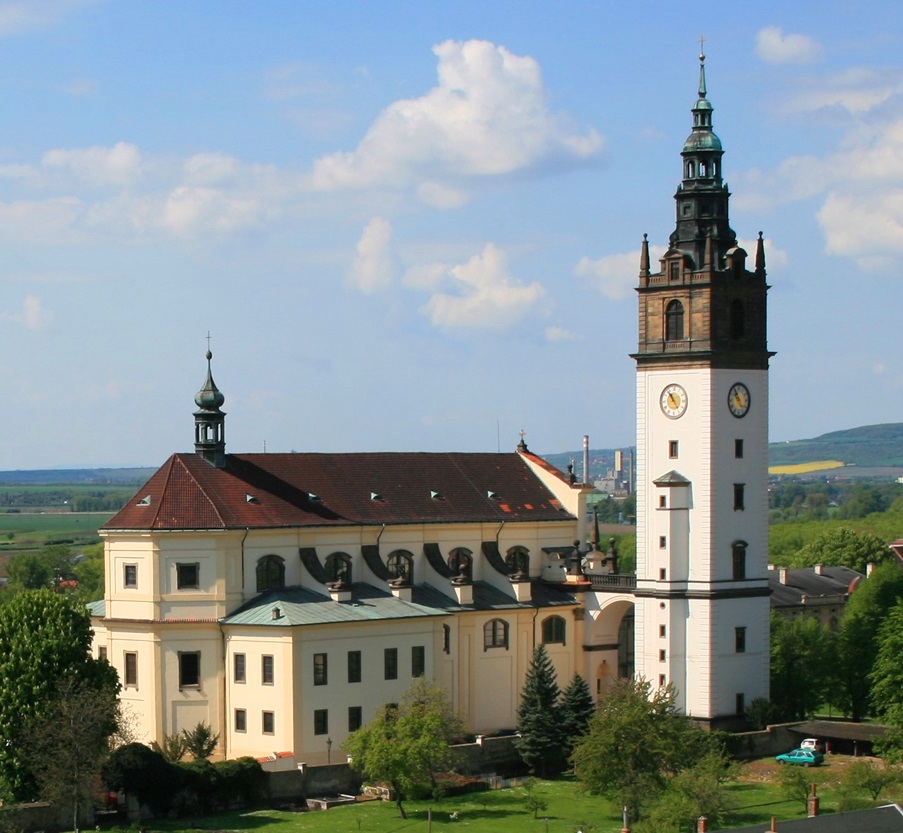
The Church of Saint James the Greater stands on Dominican Square, right next to Peace Square, in the historic heart of Litoměřice, a town on the Elbe River in the Czech Republic. It is a single-nave, late-Baroque building, once part of a monastery, now serving as a filial church of the parish of All Saints in Litoměřice.
What is the history behind the church?
The earliest written record of the church dates back to 1233, noted by the medieval chronicler Beneš Minorita in his account of the town's oldest monastery. The founder was the Prague bishop Jan II of Dražice, and the church was placed under the care of the Franciscan Minorites. Its history was far from peaceful: the building was devastated during the Hussite Wars in 1421, and it fell into disrepair again during the Thirty Years' War. A first post-war reconstruction took place between 1662 and 1667, but the church owes its present Baroque appearance to a major rebuilding carried out between 1730 and 1740 under the design of architect Octavian Broggio. Broggio did not live to see the work finished — the church was consecrated only on 14 July 1750, after his death. In 1877, the Dominicans took over pastoral care of the church and the adjoining monastery from the Minorites. After 1950, following the communist Action K that dissolved male monasteries across Czechoslovakia, administration of the church passed to the Litoměřice deanery. Today the building is protected as a cultural monument of the Czech Republic.
What does the architecture look like?
The church is a single-nave structure measuring 41 metres in length and 15 metres in width, built of stone and brick. Its facade, designed by Octavian Broggio, follows a distinctive two-part composition without towers, marked by a dynamically articulated arrangement typical of Central European late Baroque. Three sculptures decorate the facade: Saint Francis of Assisi, Saint Anthony of Padua, and the church's patron, Saint James the Greater. Above the main portal sits the emblem of the Dominican Order, a reminder of the friars' long presence at the site. The chancel ends in a semicircular apse, and the interior is covered by segmental and lunette vaults, a hallmark of Baroque church interiors of this class.
What can you see inside?
The interior decoration is relatively modest compared to the more lavish Baroque churches of the era, yet it holds several noteworthy pieces. Seven Rococo side altars date from the mid-18th century, crafted by local artists including the Hennevogel family. The pulpit dates from the late 18th century. The main altar was completed in 1769, its central painting depicting the death of Saint James, a work attributed to the painter Anton Kern. The sacristy still holds a Baroque table from the early 18th century, a surviving trace of the building's monastic past.
How do you get there and when should you visit?
The church sits in the centre of Litoměřice, close to Peace Square, the town's main square, making it an easy walk from the train station or central parking areas. As an active place of worship functioning as a filial church, access to the interior may depend on service times and the parish schedule, so it is worth checking in advance with the local parish. The facade and the surrounding Dominican Square, however, are open to view at any time of day, letting visitors appreciate Broggio's Baroque design even without stepping inside.
Frequently asked questions
Who is the church dedicated to? Saint James the Greater, the apostle, whose statue decorates the facade alongside figures of Saint Francis of Assisi and Saint Anthony of Padua.
When did the church get its current appearance? The Baroque form seen today dates from the rebuilding of 1730–1740, designed by Octavian Broggio, with the church consecrated in 1750.
Was the church always run by the same religious order? No. It was originally cared for by the Franciscan Minorites from the 13th century, and the Dominicans took over in 1877, continuing until the dissolution of male monasteries in 1950.
What are the highlights inside the church? Seven Rococo side altars from the mid-18th century, a late-18th-century pulpit, and the main altar from 1769 with its painting of the death of Saint James.
Nearby places

Earn badges for the places you visit
Download NextOnTrip, discover new places and check off your trails.