About this place
Church of Saint James the Greater (Žatec)
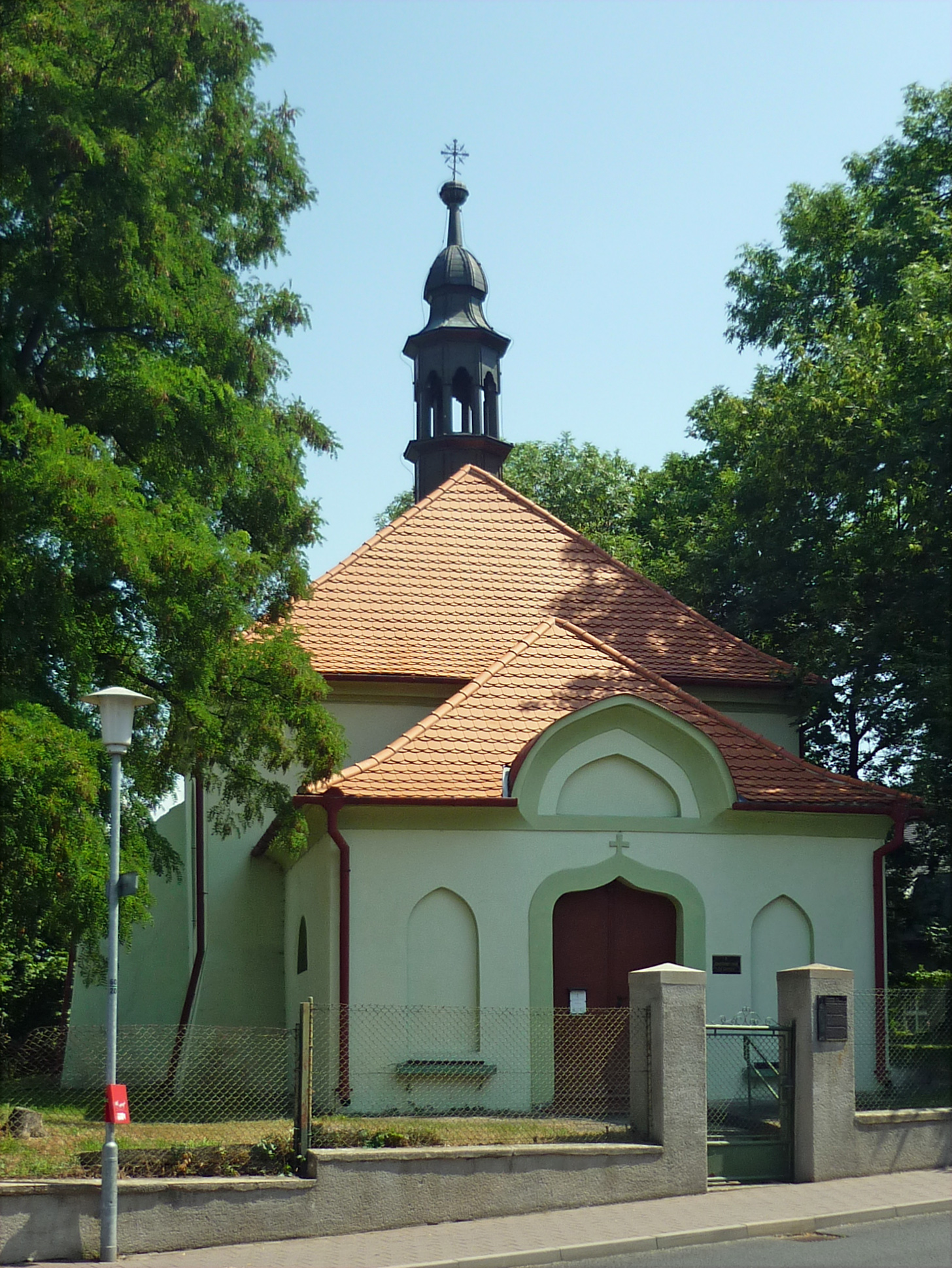
The Church of Saint James the Greater stands in Žatec, a town in the Ústí nad Labem region best known for its hop-growing tradition, in what used to be the Upper Suburb, also called Pražské předměstí. It's a small Gothic building with later Baroque additions that has switched purpose and denomination more than once over the centuries, and today serves the local Orthodox community.
When was the church built and who did it originally serve?
The earliest written record of the church dates to 1359, though the building itself is likely older. It began life as a Roman Catholic parish church, serving residents of a suburb that lay outside the town's main walls. By the 16th century, the St. James suburb had grown important enough to function almost like a separate municipal unit, with its own mayor answering independently of Žatec's town authorities.
How did the building's role change over time?
The church's history is anything but a straight line. In 1649, a small charitable hospital was founded next to it, and the church itself took on the role of the hospital chapel. In 1675, Capuchin friars used the building for a period. From the time of the Hussite Wars onward, the ground around the church also served as Žatec's main municipal cemetery, with burials continuing there until 1866, when the cemetery was finally closed. After the Second World War, following the resettlement of Volhynian Czechs in the region, the church was handed over to the local Orthodox parish — a role it still holds today.
What does the church's architecture look like?
The building is a single-nave structure without a tower, with a presbytery closing triangularly toward the east. The nave has a flat ceiling and pointed Gothic windows on each side, while the sacristy is covered by a barrel vault. A Gothic portal survives on the north wall, though it has since been walled up. In 1752, a Baroque vestibule was added on the western side, giving the building the mixed Gothic-Baroque look it still has.
What's worth seeing inside?
The interior holds Renaissance tombstones built into the walls, including the epitaph of Kateřina Eliščinová, wife of one of the town's mayors — a reminder of the era when the suburb ran its own civic affairs. The most distinctive feature, though, is an iconostasis brought from Volhynia, dating from the turn of the 18th and 19th centuries. Its icons are arranged in four rows: Old Testament prophets at the top, apostles below them, scenes from the life of Christ beneath that, and at the bottom larger icons of the Archangel Gabriel, the Virgin Mary with the Christ Child, Christ himself, and the church's patron, Saint James.
Is the church still used for religious services?
Yes. The building serves as the seat of the Orthodox parish community in Žatec, and services are held regularly on Sundays and holidays. Visitors should keep in mind that this remains an active place of worship rather than a museum piece, which is worth factoring in when planning a visit outside liturgy hours.
FAQ
Where exactly is the Church of Saint James the Greater located? In Žatec, in the Ústí nad Labem region, within the area of the former Upper Suburb (Pražské předměstí), outside the town's historic core.
What denomination is the church today? Since shortly after the Second World War, it has been an Orthodox church, used by the local parish.
Where did the church's iconostasis come from? It came from Volhynia and reached Žatec along with Volhynian Czech resettlers after 1945.
What was the church used for in the 17th century? From 1649 it served as a hospital chapel, and in 1675 it was briefly used by Capuchin friars.
Was there a cemetery next to the church? Yes — from the time of the Hussite Wars until 1866, the area around the church was Žatec's main municipal cemetery.
Nearby places

Earn badges for the places you visit
Download NextOnTrip, discover new places and check off your trails.