About this place
The Church of Saint George in Voletice is a small Gothic church at the edge of a village that today forms part of the town of Luže in the Pardubice Region. It stands on a terrace above the valley of the Novohradka stream, right next to the Voletín pond, and its elevated position has made it a landmark visible from far around for centuries.
How old is the church?
Voletice first appears in written sources in 1349, and just a year later, in 1350, the church is already listed among the parishes of the newly established Litomyšl bishopric. That places its origins in the second quarter of the 14th century, making it one of the oldest sacred buildings in this part of the Pardubice Region. A surviving document from 1394, recording a land exchange between local clergy, confirms that an organized parish already existed here at the time.
What did the original building look like?
The earliest church was built of wood. It was only replaced by a masonry structure in the early 17th century, rebuilt in a late Gothic style that largely shaped the appearance the church still has today. The interior received a flat wooden ceiling dated to 1626, which still covers the nave.
What does the church look like architecturally?
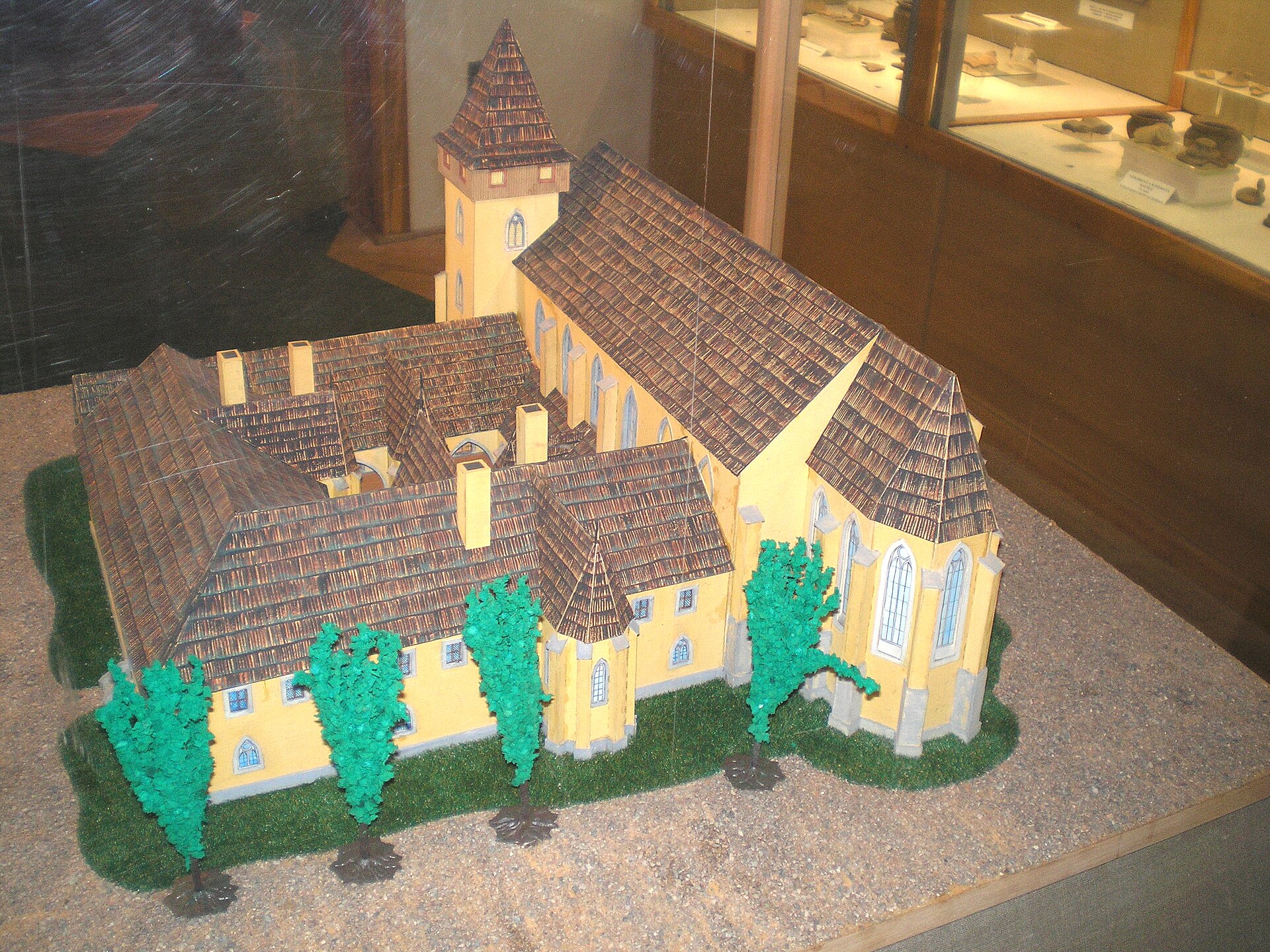
The building is a single-nave, east-oriented church with a narrower, polygonally closed presbytery set back from the nave, and a tower built into the facade. The presbytery is covered by a Gothic cross-ribbed vault, its ribs converging into a six-armed pattern that ends in flat, profiled bosses — a detail typical of late Gothic stonemasonry. A narrower, flat-roofed sacristy was added on the east side. Later, less invasive alterations followed in the mid-18th century and again in 1899.
What can visitors see inside?
The walls are decorated with Baroque frescoes, and the main altar dates from the second half of the 17th century. The 1899 renovation also brought a painting of Saint George by Jan Umlauf, depicting the church's patron in his traditional role as the knight who defeats the dragon. Interestingly, the most valuable object once kept in the church no longer stands here: a late-16th-century Gothic shrine (archa) showing Saint George in armor on a white horse slaying the dragon has been held by the National Museum in Prague since 1903.
What surrounds the church?
The church stands within a former cemetery, where fragments of old gravestones still survive. A stone wall encloses the grounds and also serves a supporting function, holding back the slope on which the whole complex sits. Thanks to its exposed position above the Novohradka valley, the church remains a primary landmark of the surrounding landscape, visible from the roads leading through the area.
Frequently asked questions
Where exactly is the Church of Saint George located? In the village of Voletice, part of the town of Luže in the Chrudim District, Pardubice Region, at the western edge of the village above the Novohradka stream.
When was the church built? It is first recorded in 1350 and dates back to the second quarter of the 14th century; originally wooden, it was rebuilt in masonry in the early 17th century.
What is the most valuable object connected to the church? A late-16th-century Gothic shrine depicting Saint George slaying the dragon, kept at the National Museum in Prague since 1903.
Has the cemetery around the church survived? Yes, the former cemetery around the church still contains fragments of old gravestones and is enclosed by a stone wall that also functions as a retaining wall.
Where does the wooden ceiling in the nave come from? It dates to 1626, from the period when the church was rebuilt from wood into masonry.
Nearby places

Earn badges for the places you visit
Download NextOnTrip, discover new places and check off your trails.