About this place
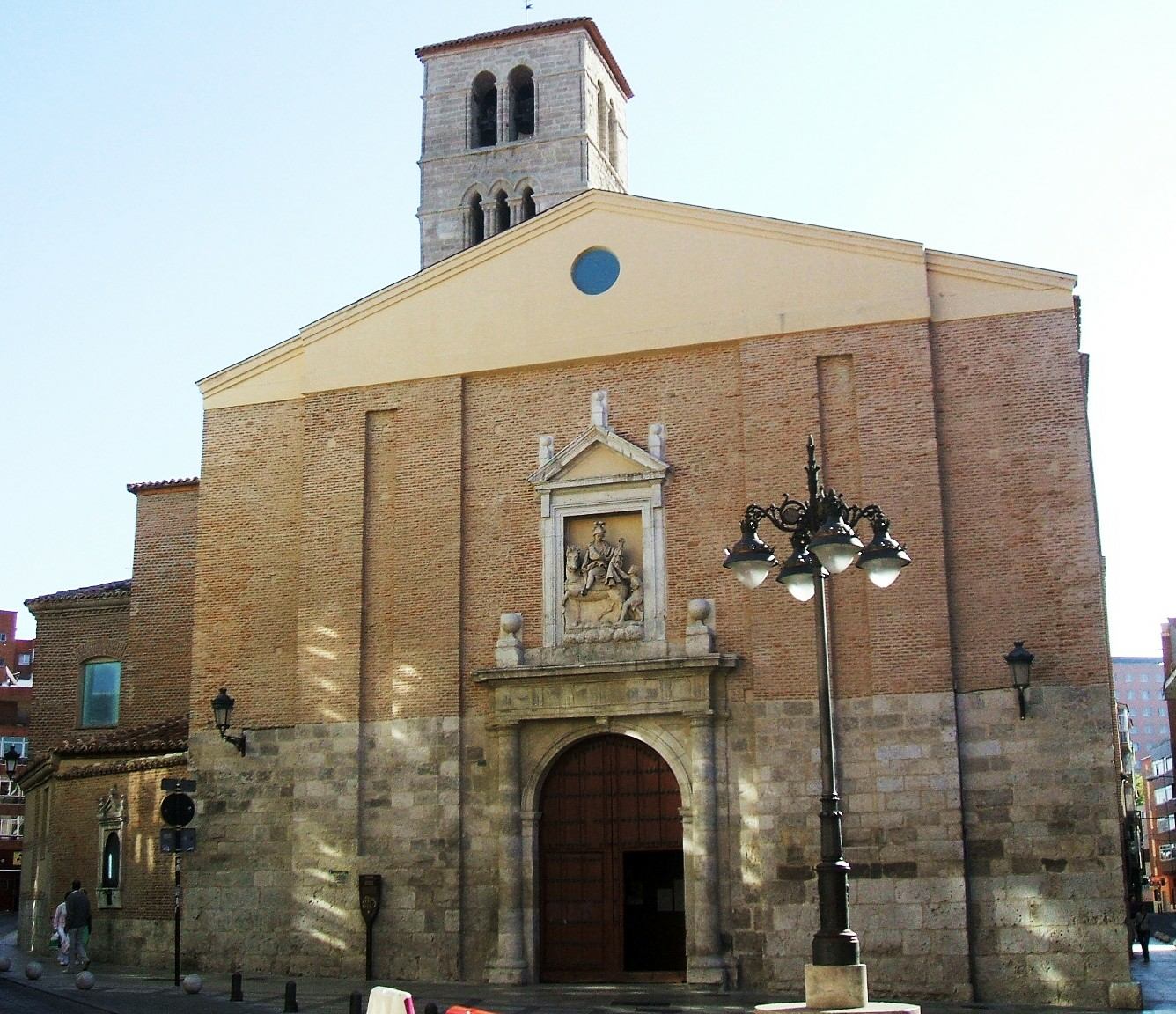
The Church of Nuestra Señora de las Angustias stands in the heart of Valladolid, in northwestern Spain, right across from the site once occupied by the Almirante palace — today home to the Teatro Calderón. For centuries this church has served as the headquarters of one of the city's oldest religious brotherhoods, and it remains one of Valladolid's most distinctive sacred buildings.
Where did this church come from?
The building's story is tied to a brotherhood (cofradía) founded before 1536, which was originally based on what is now Calle Torrecilla — known in the 16th century as Calle de las Angustias Viejas. Toward the end of that century the brotherhood relocated to its current site, and in 1597, funded by a couple named Aranzamendi, construction began on a new church meant to be the community's permanent seat. The design and direction of the works were entrusted to architect Juan de Nates, supported by a team of stonemasons including Gaspar Vallejo and Martín de Uriarte.
What will you see inside?
The interior reflects the sober, restrained style typical of Valladolid's penitential churches — architecture that favors clean structure over ornamentation. The nave is divided into two bays covered with a groin vault, while side chapels are tucked between the buttresses. Above the crossing rises a hemispherical dome topped with a lantern.
Between 1704 and 1710, an octagonal chapel was added perpendicular to the main nave, connected to the transept and covered with its own dome and lantern. This chapel houses the church's most valuable piece: a polychrome wood sculpture of Our Lady of the Angustias, carved by Juan de Juni, one of the leading sculptors of the Spanish Renaissance.
In the presbytery, the main altarpiece depicts the Annunciation — the sculptural work was created by Francisco de Rincón, while the assembly was carried out by Cristóbal Velázquez, based on designs by Juan de Nates himself.
Why does this place matter to Valladolid?
The church is closely tied to Valladolid's Holy Week (Semana Santa) celebrations, among the most renowned in all of Spain. The brotherhood based here has organized penitential processions for generations, and the sculpture of Our Lady of the Angustias is one of the central devotional images during those events. For anyone visiting the city in March or April to follow the Semana Santa route, this church is one of the essential stops.
How to get there and when to visit?
The church sits right in Valladolid's historic center, within walking distance of major landmarks such as the cathedral and Plaza Mayor, so no public transport is needed to reach it. Visiting outside peak tourist periods allows for a quieter look at the interior, though many travelers deliberately time their trip around Holy Week to witness the processions that depart from here. It's worth checking local opening hours before visiting, as they can vary depending on the season and the liturgical calendar.
Frequently asked questions
Who designed the Church of Nuestra Señora de las Angustias? Construction began in 1597 under the design and supervision of architect Juan de Nates, working with a team of stonemasons under his direction.
What is the most valuable piece inside the church? The polychrome wood sculpture of Our Lady of the Angustias, carved by Juan de Juni, displayed in the octagonal chapel added between 1704 and 1710.
What architectural style does the church represent? It follows the sober, restrained style typical of Valladolid's penitential churches, with a groin-vaulted nave and a dome over the crossing.
Why is the church associated with Holy Week? Because it is the seat of one of Valladolid's oldest penitential brotherhoods, which has organized Semana Santa processions for centuries, with the church's patron sculpture serving as one of the focal points of those celebrations.
Nearby places

Earn badges for the places you visit
Download NextOnTrip, discover new places and check off your trails.