- Sacred Monuments
- Churches
Church of Nuestra Señora de la Asunción, Quintanatello de Ojeda
About this place
The Church of Nuestra Señora de la Asunción stands in Quintanatello de Ojeda, a small village within the municipality of Olmos de Ojeda in the province of Palencia, northern Castile and León. It is one of many modest Romanesque churches scattered across this corner of rural Spain, and its layered construction history makes it a rewarding stop for anyone tracing the Romanesque routes of Palencia.
What architectural style does the church belong to?
The building was raised in ashlar and rubble masonry starting in the early 13th century, following the Romanesque conventions common to the area. Only the chancel and the bell tower survive from that original phase; the rest of the structure was reworked over the following centuries, with the final campaign completed in the 17th century. That later work deliberately echoed older Romanesque forms while also absorbing early Gothic influences, so the church reads today as a building with several historical layers folded into one compact volume — a pattern typical of village churches throughout the Ojeda valley.
How is the church laid out inside?
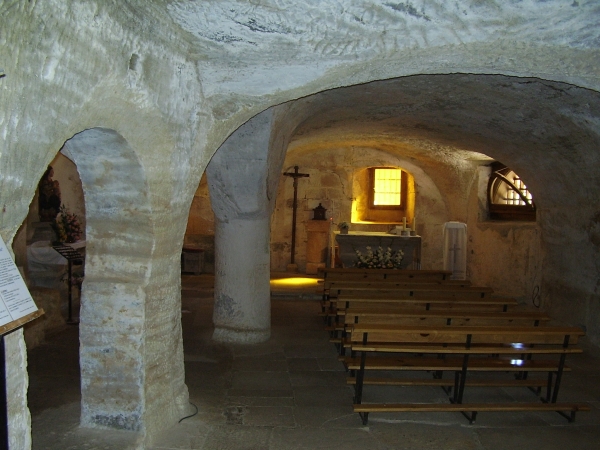
The plan is simple: a single nave ending in a semicircular apse. Over time, two side chapels and a sacristy were attached to this original core. On the south side, a porch was added to shelter the main entrance — a common feature in the region, where covered porches protected both worshippers and the doorway itself from the harsh mountain climate of northern Palencia.
What makes the entrance portal noteworthy?
The most striking decorative feature is the entrance portal, framed by a round arch and two archivolts. One is carved with a checkerboard pattern, while the other carries a molding decorated with plant, geometric, and animal motifs, part of the standard repertoire of Romanesque stone carving found across the Ojeda valley. Above the portal sits a roughly hewn relief of the Crucifixion, showing Christ on the cross flanked by the Virgin Mary and Saint John. The carving's blunt, unpolished execution is not a flaw but a hallmark of rural Romanesque sculpture, distinct from the more refined work produced in larger urban workshops of the period.
Where exactly is the church located?
Quintanatello de Ojeda belongs to the municipality of Olmos de Ojeda, in the province of Palencia, Castile and León, close to coordinates 42.734929, -4.458959. The village sits within the Comarca de Ojeda, an area known for its dense concentration of small Romanesque churches built between the 12th and 13th centuries, making it a natural stop for anyone touring rural Palencia by car in search of sacred architecture off the main tourist trail.
Frequently Asked Questions
How old is the Church of Nuestra Señora de la Asunción? Its oldest parts, the chancel and bell tower, date to the early 13th century, while the building as a whole was not finished until the 17th century, when later builders followed earlier Romanesque models.
What does the carving above the entrance depict? The relief over the portal shows the Crucifixion, with Christ on the cross accompanied by the Virgin Mary and Saint John, carved in a rough, popular style typical of rural workshops.
Does the church have rooms beyond the main nave? Yes, the single-nave body with its semicircular apse was later extended with two side chapels and a sacristy, and a covered porch shelters the entrance on the south side.
What region is Quintanatello de Ojeda part of? It lies in the Comarca de Ojeda, within the province of Palencia, an area recognized for its many rural Romanesque churches built between the 12th and 13th centuries.
Nearby places

Earn badges for the places you visit
Download NextOnTrip, discover new places and check off your trails.