About this place
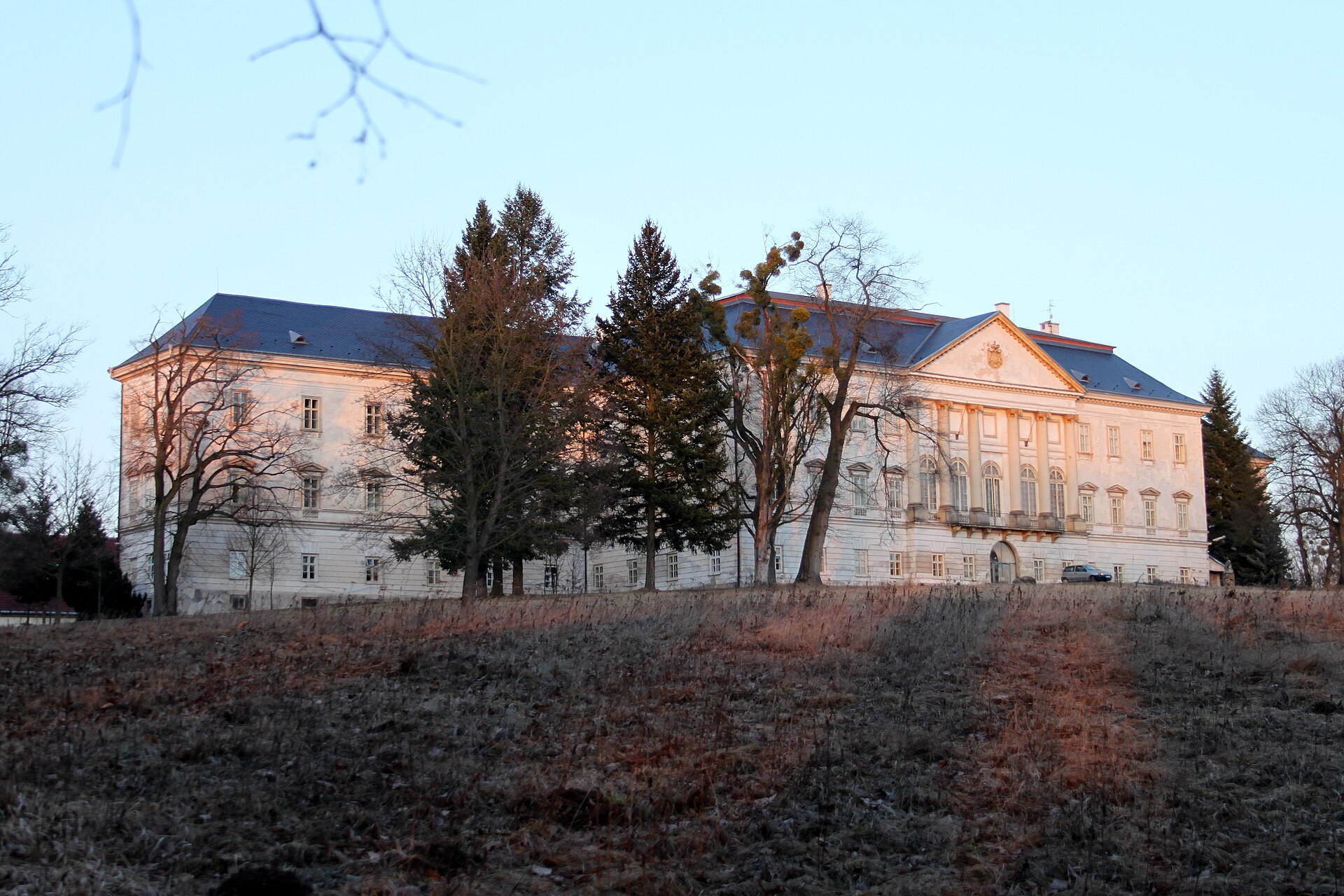
Chudobín Castle is a Classicist residence with Neo-Renaissance touches, standing in the village of Chudobín, an administrative part of the town of Litovel in Moravia — a building with centuries of rebuilding behind it that today sits neglected, yet still counts among the more intriguing stops in the Litovel area.
Where exactly is the castle located?
Chudobín is a small village forming part of Litovel, a town in the Olomouc District within the Olomouc Region of the Czech Republic. The castle stands within its own park on the eastern edge of the village, close to the Morava riverbed and the Litovelské Pomoraví area, a landscape known for its floodplain forests and network of side river channels.
What stood here before the castle?
The earliest written record of a stronghold at Chudobín dates back to 1448, and even then the document describes it as already abandoned. No sources survive detailing exactly who built the original fortification or when, but the mere existence of a mid-15th-century mention shows the site held defensive value long before today's residence took shape.
How did the Renaissance castle come about?
The castle proper was built in 1571 as a three-wing Renaissance structure. Jáchym Zoubek of Zdětín is usually credited as the builder, though sources are not entirely conclusive on this point. Regardless, this 16th-century three-wing layout became the core around which the rest of the building grew over the following centuries.
What changed during the Baroque rebuilding?
Between 1712 and 1714 the castle underwent a Baroque renovation under its then owner, Rudolf Kristián of Witten. This is when the fourth wing was added, closing the building into a full quadrangle, and when the characteristic arcades were built. From this point on, the castle essentially had the complete floor plan that has largely survived to the present day.
Where does its current Classicist look come from?
The last major architectural overhaul took place in 1847, designed by the architect Anton Arche and commissioned by the then owner, Antonín Tersch. The castle was raised by an additional storey, and the original corner arcades were extended all the way down to ground level, creating the distinctive corner towers still visible today. The result of this work is the Classicist character with Neo-Renaissance elements that defines the building's appearance now.
What happened to the castle during the 20th century?
In 1980 the state-owned company Sigma converted the building into a recreational centre with hotel facilities, and the castle served employees and guests as a leisure destination. Following privatisation, the estate was acquired by the company Sidia, which closed the facility down in 2004. Since then the building has stood largely unused and has been gradually deteriorating, despite being listed as a protected cultural monument of the Czech Republic.
Can visitors tour the castle today?
The castle building itself is not open for regular visits — its poor technical condition has worried local residents and the Litovel authorities for years, and rescue plans have floated the idea of funding renovation through the sale of apartments built on the surrounding land. The park surrounding the castle, however, is occasionally opened to the public, including during nationwide open-garden weekend events, when visitors can walk the grounds without entering the building itself.
Frequently asked questions
Where is Chudobín Castle located? In the village of Chudobín, part of the town of Litovel in the Olomouc District, near the Litovelské Pomoraví area.
How old is the castle? Its current form dates from 1571, though the first mention of a stronghold on the site goes back to 1448.
Can you visit the inside of the castle? Not on a regular basis — the building is neglected and closed to tourists, though its surrounding park is sometimes opened to visitors.
Who carried out the castle's last major rebuild? The architect Anton Arche in 1847, commissioned by owner Antonín Tersch, giving the castle its current Classicist look with corner towers.
Nearby places

Earn badges for the places you visit
Download NextOnTrip, discover new places and check off your trails.