About this place
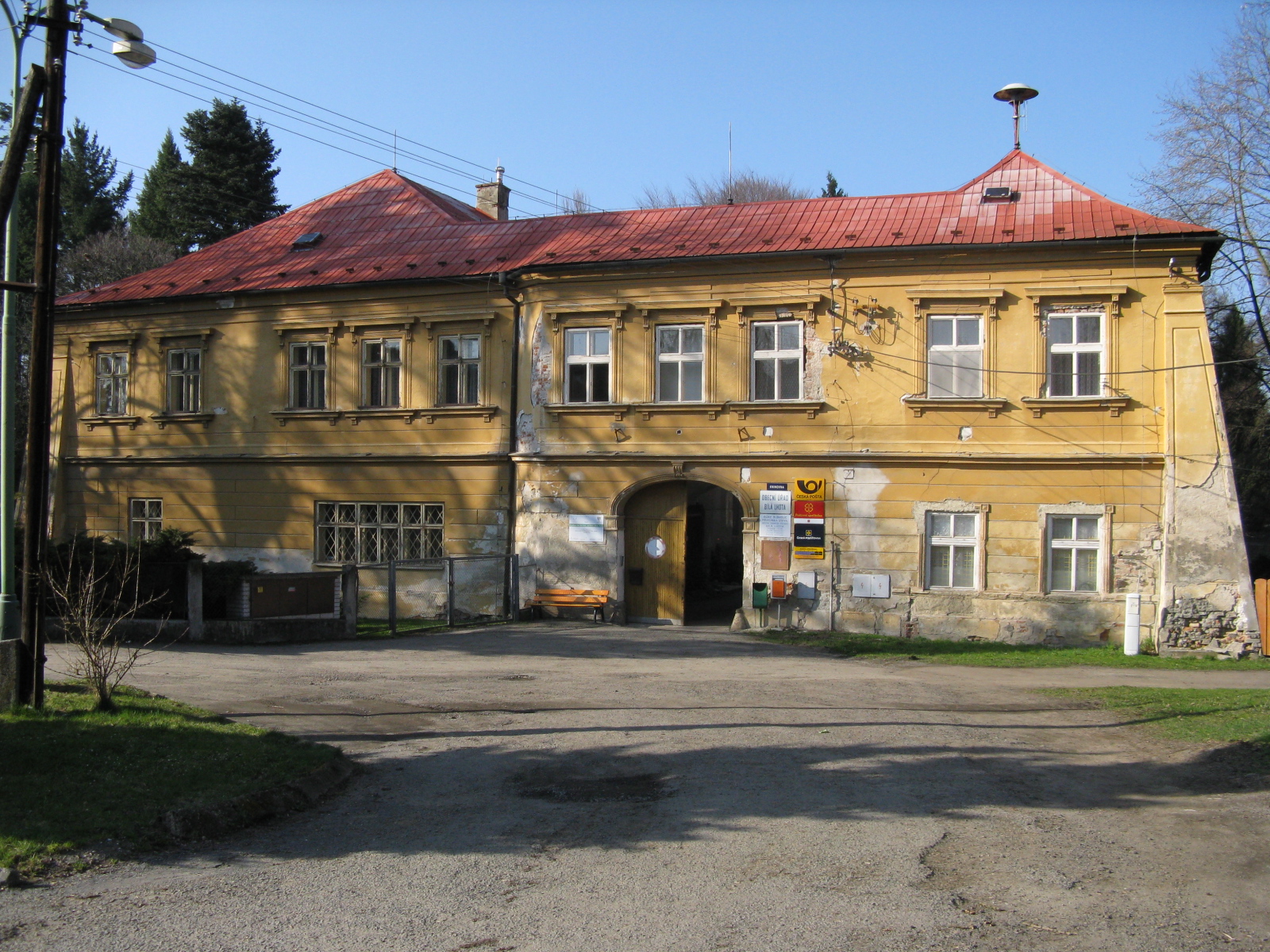
Bílá Lhota Castle is a modest Renaissance-turned-Classicist manor house in the village of Bílá Lhota near Litovel, best known today for the historic landscape park and arboretum that surrounds it.
Where does the estate's history begin?
The earliest recorded owner of the property was a certain Ješek ze Lhoty, mentioned in 1437. What began as a fortified stronghold gradually lost its defensive character in favor of residential use. During the 16th century, under Jan Záviš and his wife Kunka z Kobylí, the old fortification was rebuilt into a four-wing Renaissance chateau. Subsequent alterations progressively erased most of the Renaissance detailing, and by the early 19th century the building had taken on the appearance it still has today: a modest, single-story, four-wing structure arranged around a small inner courtyard.
Why does the park matter more than the building itself?
The green surroundings of the castle actually have a longer story than the architecture. As early as the mid-15th century, an orchard and vegetable garden stood next to the stronghold, and around the turn of the 16th and 17th centuries an oak grove was planted — known today as the Jízdárna — some of whose original trees survive to this day. The park proper was laid out around 1700, coinciding with a renovation of the manor house, and in the first half of the 19th century Jan Vojtěch Speil established an English-style landscape park on the grounds.
A turning point came in 1870, when the estate was bought by Jan Riedel, under whose influence the park took on a French-English character. It was his grandson, dendrologist Quido Riedl, who gave the park its present form: he assembled several hundred species of ornamental trees, added a rock garden, and drew on experience gained working at the arboretum in Nový Dvůr near Opava.
What happened to the park after the war?
After the Second World War, the entire Riedl estate passed to the state. The local national committee lacked the funds needed for proper maintenance, and the park began to decline. The situation changed in 1965, when the grounds were taken over by the Museum of Natural History in Olomouc — administration passed to the Regional Museum in Olomouc the following year — and since then nearly 300 additional plant species have been added to the collection.
What can visitors see today?
The park opened to the public as Arboretum Bílá Lhota in 1968 and was declared a protected area the following year. Today it holds the status of a national natural monument, covering an area of just under three hectares that is home to close to 500 species and cultivars of ornamental trees and shrubs — ranging from native oaks, beeches, and lindens to exotic species introduced over subsequent decades. The castle itself, modest compared with grander residences elsewhere in the region, serves as the natural focal point of the entire park composition.
The site draws visitors interested in residential architecture as well as those with an eye for dendrology — the unusual pairing of a small manor house with one of Moravia's richest arboretums makes it a distinctive stop in the Olomouc region.
Frequently asked questions
Can visitors go inside Bílá Lhota Castle? The main draw is generally the surrounding park, Arboretum Bílá Lhota, open to visitors since 1968. It's worth checking current access to the castle interior directly before a visit, as it can vary seasonally.
What is the biggest attraction here? Above all, it's the park — a national natural monument holding nearly 500 species and cultivars of ornamental trees and shrubs, assembled largely thanks to the work of dendrologist Quido Riedl in the first half of the 20th century.
When did the castle take on its current appearance? The building acquired its present four-wing, single-story form in the early 19th century, though the estate's history stretches back to the 15th century, with an earlier Renaissance rebuilding taking place in the 16th century.
Who manages the site today? Since the 1960s, the park has been cared for by the Regional Museum in Olomouc, which continues to expand the dendrological collection begun by the Riedl family.
Nearby places

Earn badges for the places you visit
Download NextOnTrip, discover new places and check off your trails.