About this place
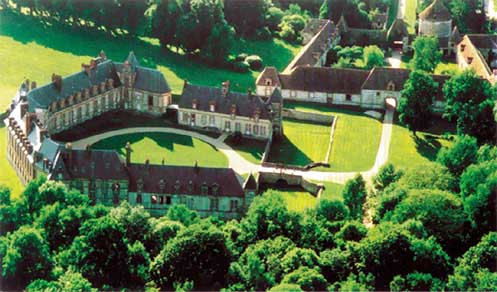
Château du Haut Rosay sits above the Vaucouleurs valley in the small village of Rosay, in the Yvelines department west of Paris, and is one of the region's quieter but historically dense country estates. Built on a bastioned terrace ringed by dry moats, the estate combines seventeenth-century military-style fortification with an eighteenth-century picturesque garden, and today holds official historic-monument status.
How old is the castle at Rosay?
Records already mention Rosay in 1036 as the seat of a castellany, and a fortress on the hill overlooking the Vaucouleurs valley served a defensive role during William Rufus's incursion into Capetian territory at the close of the eleventh century. The building visitors see today, though, dates from much later. The lordship of Bas Rosay passed to the Courtin family in 1513 through the marriage of Jean Guillaume I Courtin to Geneviève du Bois, and in 1597 Jean III Courtin merged it with the neighboring fief of Haut Rosay. Early in 1615, Jean III authorized his eldest son, François Courtin, to build a château and a fortified house surrounded by ditches — the very structure still standing on its bastioned terrace today.
Who owned the estate after the Courtins?
Ownership shifted again in the eighteenth century. Charles Savalette purchased the property in 1748, then sold it on in 1760 to Jacques Louis de Brétignières, the last marquis of Rosay-Villette. It was under his tenure that the château's interiors underwent a thorough renovation commissioned from architect Denis Antoine, who also reshaped the surrounding grounds into a picturesque garden dotted with ornamental follies, following the landscaping fashions of the period.
What's worth seeing in the park?
The park is as much a part of the estate's identity as the château itself. Remodeled in the picturesque style during the eighteenth century, it still traces the outline of the earlier fortifications — terraces, dry moats, and retaining walls mark the boundaries of the old stronghold, even though they now serve a purely decorative function. Surviving hydraulic features tied to the original water management of the grounds add extra interest for anyone curious about the history of French landscape gardening.
Is the château officially protected?
Yes. The château du Haut Rosay, together with its park, outbuildings, moats, terraces, walls, and hydraulic installations, was listed as a monument historique on 19 February 1992. The protection therefore covers not just the main building but the entire historic layout of the estate, underlining its value as a record of how a French noble residence evolved from a defensive stronghold into a refined eighteenth-century country seat.
Frequently asked questions
When was Château du Haut Rosay built? The château known today was built starting in early 1615, commissioned by François Courtin, son of Jean III Courtin, then lord of Rosay.
Who designed the park around the château? The picturesque redesign of the park was overseen by architect Denis Antoine, hired by the marquis de Brétignières after he acquired the estate in 1760.
Is this the same building as the eleventh-century stronghold at Rosay? Not quite. An earlier fortification on the hill above the Vaucouleurs valley already existed at the time of William Rufus's incursion in 1098, while the château standing today is a later structure built from 1615 onward on the site of those earlier defenses.
Does the château hold heritage protection status? Yes, since 19 February 1992 the entire estate — château, park, outbuildings, moats, terraces, and walls — has been listed among France's monuments historiques.
Nearby places

Earn badges for the places you visit
Download NextOnTrip, discover new places and check off your trails.