About this place
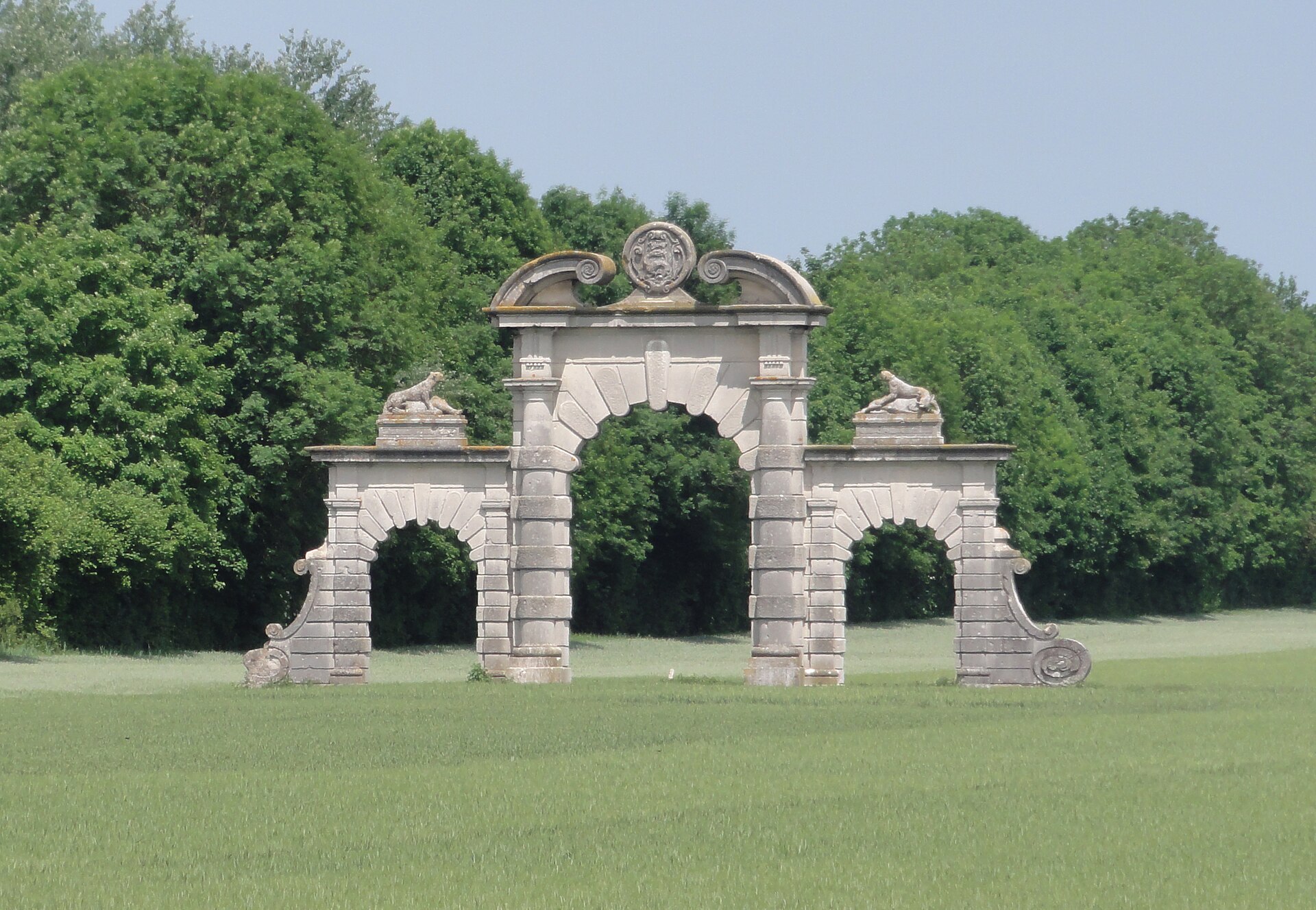
Château de Soupir, in the village of Soupir in the Aisne department, is not really a château anymore — what remains is a single monumental stone gateway, the last trace of a residence with a long and turbulent past. The site sits south of Laon, in the Aisne valley, right in the heart of the Chemin des Dames, one of the most fought-over stretches of the Western Front in 1914–1918.
How do you get there?
Soupir lies along the river Aisne, a short drive from both Laon and Soissons, the nearest towns with rail connections. The village is best reached by car along the local roads that follow the valley. The old gateway stands at a bend in the road, tucked behind a five-metre wall, so it is easy to miss if you are not looking for it — worth marking on a map before setting off.
What will you see?
The estate's story starts far earlier than the surviving gate suggests. A wooden stronghold stood here as early as the 9th century, followed by a medieval fortress in the 11th century. In the 16th century the Juvénal des Ursins family, established in Soupir from 1456, turned the fortress into a more comfortable manor house. During the 17th century the grounds were laid out with a formal French garden and a large ornamental canal.
Ownership changed hands repeatedly over the following centuries: Pierre Baudoin bought the estate in 1599, Joseph Alexandre Coste de Champéron in 1754, and in 1800 it passed to Charles Hippolyte de Berthelot, viscount of Villeurnoy. In 1871 the château was acquired by Pauline Piper (Madame Plé), who rebuilt it from 1876 in a Renaissance style, keeping the two stone towers that had survived from the medieval fortress. The park itself was later redesigned by the landscape architect Édouard Redon.
That version of the château lasted only until the First World War. It was destroyed by shelling in November 1914 as fighting engulfed the Aisne front, and the ruins were finally cleared away in 1926. All that survives today of the château, park, garden and enclosing walls is a monumental portal dated 1908, decorated with hunting-themed figures.
The village itself holds further layers of history: a listed church and four military cemeteries belonging to different nationalities, all connected to the fighting along the Chemin des Dames. A marked walking and cycling route, "Au fil du val de l'Aisne", runs through the area with interpretation panels and an audio guide, passing through several dozen metres of a former German trench known as "Tirpitz".
When should you visit?
Spring and summer are the best seasons, when the paths through the Aisne valley are easiest to walk and the long daylight hours let you combine the gateway with the nearby war cemeteries and other Chemin des Dames sites. In autumn and winter the valley floor can turn wet and muddy, which makes the longer walking routes harder going.
Frequently asked questions
Can you still visit the inside of the château? No — the building itself was destroyed in 1914 and dismantled in 1926. The only part left to see is the monumental gateway dated 1908.
What exactly is left to see on site? A stone entrance gate decorated with hunting motifs, standing alone by the road; the château and park it once led into are gone.
Is there anything else worth seeing in Soupir? Yes — a listed church, four military cemeteries of different nationalities, and a walking/cycling trail with history panels that passes through the German "Tirpitz" trench.
How do you get to Soupir? By car is easiest, via local roads from either Laon or Soissons, following the Aisne valley.
Nearby places

Earn badges for the places you visit
Download NextOnTrip, discover new places and check off your trails.