About this place
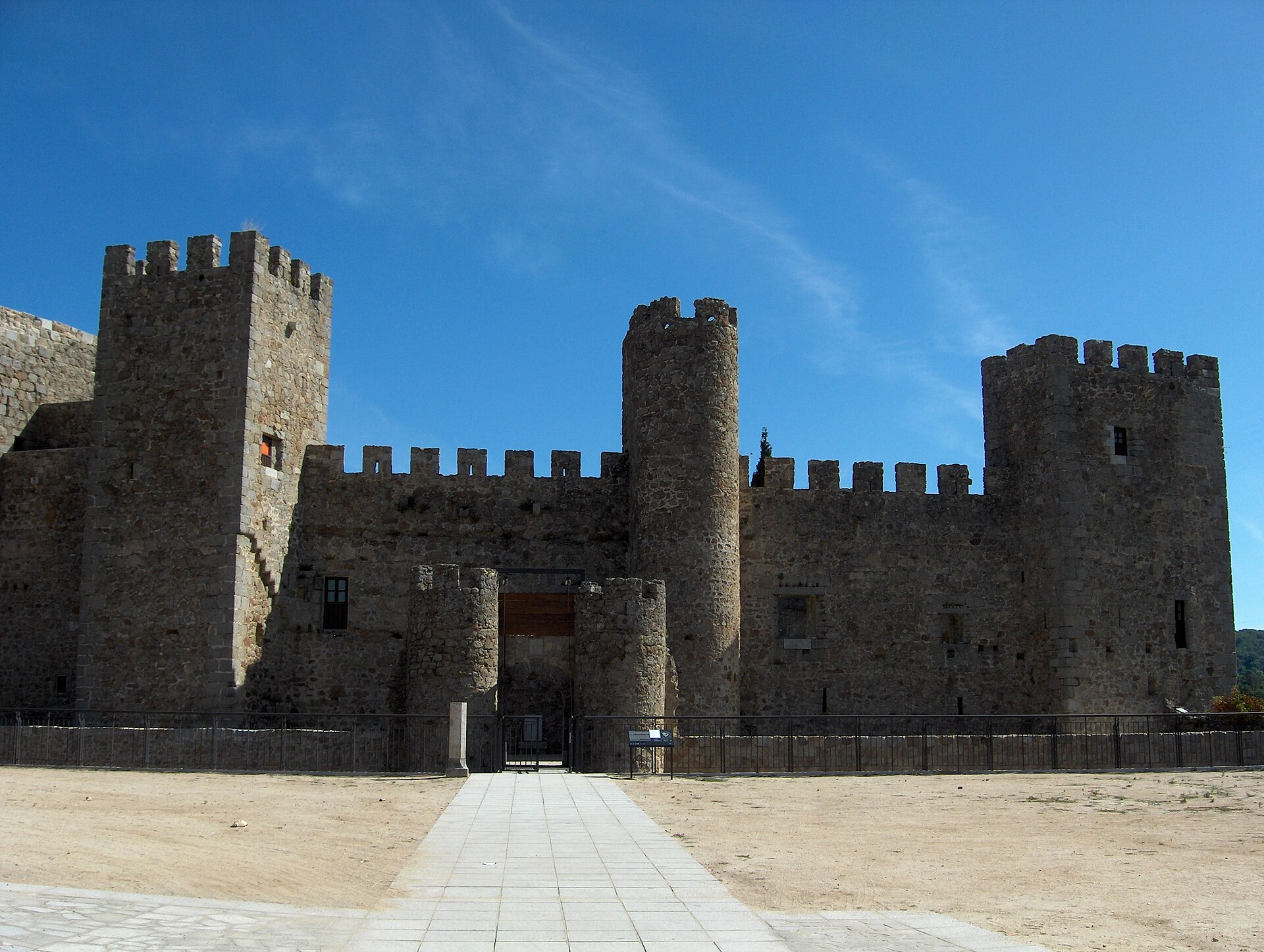
Castle of Montemayor del Río (Castillo de San Vicente) crowns the hilltop above the town of Montemayor del Río, in the province of Salamanca, right along the historic Vía de la Plata route linking Extremadura with the kingdoms of León and Castile. It stands as one of the best-preserved fortresses in the region and the town's principal landmark.
What will you see on site?
The fortress is built around an unusual six-tower layout: four square towers and two semicircular ones set along the perimeter walls. A defensive wall once ran from the castle all the way down to the town's main square, and traces of that line can still be followed in the layout of the old streets. The castle sits within the same fortified enclosure as the parish church, giving visitors a clear picture of how a medieval defensive settlement combined military and religious functions in one compact space.
The walls and interior have undergone a recent restoration, and the site is now open to visitors, with locally arranged guided tours available. Walking the courtyard and the wall line offers wide views over the valley and the surrounding Sierra de Béjar hills.
How do you get there?
Montemayor del Río lies in the province of Salamanca, in the Castilla y León region, on the road connecting Béjar with the southern part of the province. Arriving by car is the most practical option, since the town sits just off the local roads branching from the main routes between Salamanca and Extremadura. The castle is visible from a distance, towering over the town, and the walk uphill from the centre takes only a few minutes.
Why does this castle matter historically?
The fortress served as the most forward bastion controlling the passage between the kingdoms of León and Castile and the region of Extremadura during the Reconquista. Its position on the Vía de la Plata — an ancient trade and military route running north–south across the Iberian Peninsula — made it a prize held by successive noble families over the centuries, including the Silva family (marquises), and later linked to the title of the dukes of Montemar. At certain periods it also functioned as a royal castle under the direct control of the crown.
The town's historic-artistic ensemble, which includes the castle and its surroundings, received official heritage protection in 1982, underlining its significance to the region's heritage.
When should you visit?
Spring (April to June) and early autumn (September and October) offer the mildest conditions in the Salamanca area and show the Sierra de Béjar landscape at its best. Summers can get hot, particularly around midday, so it is worth planning a visit for the morning or late afternoon.
Frequently Asked Questions
Can the castle be visited with a guide? Yes, following its recent restoration the site is open to the public, and guided visits are available locally.
How many towers does the castle have? Six in total: four square towers and two semicircular ones, arranged along the line of the old defensive walls.
Why was the castle built in this exact spot? Because of its position on the Vía de la Plata route and its strategic control over the passage between Extremadura and the kingdoms of León and Castile during the Reconquista.
Is there anything else to see near the castle? Yes, the parish church stands within the same fortified enclosure, and the town together with the castle has formed part of a protected historic-artistic ensemble since 1982.
Nearby places

Earn badges for the places you visit
Download NextOnTrip, discover new places and check off your trails.