About this place
Castillo de la Murta is a medieval hilltop fortress overlooking the countryside near Agost, a small town in the province of Alicante best known for its centuries-old pottery tradition. The ruins sit atop a rocky peak in the La Murta range, roughly 7 km from the center of Agost, in the direction of Sant Vicent del Raspeig, within the L'Alacantí region.
Where exactly is the castle located?
The fortress occupies a prominent, rocky summit surrounded by the dry, stony terrain typical of this part of Alicante. The position was chosen deliberately: from this vantage point, the surrounding valleys are visible for miles, which made the spot a natural lookout and defensive stronghold as far back as the Islamic period.
What is the history behind Castillo de la Murta?
The castle has Muslim origins. It began as a small watch fortification — a tower or minor stronghold — whose role was to protect and control the route linking the mountainous interior with the coast and the city of Alicante. From this post, guards monitored the movement of people and troops approaching from the eastern side of Agost.
The turning point in the castle's history came with the Muslim uprisings that followed the Castilian conquest of the region. Rebels entrenched themselves in the Castellet de la Murta, relying on its remote and defensible position. It ultimately took King James II of Aragon himself to retake the castle and its surrounding settlement, restoring Castilian control over the area.
What remains to see on site today?
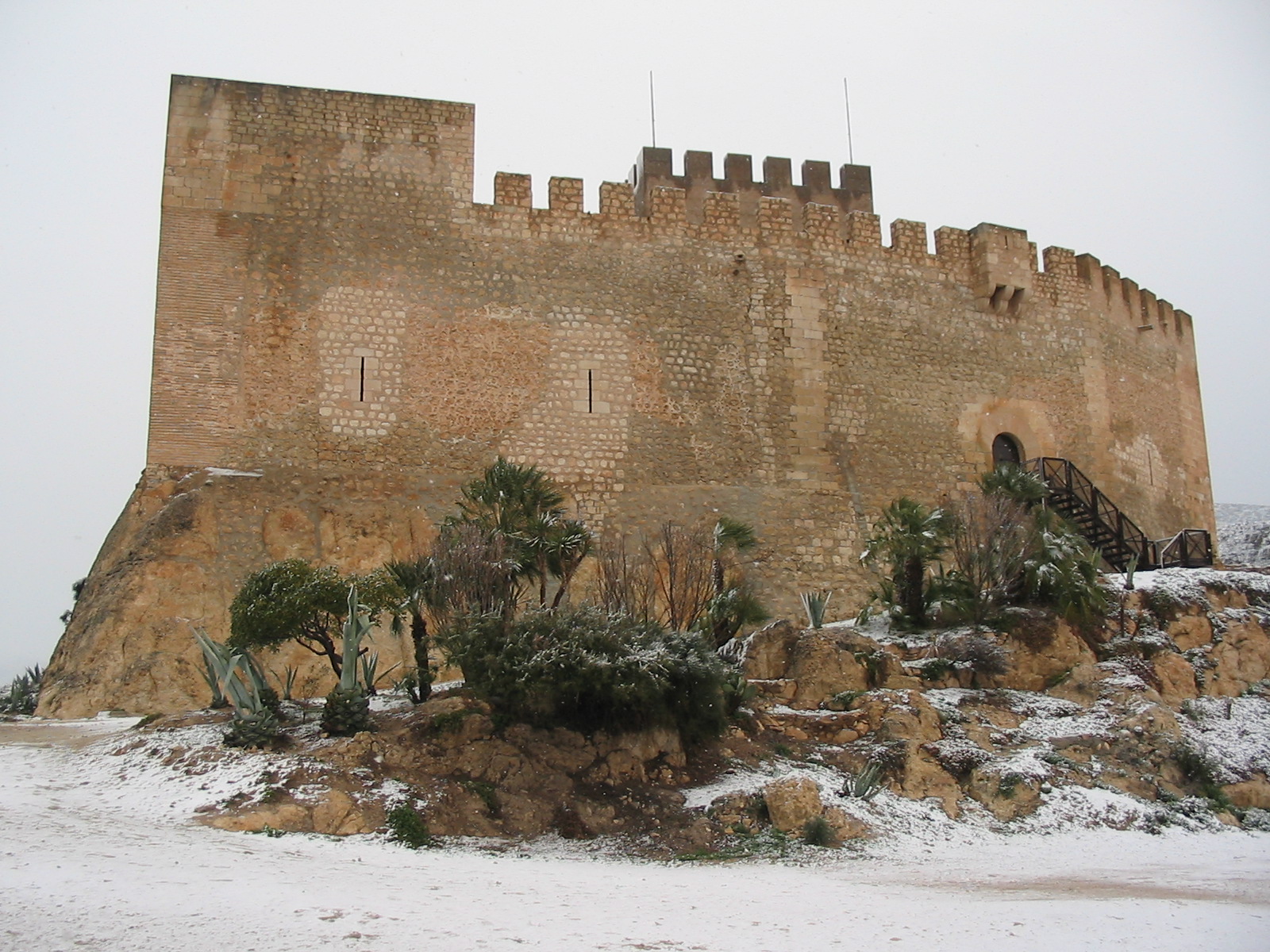
Of what was once a strategically important fortification, only scattered traces survive. On the hilltop, visitors can make out sections of defensive wall and the foundations of several towers, enough to reconstruct the general layout and scale of the original structure. This is a site for those interested in medieval military archaeology and the history of the Christian-Muslim frontier, rather than for anyone expecting an intact monument.
How do you get to Castillo de la Murta?
The ruins lie in mountainous terrain, well away from any settlement, so reaching them requires a hike on foot — the area is a popular destination for trekking routes departing from Agost toward Sant Vicent del Raspeig. Sturdy footwear, water, and sun protection are essential, as the La Murta landscape is dry, rocky, and largely without shade along most of the route.
What else is worth combining with a visit?
Agost itself makes a good base for the trip. The town has been known for generations for its pottery and ceramics production, and local workshops still keep the craft alive today. The L'Alacantí region, where Agost sits, borders the city of Alicante directly, making it easy to pair a visit to the castle with time along the Costa Blanca coastline.
Frequently Asked Questions
Is Castillo de la Murta well preserved? No — only fragments of the defensive walls and tower foundations remain. It is an archaeological ruin rather than a restored monument.
How far is the castle from Agost? About 7 km from the town center, in the direction of Sant Vicent del Raspeig.
Who built Castillo de la Murta? The castle has Muslim origins and originally functioned as a watchtower controlling the route between the mountains and the Alicante coast.
Can you drive up to the site? Given the rocky, mountainous location, reaching the ruins requires a stretch on foot — it's a popular hiking route in the countryside around Agost.
Nearby places

Earn badges for the places you visit
Download NextOnTrip, discover new places and check off your trails.