About this place
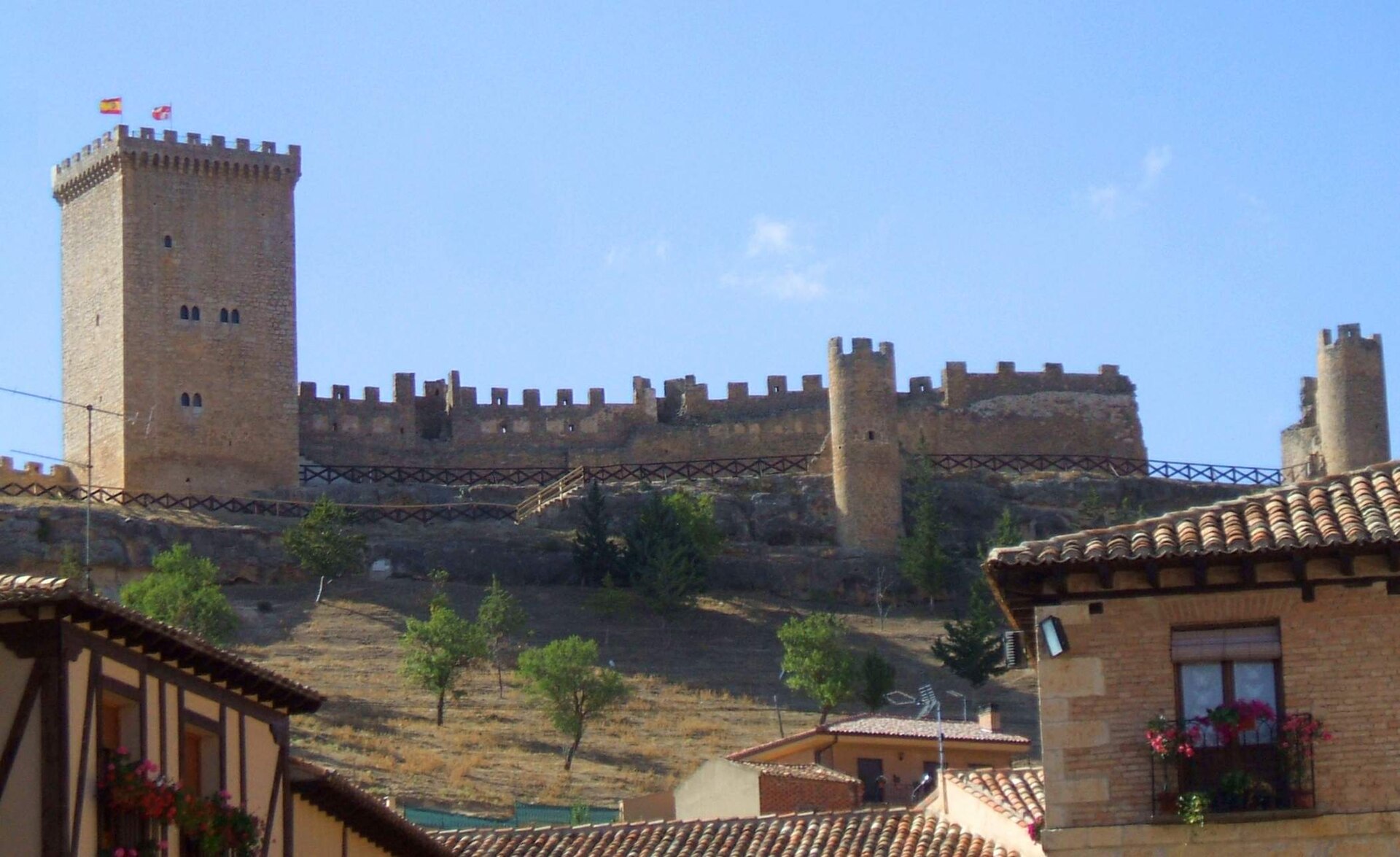
Castle of Coruña del Conde stands on a rise above the Arandilla river valley, right next to the small town of Coruña del Conde in the province of Burgos, in Castile and León. Today the fortress is a ruin, but its outline still dominates the surrounding landscape and hints at the role it once played guarding the frontier of Christian Castile.
Why was the castle built exactly here?
The fortress occupies a promontory overlooking the passage through the Arandilla valley, right beside the ancient Roman city of Clunia (Clunia Sulpicia). That location was no accident: it let defenders control the old road heading south, and two Roman bridges still survive nearby. Choosing this spot combined military oversight with an existing, centuries-old transport route.
Where do its origins lie?
The castle's roots go back to the 10th century, tied to the resettlement and fortification of the Duero valley carried out by the rulers of Christian Castile, a frontier region that constantly needed defending against incursions from the south. The stronghold was later captured by Almanzor, the Muslim military leader famous for his campaigns against Christian territories on the Iberian Peninsula. During his hold on Coruña del Conde he expanded the fortification, adding a new main tower along with a wall that included a caliphal-style gate. That gate survives only in old engravings today — the physical structure is gone, but the drawings give a sense of how substantial the rebuilding was.
How did ownership of the castle change over time?
For a long stretch the fortress remained crown property, directly under the Castilian monarchy. That changed when King Alfonso XI granted it to Juan Martínez de Leiva. The castle and its town then passed through several noble families until, in the 15th century, King Henry IV handed the estate to Lorenzo Suárez de Mendoza. In recognition of his support during the kingdom's civil conflicts, the king granted him the title of count (conde) — and from that point on, "del Conde" was added to the town's name, producing the Coruña del Conde known today.
What will you actually see on site?
The castle survives as a ruin, so this isn't a restored attraction with full visitor infrastructure — it's an authentic, weathered remnant of a medieval border fortification. Some repair work was carried out as late as the mid-17th century, but from then on the structure steadily lost its strategic relevance and fell into disrepair. Visitors today can make out the outline of walls and foundations, and take in views over the Arandilla valley and the nearby archaeological site of Clunia, one of the more significant Roman cities on the Iberian Peninsula, whose ruins lie a short distance away.
How do you get there, and when's the best time to visit?
Coruña del Conde is a small town in the province of Burgos, well suited to a day trip that pairs the castle with the nearby Clunia archaeological site. Given the ruined state of the fortress, it's best to visit on a clear day and in sturdy footwear, since the ground is uneven and there's minimal on-site infrastructure. Spring and autumn bring milder conditions than Castile's hot summers, making them a better choice for a longer walk around the area.
Frequently asked questions
Is the Castle of Coruña del Conde open to visitors? Yes, the ruins can be freely viewed from the outside and partly explored from within, though there's no ticket office or on-site guide service — this is not a formally managed visitor attraction.
What sets this castle apart from other fortifications in the Burgos area? Its proximity to the Roman city of Clunia and its history under Almanzor, who added caliphal-style elements to the fortress, make it unusual among strongholds in Christian Castile.
Where does the "del Conde" part of the town's name come from? It was added after King Henry IV granted the estate to Lorenzo Suárez de Mendoza and awarded him the title of count for his backing during the kingdom's internal conflicts.
Is it worth combining a visit with the Clunia site? Yes — the two locations sit close together, and visiting both gives a fuller picture of the region's history, from a Roman city to a medieval border fortress.
Nearby places

Earn badges for the places you visit
Download NextOnTrip, discover new places and check off your trails.